The Best Alternative to a Recliner After Shoulder Surgery
By Scott Adams, Founder, Surgical Recovery SystemsUpdated · 8 min read
Why the Recliner You Are Sleeping in Might Be Working Against Your Recovery
Your surgeon told you to sleep elevated for the next several weeks. So you set up a recliner, figuring you’d tough it out. Three nights in, you’re exhausted, your neck aches, your lower back is stiff, and you’re stringing together maybe two or three broken hours of sleep before you’re up again, shifting, readjusting, trying to find a position that doesn’t hurt. You start wondering if there’s a better way than using a recliner to sleep in after surgery, and there is. Recliners became the default recommendation for a simple reason: patients need to stay elevated, and for decades, a recliner was the easiest piece of furniture to point people toward. That doesn’t mean it’s the best tool for the job. Understanding how to sleep after shoulder surgery, and what a recliner actually does to your body over weeks of use, is the first step toward finding something that works better.
Do you need a recliner after shoulder surgery?
Many surgeons suggest sleeping upright for the first weeks, and a recliner is the usual advice. You don’t have to buy or rent one if you can keep your upper body raised and your arm supported in bed. Ask your surgeon which position they want, then choose the setup that lets you actually sleep.
When the recliner hurts your neck and back
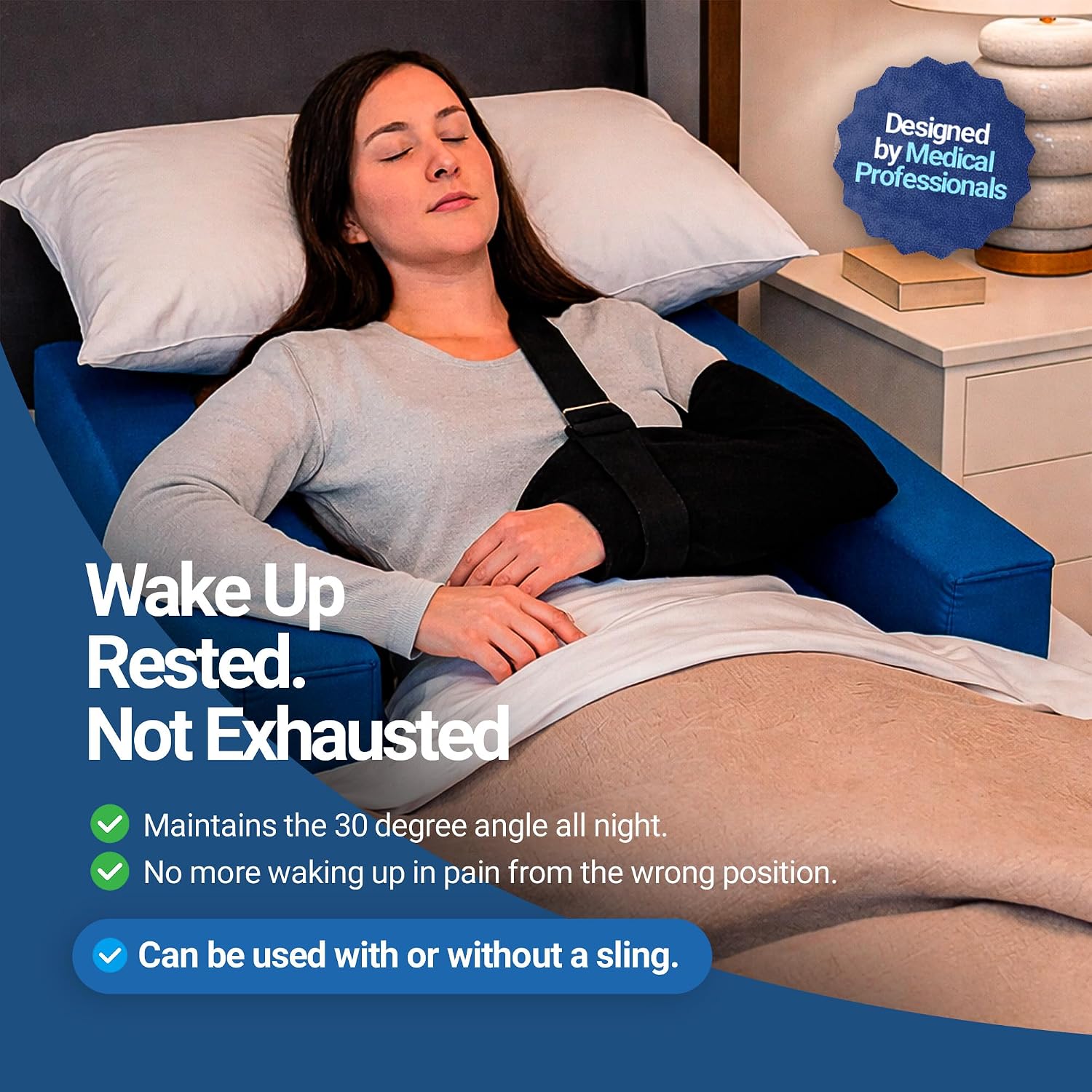
A recliner holds you upright, but a lot of patients find it hurts in new places after a week or two. Your head drops to one side when you fall asleep, and your lower back carries you all night. If that’s where you are, there is another option: sleep in bed with your back raised and your operated arm supported.
Renting or buying a recliner?
Medical supply stores rent recliners and lift chairs after surgery, and some people buy one they won’t want afterwards. Before you do either, ask your surgeon whether you need to sit upright or just have your back raised. If raised is enough, Restore You does it in your own bed for $199, with free standard shipping in the U.S., and it is HSA/FSA eligible in most cases.
If you can’t sleep in the recliner
If you’ve tried the recliner for a few nights and you’re still awake at 2 a.m., you’re not doing it wrong. Plenty of people can’t sleep sitting up for weeks. Move back to bed with your upper body raised, your operated arm supported on its own, and something on that side so you can’t roll onto it.
The Real Problems with Recliner Sleep
Recliners are built for watching television, not for six to eight hours of unmoving rest. A handful of predictable problems show up almost immediately.
Neck and Back Strain: Recliners position your body at angles that push your chin toward your chest and put your lumbar spine under sustained tension. Many patients end up with new neck and back pain that rivals or exceeds their surgical site pain by the end of the first week.
Lack of Arm Support: A recliner has no mechanism for holding your operated arm in the position your surgeon actually wants. Your arm either dangles unsupported or gets propped with loose pillows that slide the moment you doze off, letting your shoulder drift out of the alignment that protects the repair.
Sliding: Recliners are angled for lounging, not sleeping, so your body gradually creeps downward through the night. Every slide is a small jolt that interrupts sleep and can stress the surgical site.
Emotional and Physical Isolation: Being relegated to a chair away from your bed and your partner adds a layer of mental fatigue to the physical strain. It is no surprise that many patients point to the chair as their primary source of frustration.
Circulation Concerns: Staying in a bent, immobile position for long stretches slows blood flow in the legs, and reduced mobility after surgery is a recognized contributor to clot risk during the postoperative period, according to the CDC. Elevation matters, but so does being able to shift and move naturally, something a recliner makes surprisingly difficult.
Sleep Is Not Optional in Recovery
It’s worth taking a moment to consider why this matters beyond comfort. Sleep disturbance is extremely common after shoulder surgery: one prospective study of nearly 300 rotator cuff repair patients found that roughly 89% reported disrupted sleep in the recovery period. That’s not a minor side effect. Research on sleep restriction has also shown that poor sleep dampens the immune signaling and hormonal activity your body relies on to repair tissue, which means the nights you spend tossing in a recliner aren’t just unpleasant, they may be working against the healing your surgery was meant to achieve.
What a Good Alternative Actually Needs
Before looking at options, it helps to know what you’re actually trying to solve. Surgeons aim for elevation, typically in the 30 to 45-degree range, along with a position that keeps tension off the repair and limits swelling. Any real alternative to a recliner after surgery needs to:
Deliver the 30 to 45 degree angle elevation
Support the operated arm independently of the torso
Keep you from rolling in your sleep
Let you do it all in a stable position that doesn’t require constant readjustment
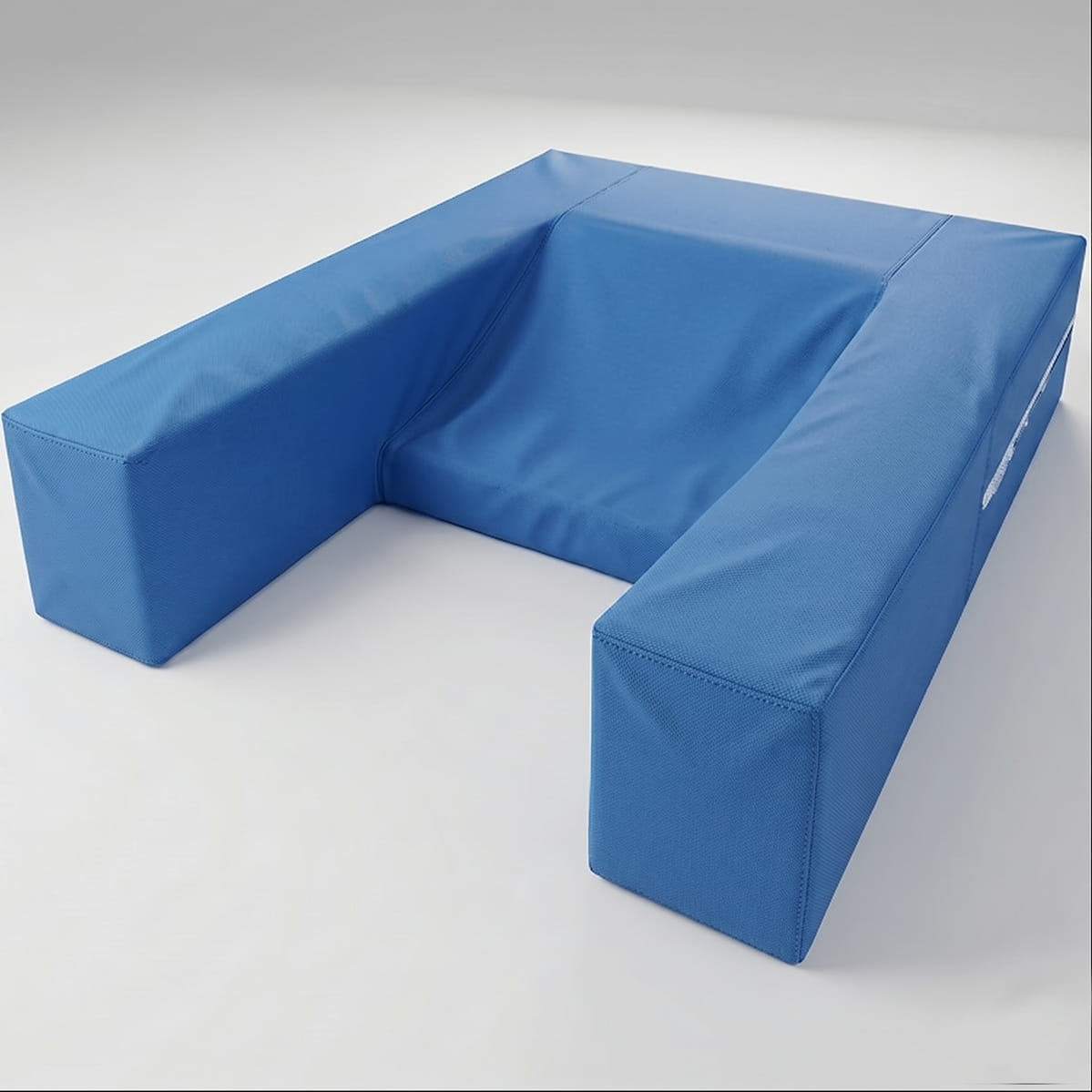
Pillow stacks fall short here almost immediately since they compress, shift, and rarely hold their shape past the first hour of sleep. Basic wedge pillows are sturdier but only address the torso angle, and leave your arm to fend for itself. Adjustable bed frames solve the elevation problem if you already own one, but they’re a significant expense to acquire for a temporary recovery window, and they still don’t support your arm.This is the gap that purpose-built recovery supports are designed to close. Instead of stacking separate objects and hoping they hold through the night, a system built specifically for post-surgical positioning combines torso elevation, dedicated arm support, and lateral stability into one piece of equipment you place directly on your own mattress.
Why surgeons recommend sleeping elevated
Keeping the upper body elevated after shoulder surgery helps reduce swelling, limit pressure on the repair, and lower the odds of accidentally rolling onto the surgical side during sleep. A recliner happens to be an easy way to accomplish that by default, and has become the go-to answer for decades.
The quality of your sleep matters just as much as the position. As many as 89% of patients undergoing rotator cuff repair report meaningful sleep disturbances, and that number doesn’t disappear the moment surgery is over. The same research found it typically takes several months for sleep patterns to gradually normalize. That’s a long stretch of nights to spend fighting a chair that was designed for watching TV, not for immobilizing a healing joint.
How to sleep in bed after shoulder surgery
Raise your upper body to the angle your surgeon recommends.
Support the operated arm so it rests slightly away from your body and doesn’t hang.
Keep pillows or a support on the operated side so you can’t roll onto it.
Keep your sling within reach and put it back on before you get up.
Why the pile of pillows keeps sliding
The usual setup is a wedge behind your back and pillows stacked under the arm. It works for an hour, then the pillows shift, the arm drops and you wake up. One support that holds your back and your arm together stays where you put it. If you’re set on a wedge, our guide to the best wedge pillow for shoulder surgery shows how to get the most from one.
Where Does Restore You Fit In?
This is the category that the Restore You Therapeutic Support from Surgical Recovery Systems was built for. Rather than asking you to prop pillows around a recliner or your bed frame, it’s designed so you can lie directly on your own mattress, with dedicated channels supporting each arm and a structure that keeps your torso from rolling. If you’re weighing whether to keep fighting with a recliner or try something engineered specifically for shoulder recovery, this is the kind of option worth looking at before you commit to another week of broken sleep in a chair.
Recliner vs recovery pillow: side by side
What Do Surgeons Typically Recommend?
Most surgeons aren’t necessarily recommending a recliner itself, but an elevation and protection of the shoulder. The recliner recommendation isn’t based on it being a good solution. It became the standard because, for 60 years, it was the only option available.
The actual goal has always been elevation and shoulder protection. The recliner was just the least bad way to achieve that, until now. This explains why sleeping after shoulder surgery remains the number one complaint among patients. Not the pain itself, not the sling, not physical therapy. Sleep. Because the tool surgeons have been pointing patients toward for generations was never designed for the job.
Surgical Recovery Systems built Restore You to solve the problem at its root: a purpose-engineered system that maintains the same surgeon-recommended elevation and MLPP positioning a recliner approximates, but in your own bed, for a full night’s sleep.
Most orthopedic surgeons are exceptional at fixing shoulders. The recliner recommendation persists not because it works, but because, until recently, there was nothing better to recommend. Now there is.
What Switching Actually Looks Like
If you decide to move away from a recliner, you can expect a few differences when switching to proper surgical support:
The First Night
Most patients notice a difference immediately, simply from being back in their own bed. You may still wake once or twice as your body adjusts to a new support system, but falling asleep tends to come faster, and the stretches between wake-ups are usually longer than anything a recliner allows.
The First Week
By the end of the first week, many patients begin to find more comfortable sleep positions and longer stretches of uninterrupted sleep as early postoperative pain and swelling ease. Because sleep and pain tolerance are closely linked, this is often when people notice they’re moving more easily in the morning and have more energy left for physical therapy.
Week Two and Beyond
As healing progresses, many patients find they need less overnight repositioning and start relying less on pain medication just to get through the night. This is also a good point to reassess with your surgeon whether your positioning needs have changed.If you’re evaluating options, the Restore You design addresses torso elevation, arm positioning, and stability together. Consider asking your surgeon whether it fits your specific procedure and positioning requirements.
Sleep is part of healing after shoulder surgery. A recliner is the usual advice, but most people can’t sleep in one for weeks. Restore You keeps you in the position your surgeon wants while you sleep in your own bed. See the Restore You Therapeutic Support: $199, free standard shipping in the U.S.