Expedited Shipping for $35
✦
FREE STANDARD SHIPPING IN THE U.S.
✦
SLEEP BETTER. HEAL FASTER
✦
FREE STANDARD SHIPPING IN THE U.S.
✦
The short answer
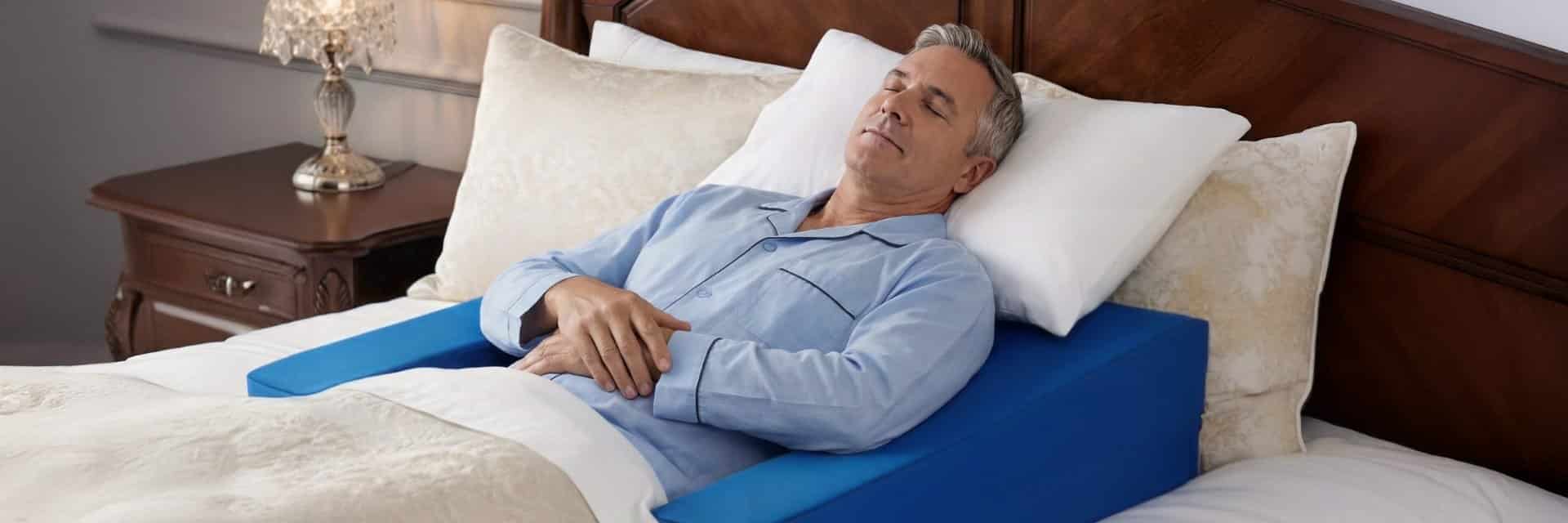
A 30 to 45 degree wedge is the cheapest way to sleep propped up after shoulder surgery, and it helps with swelling. What it can’t do is hold your arm. If you want your arm supported and kept still all night in your own bed, look at a support that cradles the arm as well as your back.
If you’re searching for the best wedge pillow for shoulder surgery, you’ve probably already been told by your surgeon to sleep elevated for the first several weeks after rotator cuff repair, shoulder replacement, or arthroscopic surgery. A pillow wedge for shoulder surgery seems like the obvious answer. It’s inexpensive, widely available, and it does prop your torso up.
It also doesn’t do everything your shoulder needs it to, and that gap is worth understanding before you buy one or decide the one you already own is good enough.
Shoulder surgery is especially hard on sleep.
89% of patients report sleep disturbances before rotator cuff repair, and for many, the weeks right after surgery are worse before they’re better. Poor sleep is not one of the inconveniences of post-surgery repair. Poor sleep during the healing window has measurable consequences: a 2025 study following patients through emergency surgery found that poor sleep quality during the healing phase was associated with wound complications.
Surgeons encourage elevation because sleeping at around 30 to 45 degrees reduces swelling, takes tension off the repair site, and keeps you from rolling onto the surgical shoulder while you’re asleep and can’t stop yourself.
When your orthopedic surgeon says to sleep with your arm elevated after rotator cuff repair, shoulder replacement, or arthroscopic surgery, they aren’t describing a rough angle. They’re describing a clinically specific position known as the Maximally Loose Packed Position, or MLPP.
The MLPP places your shoulder at approximately 30–45 degrees of elevation, with your arm slightly away from your body. This position does three specific things: it reduces intra-articular pressure at the surgical site, it minimizes swelling by encouraging fluid drainage, and it keeps tension off the healing tendon or repaired joint capsule. It is the angle at which your shoulder is under the least stress.
Here is the problem with a standard wedge pillow: it addresses your torso angle. It does nothing specific for your arm. Your arm still needs independent support to stay in MLPP, which means you are stacking pillows, rolling up towels, or hoping that nothing shifts while you sleep. Most patients discover within the first two nights that this arrangement collapses the moment they drift into deep sleep.
How the usual options compare for the first weeks after shoulder surgery:
| Wedge pillow | Wedge + loose pillows | Recliner | Restore You | |
|---|---|---|---|---|
| Back support | Yes | Yes | Yes | Yes |
| Arm support | No | Some, until the pillows shift | Armrest only | Holds the arm in its own raised support |
| Stays in place all night | Often slides | Pillows end up on the floor | Yes | Yes |
| Where you sleep | Bed | Bed | Chair | Your own bed |
| Price | Varies | Varies | Varies; see the recliner guide | $199, free U.S. shipping |
A wedge is a smooth slope, so through the night your body creeps toward the foot of the bed and your arm slides off its pillow. A pillow under your knees slows it down. A support shaped around your back and arm stops it. If a recliner after shoulder surgery is the other option you’re weighing, compare that too.
If you’re using a standard wedge, most surgeons and physical therapists recommend placing the wedge against your headboard, sitting back into it at an incline, keeping your sling on, and using extra pillows to support your operated arm out to the side so it isn’t just hanging against your chest.
That last part is the part people struggle with. A wedge angles your back and does nothing for your arm. You’re left folding a regular pillow under your elbow and hoping it stays put through a full night of sleep cycles, which, for most patients, it doesn’t.
Ask anyone a week into recovery, and they’ll tell you they’ve woken up with their arm pillow on the floor and their shoulder unsupported. Researchers have linked disrupted sleep to weaker immune signaling during tissue repair, so a bad night of sleep can mean slower recovery.
There are three gaps that show up consistently when considering standard wedge pillows.
Patients often narrow their search to the best 45 degree wedge pillow for shoulder surgery, assuming the angle is the whole problem. The angle matters, but it’s only one variable. Your surgeon’s elevation recommendation is really describing a full-body position, a torso incline, an arm cradle, and enough lateral support that you can’t physically roll onto the repair. A wedge, even a well-made one, is a single inclined surface. It solves the torso piece and leaves the rest to you and a pile of loose pillows.
That’s a reasonable starting point for the first night or two home from surgery. It becomes a harder ask by night seven, when fatigue is compounding, and you’re still waking every two or three hours to reposition an arm pillow that moved again.
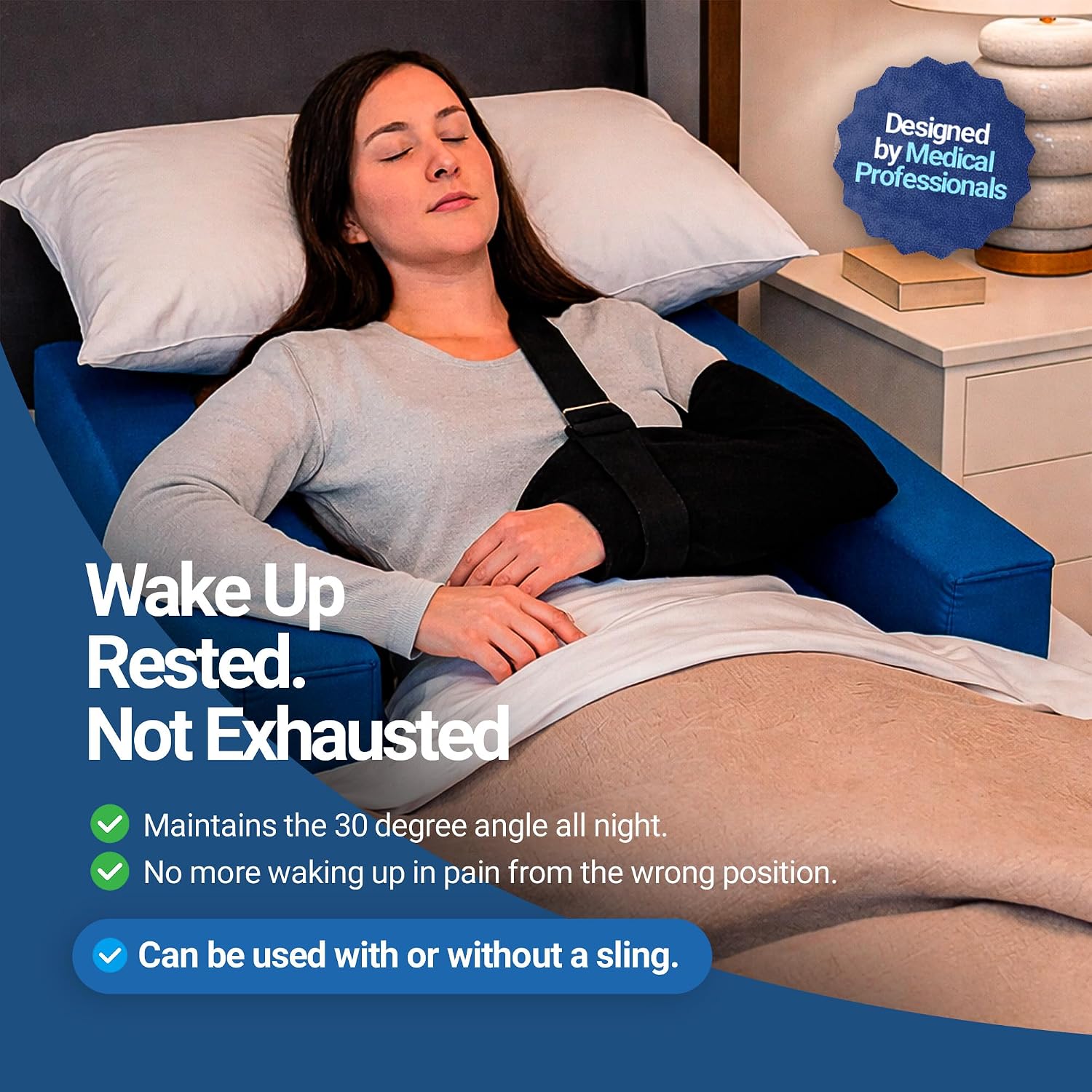
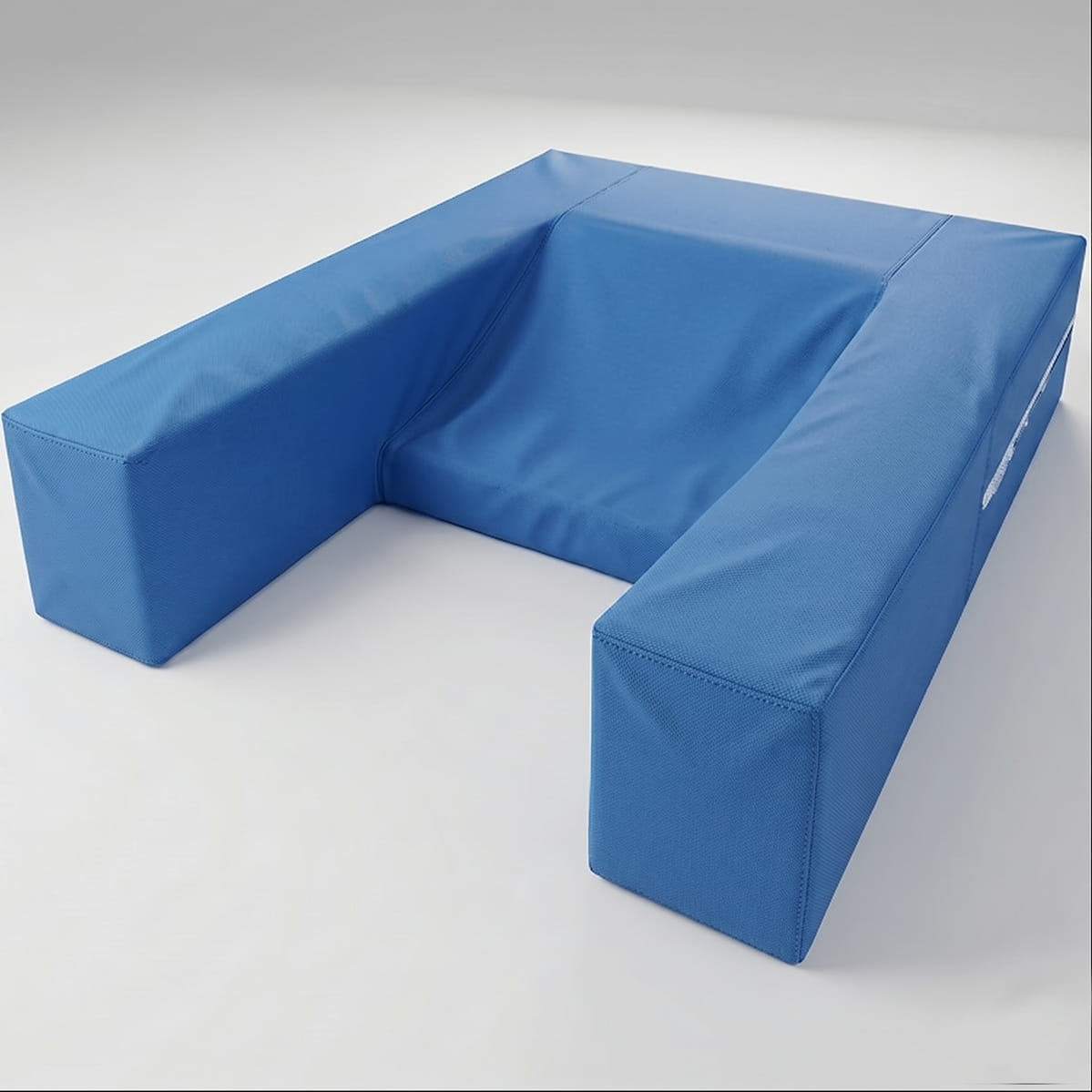
For patients who find themselves arranging pillows every night or keep waking with sore necks and lower backs from compensating around a wedge, the next step up is a system built specifically around shoulder positioning rather than general incline. The Restore You Therapeutic Support from Surgical Recovery Systems combines torso elevation with dedicated arm channels and lateral support, so the arm doesn’t rely on a loose pillow to stay in place through the night.
It may not be a fit for everyone. If a wedge and some extra pillows are getting you through the night without frequent waking and putting pressure on the surgical site, there’s no need to make a change. But if you’re past the first week and still not sleeping more than a couple of hours at a time, consider looking at what a purpose-built option offers instead of continuing to troubleshoot a setup that isn’t holding.
Keep reading
Sleep is part of healing after shoulder surgery. A recliner is the usual advice, but most people can’t sleep in one for weeks. Restore You keeps you in the position your surgeon wants while you sleep in your own bed.
See the Restore You Therapeutic Support: $199, free standard shipping in the U.S.