Expedited Shipping for $35
✦
FREE STANDARD SHIPPING IN THE U.S.
✦
SLEEP BETTER. HEAL FASTER
✦
FREE STANDARD SHIPPING IN THE U.S.
✦

What to look for in a pillow after shoulder surgery
Three things matter after shoulder surgery: your back raised to the angle your surgeon wants, your operated arm supported away from your body, and a setup that stays put so you don’t roll onto your shoulder at 2 a.m. Most pillows, including wedge pillows, do one of the three.
If you’ve just had shoulder surgery or you’re preparing for one, you’ve probably already heard that you need to sleep elevated for the next several weeks. What you may not have heard is that not every pillow actually does the job, and the difference between a good fit and a mediocre one shows up fast, when fatigue starts to compound.
This 2026 guide walks through what actually matters when you’re choosing one. Nowadays, purpose-built recovery pillows have largely replaced the “recliner and a pile of couch cushions” approach that was once the default advice. This guide will help you choose the right pillow for sleeping upright during your post-surgery recovery.
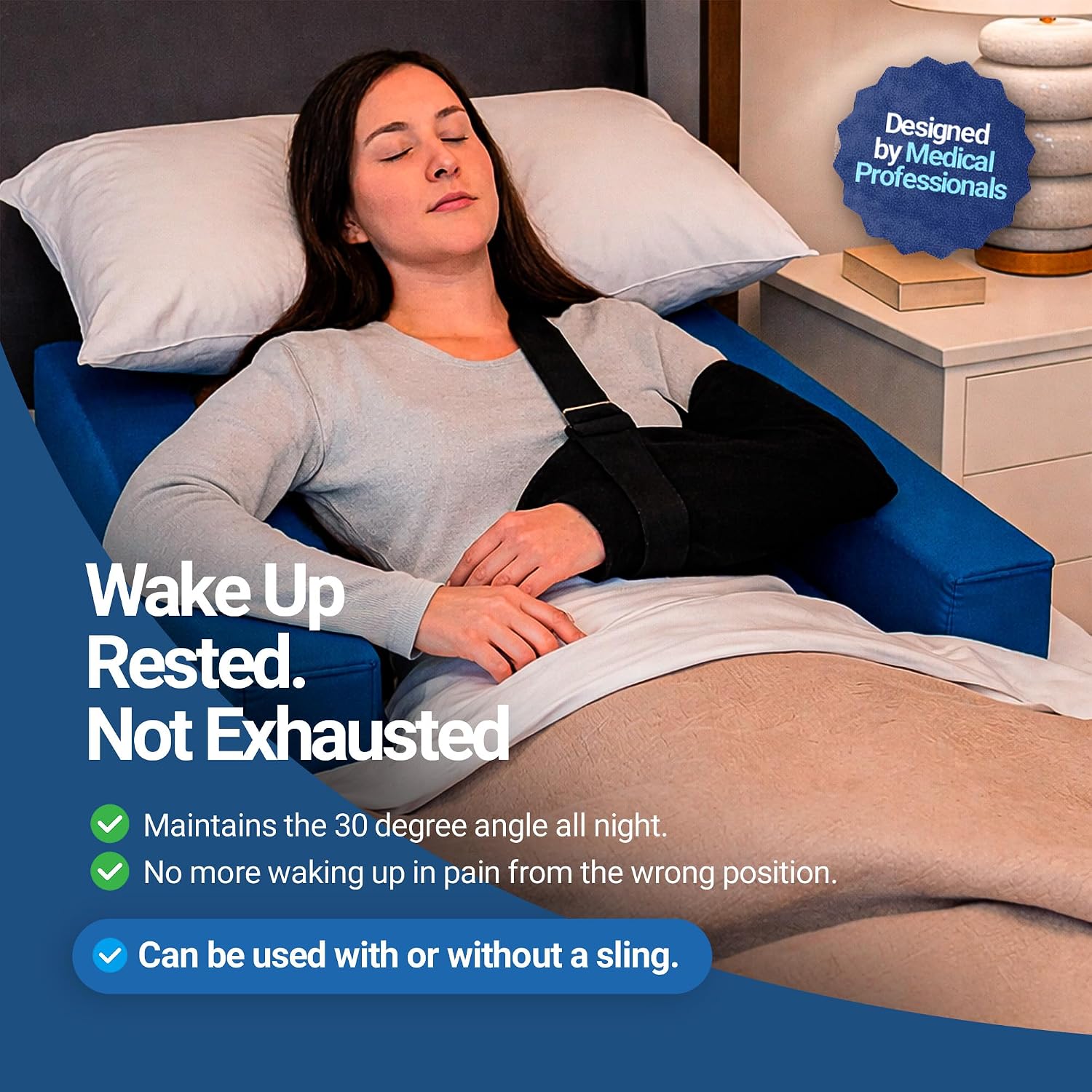
If your surgeon wants you upright for the first weeks, you need your back raised and supported all night, not a stack of pillows that flattens by midnight. Restore You raises your back to a 30-degree angle in your own bed and supports the operated arm beside you.
After shoulder surgery, your joint needs to stay in a position that keeps tension off the repair and allows swelling to drain rather than pool at the surgical site. Sleeping flat on your back doesn’t give your shoulder the support it needs, and many patients end up in a recliner instead, which solves the elevation problem but creates new problems in the neck, hips, and lower back in the end.
The stakes are higher than most people assume. Sleep disturbance is extremely common after shoulder surgery, and it’s uncomfortable, and it also affects your recovery.
Disrupted sleep has been linked to elevated inflammatory markers and lower pain thresholds, meaning a bad night can actually make the next day’s pain feel worse than it otherwise would.
That’s the real argument for getting your sleep setup right early rather than improvising with a recliner or a stack of couch cushions for a few weeks and hoping for the best.
A regular bed pillow, even a good one, isn’t built for the kind of support you need to support your shoulder and sleep upright after surgery.
A generic wedge pillow solves the incline problem, but usually stops there. Most are only about two feet wide, which is fine for propping yourself up to read but leaves nothing for your arms or the sides of your body, so you end up building a small fort of extra pillows just to keep your arm from sliding down through the night.
The benefits of post-surgery pillows built specifically for this purpose come down to a few concrete design differences:
If you’re comparing options currently on the market, a few specifics are worth checking rather than taking a product description’s word for it.
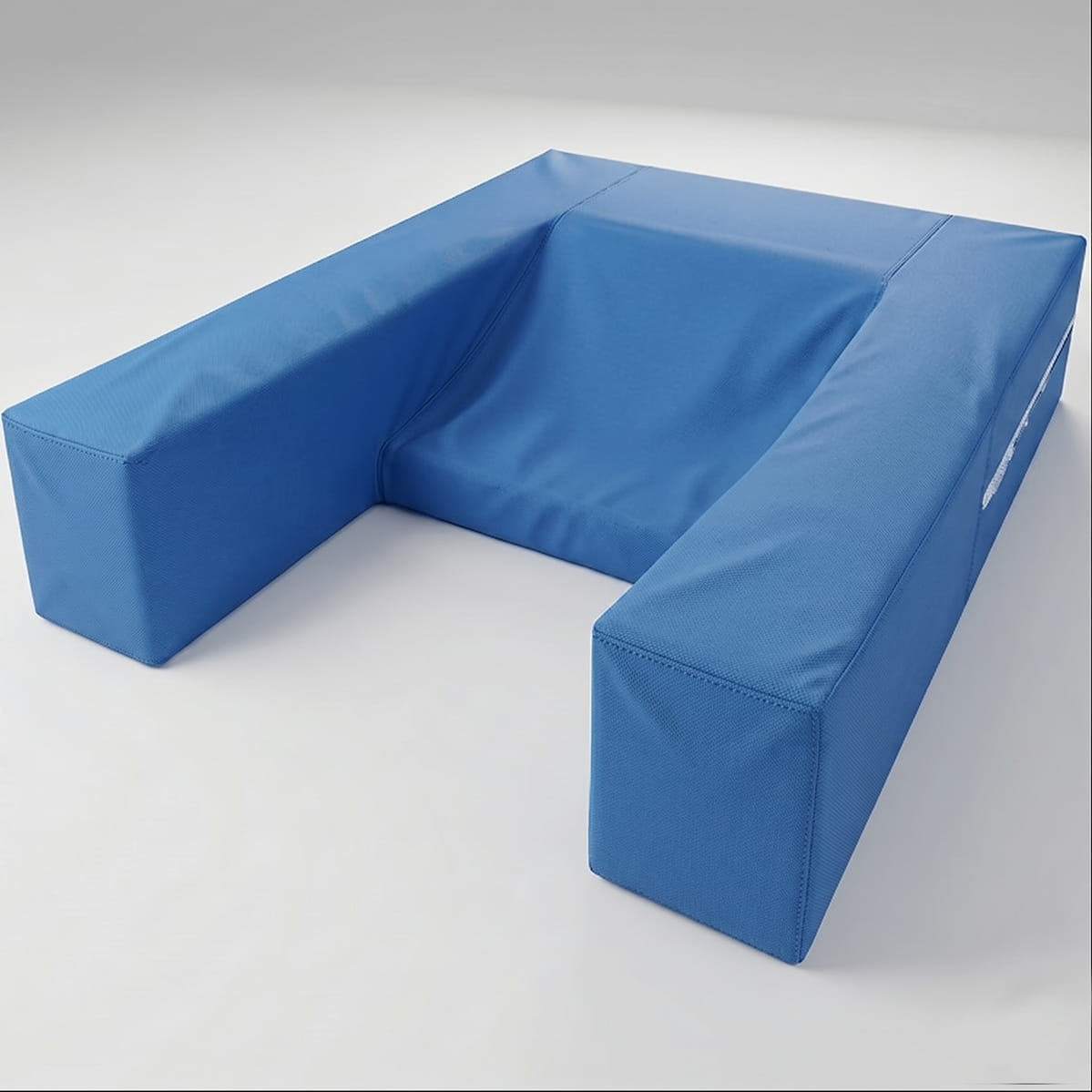
A narrow incline pillow supports your back but leaves your arms unsupported, which means they end up hanging or slumping against your chest overnight. A wider design, generally 2.5 feet or more, gives your arms a stable place to rest alongside your torso.
Standard foam compresses under body weight over weeks, losing the shape that was doing the actual work. Multi-density or medical foam holds up better across a full recovery period, giving you the support you need since you’re using it for a couple of months.
Until you’re managing it one-handed with a sling on. A design you can lie into directly, without straps or multi-piece assembly, is a real practical advantage when you’re sore and tired.
The needs are slightly different depending on why you’re using it.
In the first six to eight weeks after surgery, the priority is protecting the repair itself, keeping the joint in a consistent, low-tension position, and preventing any accidental rolling onto the operated side.
For chronic shoulder pain, the priority is more about pressure relief and avoiding positions that aggravate an already irritated joint.
In practice, a well-designed post-surgical positioning pillow tends to work well for both situations, since the underlying goal, protecting the shoulder joint while keeping it supported, is the same either way.
When you’re comparing the best pillow for sleeping upright after surgery, it’s worth asking a few direct questions:
A generic wedge, a recliner, or a bad post-surgery pillow might get you through the first few nights, but if you’re still waking up repeatedly two or three weeks in, that’s worth addressing directly rather than pushing through it.
The Restore You Therapeutic Support from Surgical Recovery Systems was built around exactly these questions. It was built as a single, purpose-built piece rather than a stack of separate wedges and pillows, specifically for patients who need consistent shoulder positioning through a full night’s sleep in their own bed.
Keep reading
Sleep is part of healing after shoulder surgery. A recliner is the usual advice, but most people can’t sleep in one for weeks. Restore You keeps you in the position your surgeon wants while you sleep in your own bed.
See the Restore You Therapeutic Support: $199, free standard shipping in the U.S.