Expedited Shipping for $35
✦
FREE STANDARD SHIPPING IN THE U.S.
✦
SLEEP BETTER. HEAL FASTER
✦
FREE STANDARD SHIPPING IN THE U.S.
✦

If you’ve recently had a breast augmentation, reduction, or mastectomy, you’ve probably discovered that sleep has suddenly become one of the hardest parts of recovery.
Here’s what you need to know: how you sleep after breast surgery is not a minor comfort issue. It directly affects how quickly your tissue heals, whether your implants settle correctly, and how much pain medication you’ll need.
Getting it right, especially in the first six weeks, can meaningfully change your outcome.
Your body does the majority of its repair work while you sleep. During deep, slow-wave sleep, the pituitary gland releases growth hormone, which drives tissue regeneration, protein synthesis, and immune function, all of which are in especially high demand after surgery.
Research demonstrates that poor postoperative sleep quality is significantly associated with impaired wound healing as early as the third day after surgery. Sleep deprivation intensifies pain sensitivity and raises inflammatory markers that slow recovery.
That feedback loop is particularly brutal after breast surgery. Pain makes it hard to sleep. Poor sleep amplifies pain. Fatigue impairs your ability to manage that pain calmly and consistently. Breaking the cycle starts with getting the position right from night one.
Drains are the main reason the first nights are hard. Sleep on your back with your upper body raised, pin or clip the drain bulbs so they can’t pull, and keep pillows or a support at your sides so you don’t roll onto them. Your surgical team will tell you how long the drains stay in and how to empty them.
For the first two weeks after any breast procedure, sleeping flat is not an option. The medical consensus is clear: sleep exclusively on your back with your upper body elevated at a 30 to 45 degree angle.
This position makes it physically easier to get in and out of bed without straining your chest, while also keeping breast tissue in a neutral position, preventing fluid from pooling in the surgical site, reducing swelling by supporting circulation, and protecting incisions from unnecessary pressure.
Many patients end up in a recliner for the first week or two, which works in principle but often leads to fragmented sleep because recliners don’t allow proper spinal alignment. Stacking regular bed pillows creates a similar problem because they shift during the night, dropping your angle well below the therapeutic threshold.
Between weeks three and four, your surgeon may clear you to begin a cautious transition to side sleeping. If so, a pillow under your breast and another between your knees are essential. It’s also important that you continue wearing your surgical bra.
For most augmentation and reduction patients, week six to eight marks the point when sleeping in most positions becomes possible again. Stomach sleeping is strictly forbidden for at least 12 weeks, with no exceptions.
Mastectomy patients face additional challenges that augmentation patients don’t.
Most will have surgical drains in place for the first one to two weeks, and knowing how to sleep with mastectomy drains is something many patients aren’t adequately prepared for before discharge. The drains exit through small incisions and collect fluid in bulbs that need regular emptying. At night, the risk is rolling onto a drain or having a bulb pull on the incision site.
The practical solution is to secure the drain bulbs using a lanyard, a dedicated drain holder, or a soft button-up shirt with front pockets; anything that keeps the tubing against your body without tension.
With tissue expanders, surgeons usually ask you to sleep on your back with your upper body raised for several weeks, and not on your side or stomach until they clear you. Support under both arms takes pressure off your chest.
Sleeping with tissue expanders after reconstruction poses a longer, more demanding positioning challenge than most patients anticipate.
Tissue expanders are rigid devices placed beneath the chest muscle to gradually stretch the skin and tissue over several months. Unlike a soft implant, they have no give, and that firmness becomes especially noticeable when lying down. Strict back sleeping for the duration of the expansion process is recommended, which typically runs three to six months.
Side sleeping on the affected side is not possible, and stomach sleeping is entirely ruled out. Bilateral reconstruction patients have no alternative side to default to, making consistent, well-supported back sleeping the only viable strategy for an extended period.
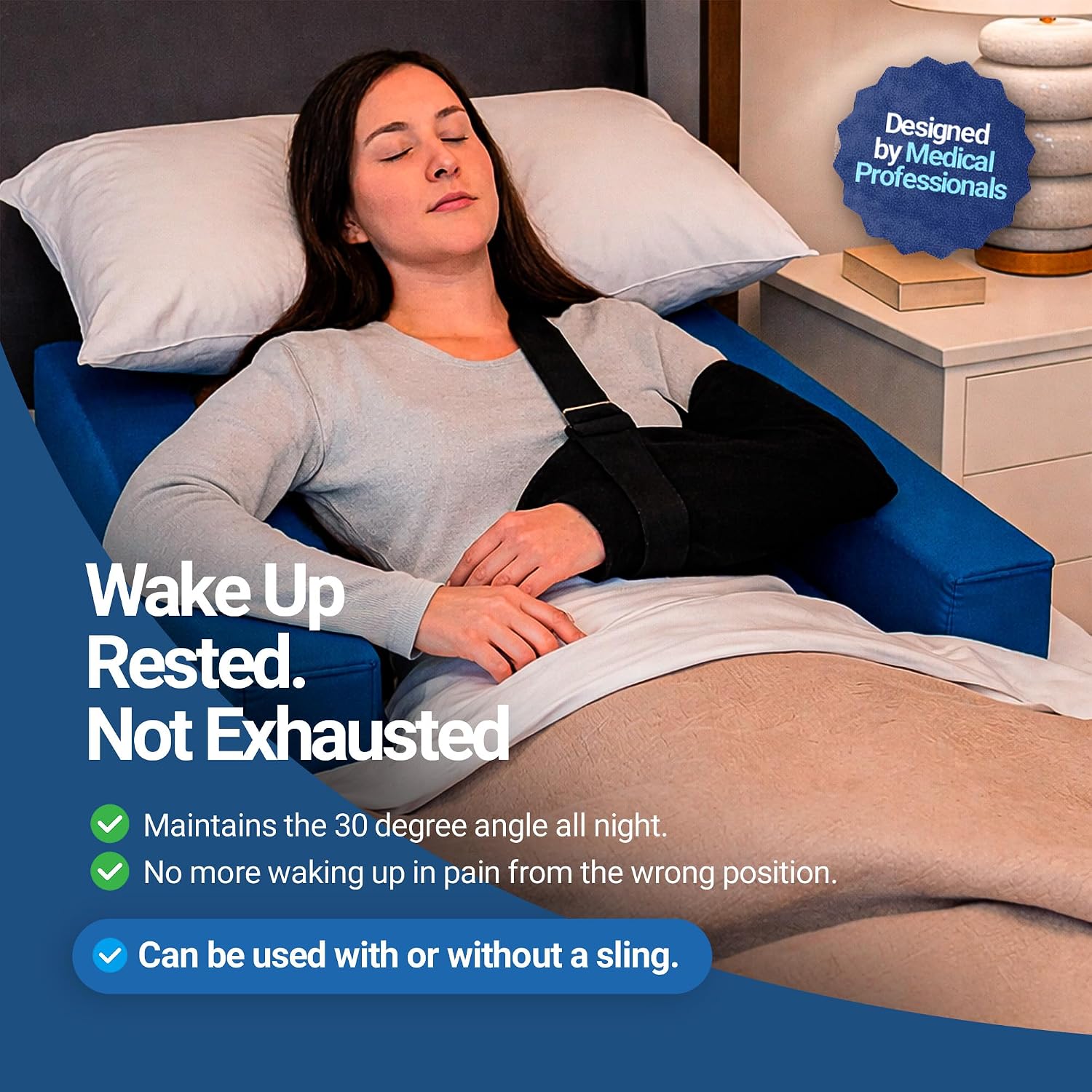
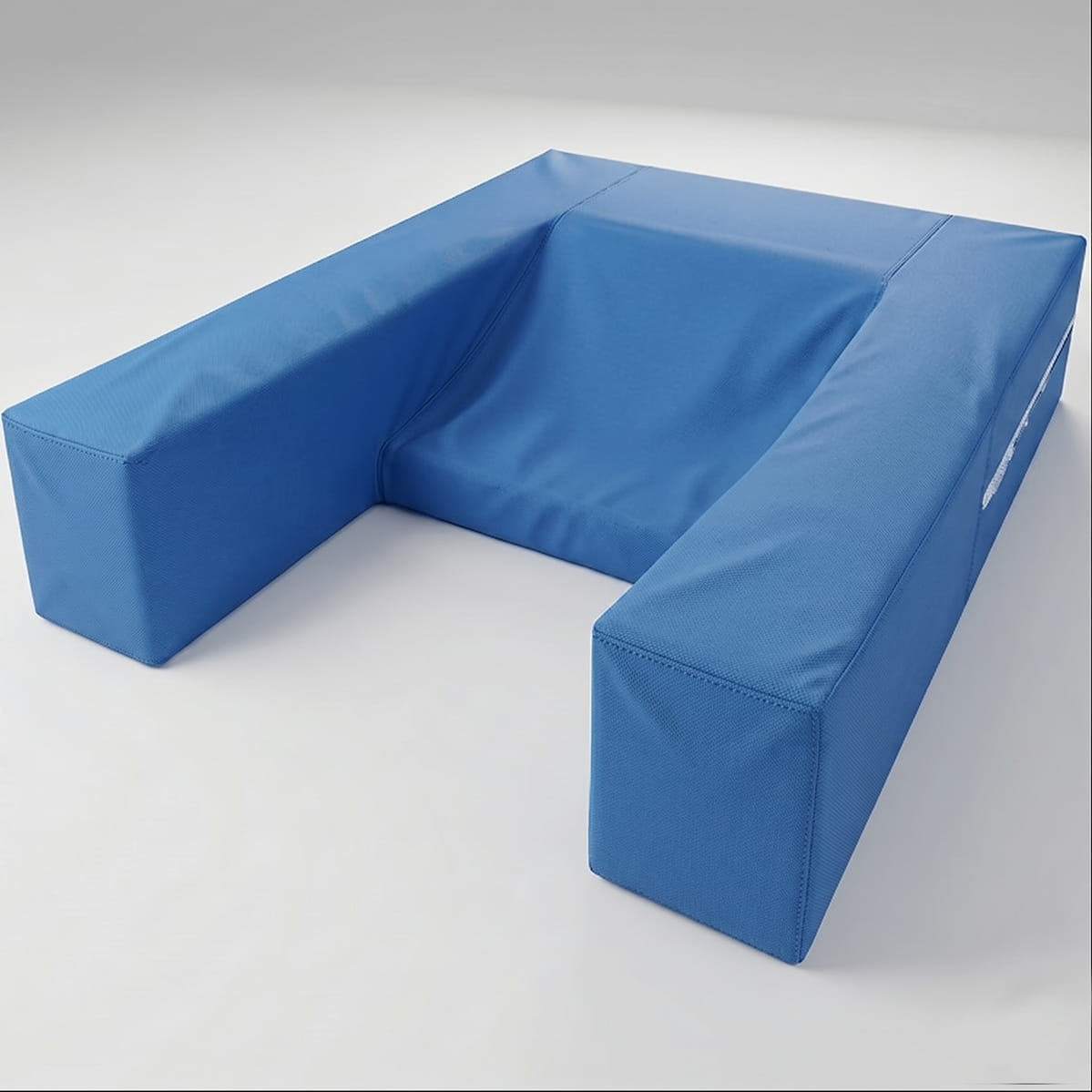
Patients who struggle to stay comfortably positioned on their backs may also benefit from a dedicated recovery support system like the Restore You Therapeutic Support, which helps maintain an elevated sleeping position while reducing the need for frequent overnight repositioning.
Keep reading
Sleep is part of healing after shoulder surgery. A recliner is the usual advice, but most people can’t sleep in one for weeks. Restore You keeps you in the position your surgeon wants while you sleep in your own bed.
See the Restore You Therapeutic Support: $199, free standard shipping in the U.S.