Expedited Shipping for $35
✦
FREE STANDARD SHIPPING IN THE U.S.
✦
SLEEP BETTER. HEAL FASTER
✦
FREE STANDARD SHIPPING IN THE U.S.
✦

You went to bed fine. But when you wake up, your shoulder is throbbing, brushing your teeth suddenly feels like a chore, and dressing up seems harder than it should. If that’s a familiar pattern, you’re dealing with one of the most common overnight complaints out there, and most of the time, the explanation is simpler than it feels: your sleep position.
The shoulder is the most mobile joint in the body, which also makes it the least stable. During the day, your muscles actively hold the joint in place. At night, when those muscles relax into deep sleep, the tendons and soft tissue around the joint lose that support. If you’re lying in a position that compresses or stretches the joint for hours at a stretch, inflammation sets in, and that’s what you feel when you wake up.
For most people without an underlying shoulder problem, this kind of pain settles within a couple of days. If it keeps happening night after night, though, the cause is usually one of the following:
Sleeping positions can put pressure on the shoulder for several hours. If the tendons, capsule, or joint are already irritated, this pressure can worsen the symptoms.
Although your sleep position is often the cause of shoulder pain, sometimes it just aggravates an underlying condition.
Tendinitis and rotator cuff tears are well known for worsening at night, in part because lying down alters blood flow patterns around the joint.
Also known as adhesive capsulitis, frozen shoulder is another common underlying condition. It affects roughly 2 to 5% of the general population, tends to show up between ages 40 and 60, and is notorious for making every sleep position uncomfortable, not just the affected side.
Is a syndrome where tendons and bursae get pinched in a narrowed space. It follows a similar pattern: the muscles that normally hold that space open relax overnight, allowing the compression to worsen.
Neck problems, including a pinched nerve or a herniated disc, commonly refer pain into the shoulder and arm. This is only one reason why shoulder pain that doesn’t respond to position changes is worth evaluating, rather than working around indefinitely.
A few quick adjustments make a real difference for most people.
Regardless of your preferred sleep position, either of these two options can provide some relief.
An old, flattened pillow is often part of the problem. Pillow choice matters more than people expect. A pillow for bad shoulders needs to match your sleep position:
For some people, none of this fully solves the problem, particularly those recovering from shoulder surgery or living with a chronic rotator cuff or capsule issue.
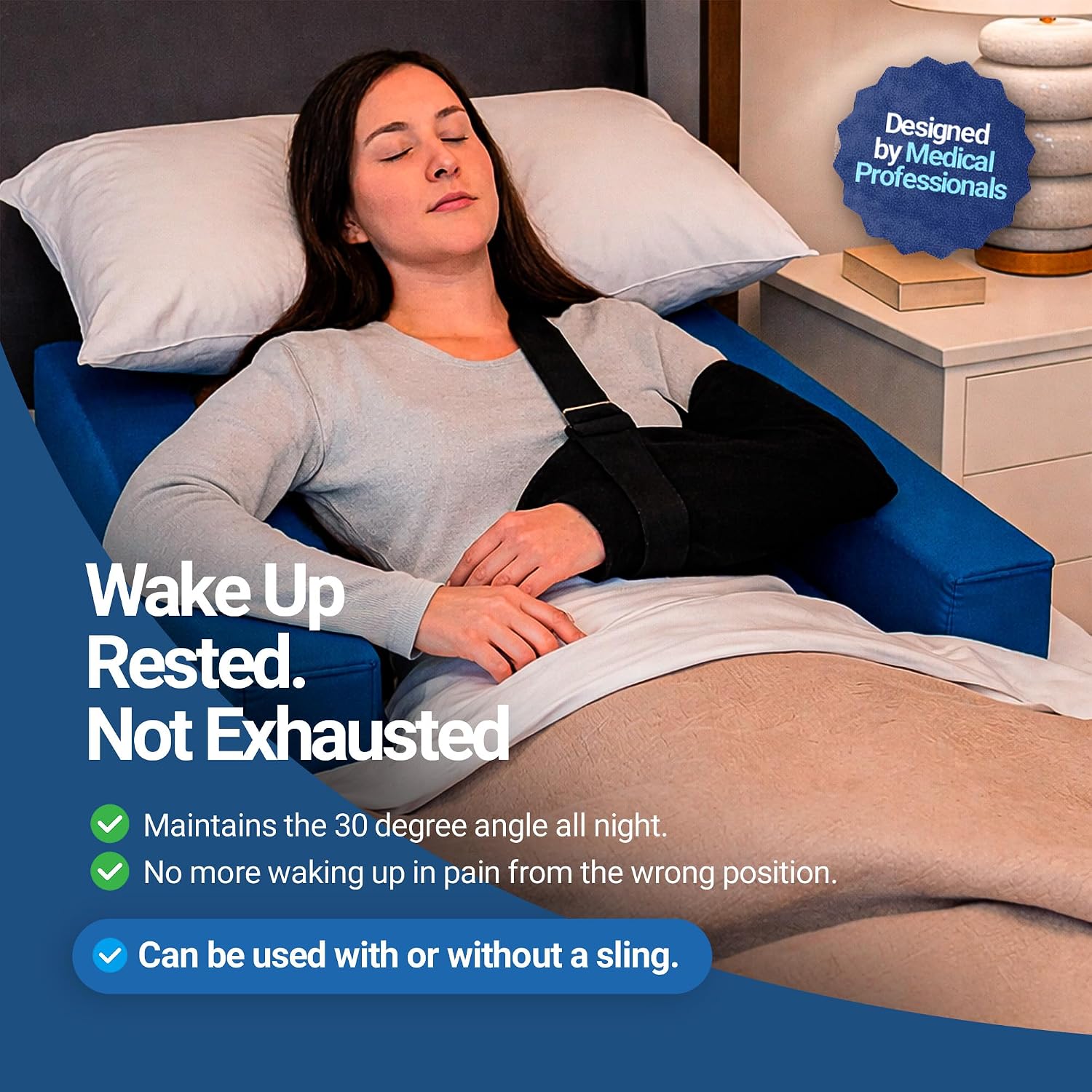
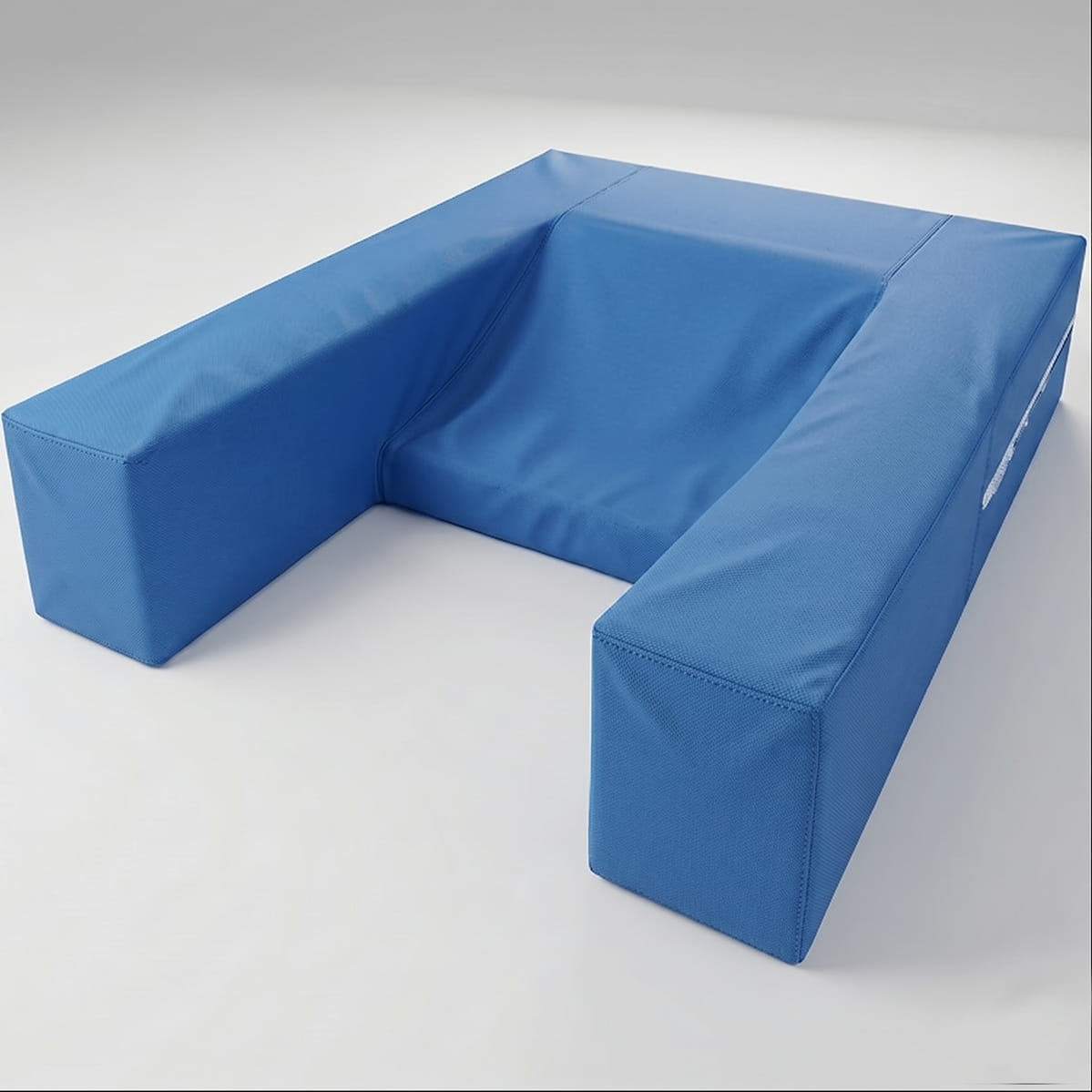
In those cases, the shoulder often needs more than a general pillow can offer: a consistent angle, dedicated support for the arm, and something that physically prevents rolling back onto the joint overnight. That’s a different category of product than a standard bed pillow, and it’s where a medical pillow for shoulder pain, built specifically around shoulder positioning rather than general comfort, outperforms a stack of regular pillows that shift as soon as you fall asleep.
This is the gap The Restore You Therapeutic Support from Surgical Recovery Systems was built to address: full-body positioning support with dedicated arm cradling, designed for people who need consistent shoulder positioning through the night, rather than a pillow they have to keep readjusting.
Most morning shoulder pain from a bad sleep position resolves within 48 hours.
See a doctor if pain lasts longer than that, if you lose a meaningful range of motion, if there’s visible swelling or deformity, if you have persistent numbness or weakness in the arm, or if the pain keeps waking you up despite changing your setup.
Left shoulder pain paired with chest tightness, sweating, or shortness of breath is a separate emergency. Call 911, since those can be signs of a heart attack.
Keep reading
Sleep is part of healing after shoulder surgery. A recliner is the usual advice, but most people can’t sleep in one for weeks. Restore You keeps you in the position your surgeon wants while you sleep in your own bed.
See the Restore You Therapeutic Support: $199, free standard shipping in the U.S.