Expedited Shipping for $35
✦
FREE STANDARD SHIPPING IN THE U.S.
✦
SLEEP BETTER. HEAL FASTER
✦
FREE STANDARD SHIPPING IN THE U.S.
✦

If nighttime heartburn keeps waking you up, you’ve probably already searched for a pillow for acid reflux and found dozens of foam wedges that all look identical. Most people assume any wedge will do the job. In practice, the angle, the shape, and the design accounting for your preferred sleeping position make a real difference in whether you actually get relief or just get an uncomfortable night’s sleep, in addition to the reflux you already have.
Acid reflux happens when stomach acid moves backward into the esophagus, and lying flat removes gravity’s help in keeping it where it belongs. Elevating the upper body during sleep is a consistently recommended non-drug strategy for reducing nighttime symptoms. It’s the main reason why wedge pillows for acid reflux have become a standard recommendation from gastroenterologists rather than just a wellness trend.
Sleep position affects reflux in two separate ways: the angle of your torso and which side you’re lying on.
Elevating the head and torso reduces the time stomach acid is in contact with the esophagus, since gravity helps keep it lower. This is the basic principle behind every wedge pillow for acid reflux on the market.
However, the angle isn’t the whole story. Research also points to a difference between lying on the left side versus the right. The left lateral decubitus position, lying down on your left with a pillow under your head and another between your legs, is associated with significantly shorter nocturnal esophageal acid exposure time and faster esophageal acid clearance compared with the supine and right lateral decubitus positions. The studies conclude that sleeping on the left side could reduce nocturnal reflux and improve GERD-related quality of life.
The combination of elevation plus left-side positioning is why an acid reflux pillow for side sleepers needs to do more than only prop up your head. The pillows need to support the whole torso at a stable angle while still letting you rest comfortably on your side, which is a harder engineering problem than it sounds.
Specialists have noted that wedge pillows are an effective way to manage reflux because they elevate the entire torso, making it harder for acid to reflux back into the esophagus.
That’s the theory, and it holds up. The problem is execution.
A basic foam wedge is a single rigid incline. It elevates your torso in one fixed position, but it does nothing to keep you positioned on your left side through the night, nothing to prevent you from sliding down toward the mattress as the hours pass, and nothing to support your neck and shoulders independently from your back. Side sleepers tend to find that a plain wedge either rolls them onto their back by 2 a.m. or leaves a shoulder unsupported and aching by morning.
This is the gap between “some elevation” and elevation that actually holds up for a full night of sleep. A lot of people buy what they think is the best wedge pillow for acid reflux based on angle and firmness alone, without considering whether the shape will still be doing its job three hours after they fall asleep.
If you’re comparing pillows for acid reflux, the answers to these practical questions matter more than marketing claims.
Propping only your head and neck creates an awkward bend at the base of the neck and does little for reflux, since the stomach is still roughly level with the esophagus.
If left-side sleeping is part of your strategy, look for a design with enough width and structure to keep you from drifting onto your back or right side overnight.
Cheaper foam wedges compress over time, gradually losing the angle that made them useful in the first place.
Consistency matters. An uncomfortable wedge that gets abandoned after two weeks provides no benefit at all, regardless of how well-engineered the angle was on paper.
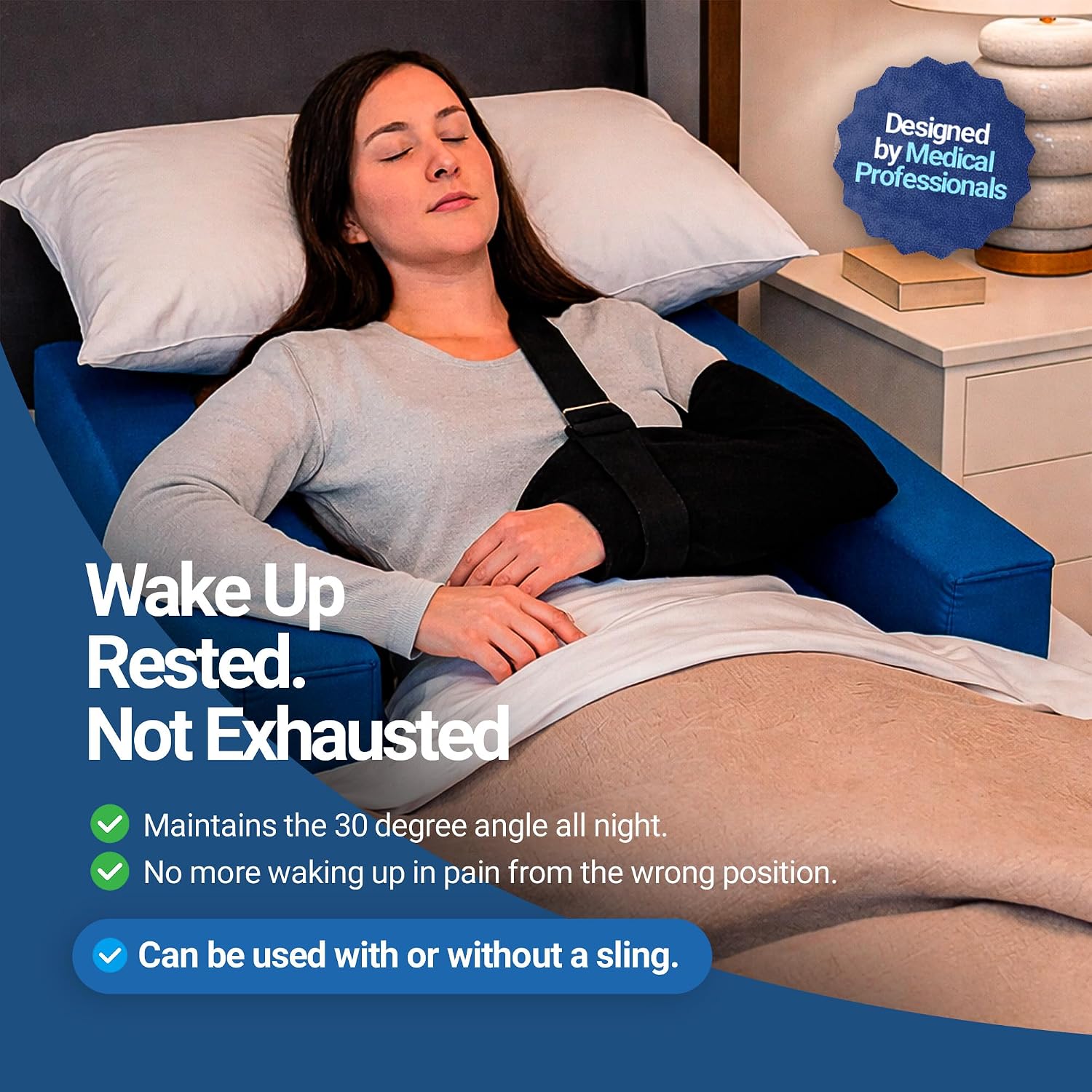
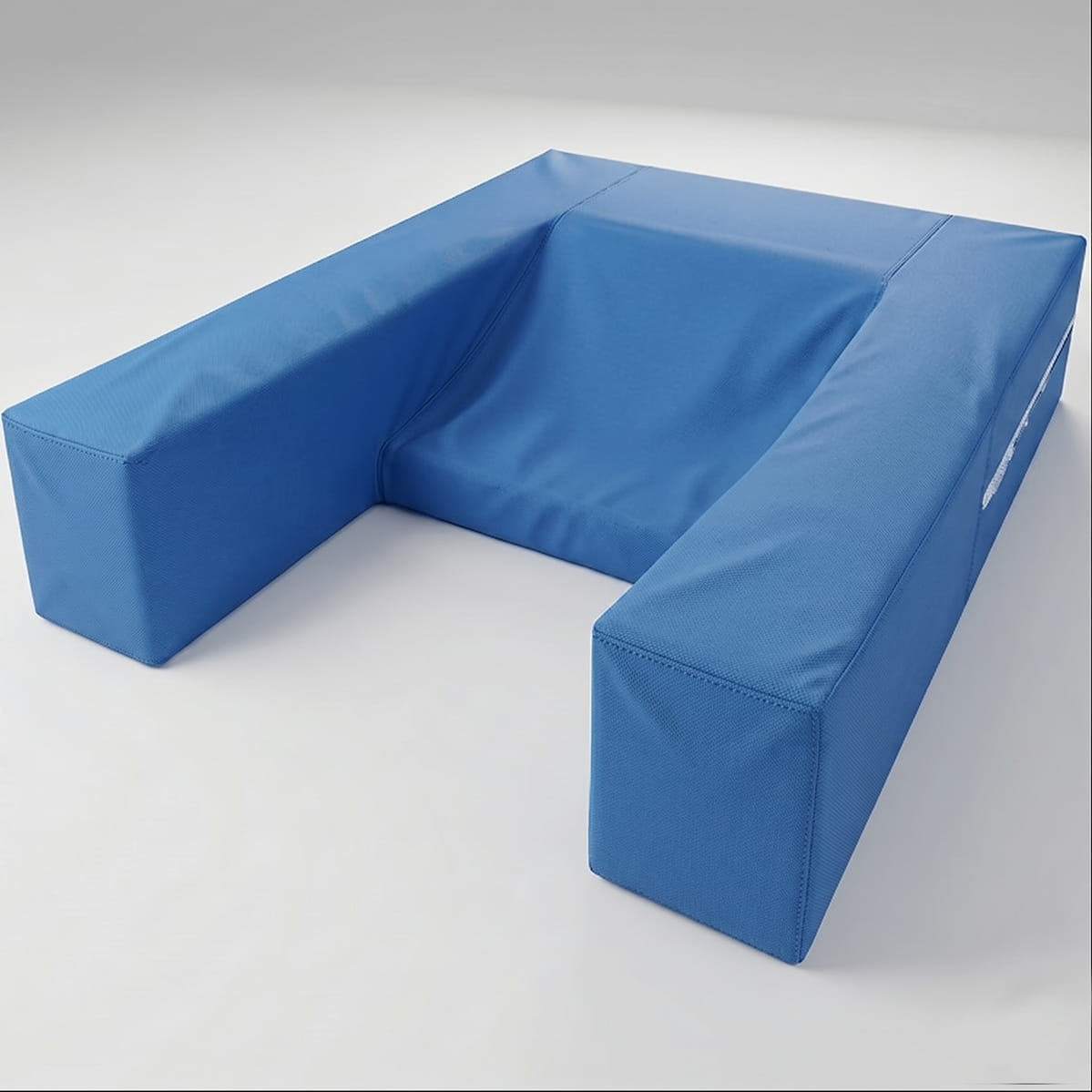
Surgical Recovery Systems originally engineered the Restore You Therapeutic Support to help patients maintain a stable, elevated upper-body position through the night. Although originally created for shoulder surgery recovery, when comfort and consistent positioning both matter for weeks at a time, that same full-torso support structure, rather than a single flat incline, is why some people managing nighttime reflux have considered it an alternative to a standard wedge. Restore You is particularly useful for these patients if they’ve struggled to keep a plain foam wedge in place while side sleeping.
It isn’t marketed as a reflux treatment, and it isn’t a substitute for the medical guidance your doctor has already given you. However, if what’s been frustrating you about your current setup is that it slides, collapses, or simply isn’t built to support side sleeping, it’s worth looking at the Restore You Therapeutic Support to see whether a full-body support design solves a problem a single wedge hasn’t.
Disclaimer: This article is for informational purposes only and is not a substitute for professional medical advice. Talk with your doctor or gastroenterologist about the right treatment plan for your acid reflux or GERD symptoms.
Keep reading
Sleep is part of healing after shoulder surgery. A recliner is the usual advice, but most people can’t sleep in one for weeks. Restore You keeps you in the position your surgeon wants while you sleep in your own bed.
See the Restore You Therapeutic Support: $199, free standard shipping in the U.S.