Expedited Shipping for $35
✦
FREE STANDARD SHIPPING IN THE U.S.
✦
SLEEP BETTER. HEAL FASTER
✦
FREE STANDARD SHIPPING IN THE U.S.
✦

If you’ve been told you have sleep apnea, or you suspect you do based on how exhausted you feel despite a full night in bed, you’ve probably come across the idea of an apnea pillow somewhere in your research.
The pitch is straightforward: elevate your upper body, keep your airway from collapsing, and sleep better.
The honest answer to whether it works is more nuanced than either the marketing or the skeptics suggest.
Obstructive sleep apnea happens when soft tissue in the throat collapses and blocks the airway during sleep.
Gravity also plays a real role in that. Lying flat lets the soft palate and the base of the tongue fall backward more easily, narrowing the airway. Elevating the head and trunk works against that collapse instead of with it.
This was demonstrated using simultaneous airway imaging and sleep monitoring, which showed that elevating the head and trunk by 30 degrees measurably reduced airway collapse and lowered the apnea-hypopnea index compared with lying flat.
The honest answer is: elevation helps, but it helps within limits, and a pillow is not a substitute for diagnosis or treatment.
Sleep apnea affects an estimated 30 million adults in the U.S., and for many of them, the disorder is more complex than positioning alone can address. For people with mild to moderate, position-dependent apnea, meaning their breathing events are worse specifically when lying on their back, positional therapy, including elevation, tends to work best. For moderate-to-severe cases, positioning is a complement to prescribed treatment such as CPAP, not a replacement for it.
Within that context, yes, elevation can genuinely reduce the frequency of breathing interruptions for the right patient. What makes the difference between “helps a little” and “helps meaningfully” usually comes down to how well the elevation is actually maintained through a full night. This is where many standard pillows fall short.
Simply propping your head up on an extra pillow or two isn’t the same thing as therapeutic elevation. A stack of regular pillows elevates the head but leaves the torso flat, which does little for airway mechanics and often causes neck strain.
A sleep apnea pillow should:
If you slide back down within a couple of hours, you’ve lost whatever benefit the position was providing.
Stability matters as much as the angle itself: whatever you’re using needs to keep you from sliding, and needs to support your arms comfortably enough that you’re not unconsciously fighting the position all night.
If you’re combining this with CPAP, elevation can help the mask seal more consistently by changing the angle of the airway and face relative to the machine.
An apnea pillow needs to do two things: hold your upper body at a stable elevation through the night, and keep your shoulders and chest open with real arm support, not just prop your head up.
A basic bed pillow can’t do either. It flattens and slides.
A standard foam wedge gets closer to the right angle, but it still leaves your arms and shoulders unsupported, so most people end up stacking extra pillows around it that shift the moment they fall asleep.
Angle without stability and inclination without support is why some patients who need consistent upper-body elevation, whether for apnea, reflux, or post-surgical positioning, look for something more purpose-built than a basic foam wedge.
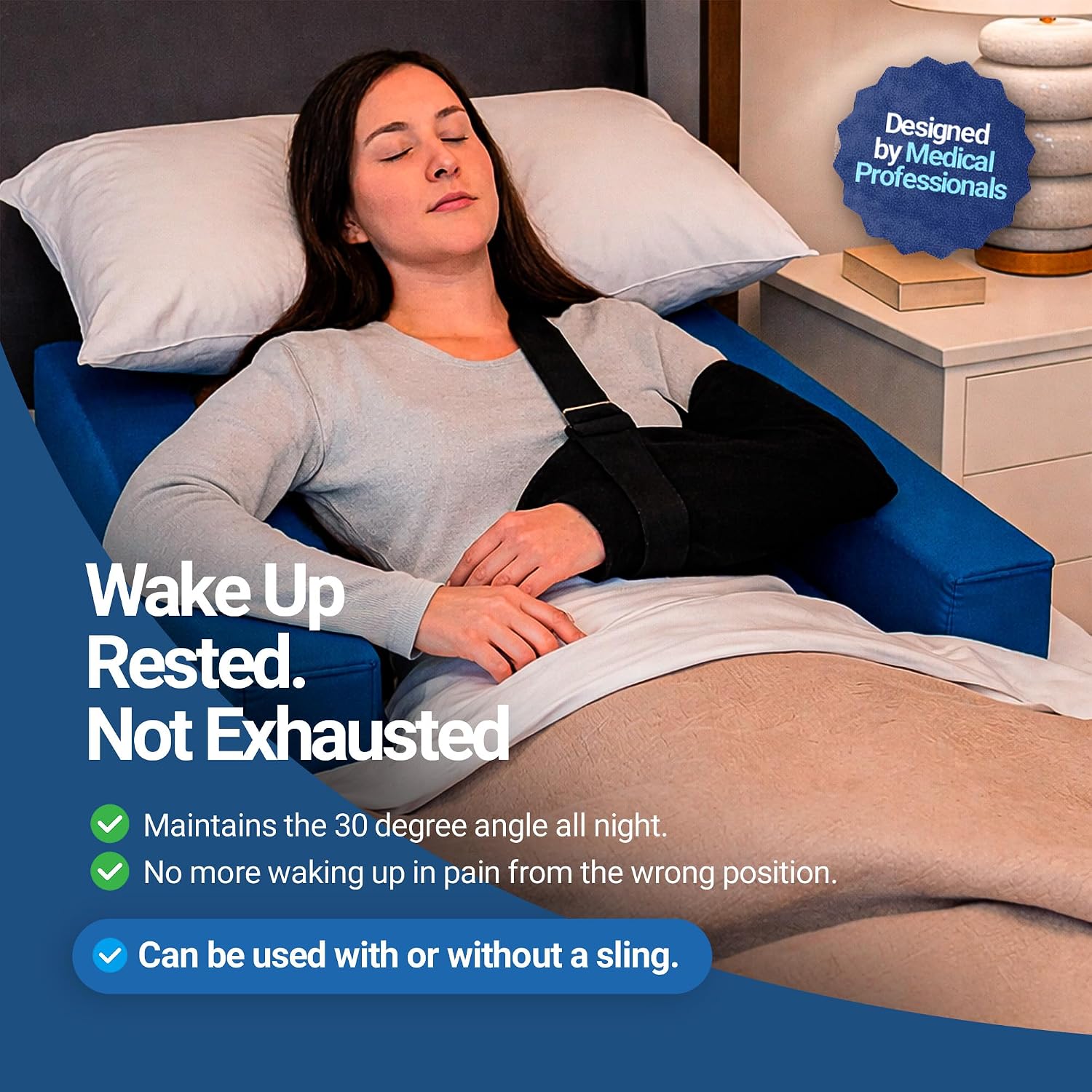
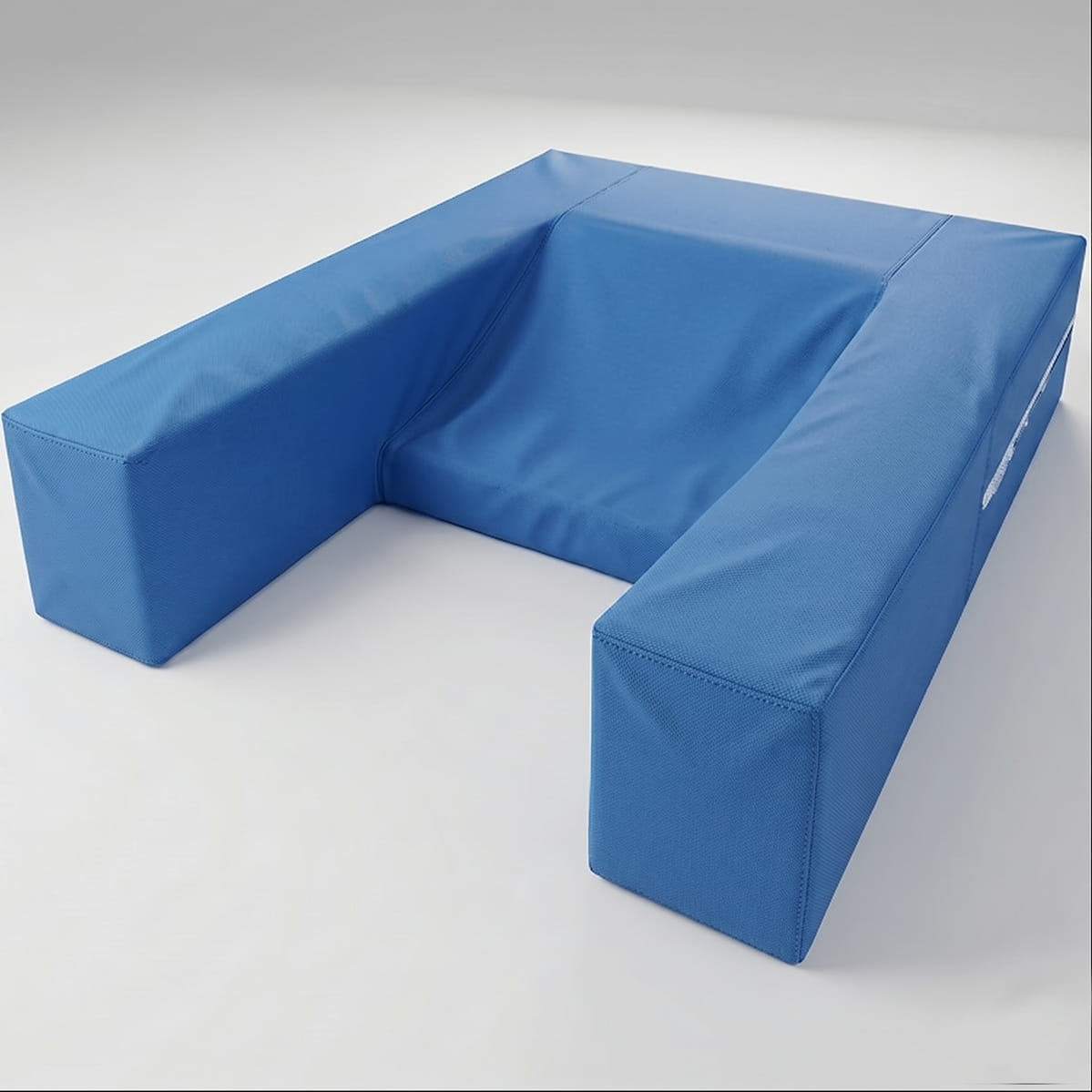
The Restore You Therapeutic Support was originally designed to solve this exact positioning problem for shoulder surgery patients, who need to hold a precise elevated position overnight without it collapsing or shifting. It combines a stable incline with dedicated arm channels built to hold that position through a full night’s sleep.
The same design works for anyone who needs consistent upper-body support for other reasons, including sleep apnea. A sleep apnea pillow isn’t a substitute for CPAP or a medical evaluation, but for patients who already need that kind of elevation, it’s worth knowing that support exists beyond a basic foam wedge.
Not every sign that something’s off with your sleep is obvious, and some are easy to write off as normal tiredness. A sleep evaluation is needed if you:
A pillow, however well designed, cannot diagnose apnea severity or replace a prescribed treatment plan. Positional strategies are genuinely useful for people who already know their apnea is mild and position-dependent; they are not a way to avoid getting evaluated in the first place.
Keep reading
Sleep is part of healing after shoulder surgery. A recliner is the usual advice, but most people can’t sleep in one for weeks. Restore You keeps you in the position your surgeon wants while you sleep in your own bed.
See the Restore You Therapeutic Support: $199, free standard shipping in the U.S.