Expedited Shipping for $35
✦
FREE STANDARD SHIPPING IN THE U.S.
✦
SLEEP BETTER. HEAL FASTER
✦
FREE STANDARD SHIPPING IN THE U.S.
✦
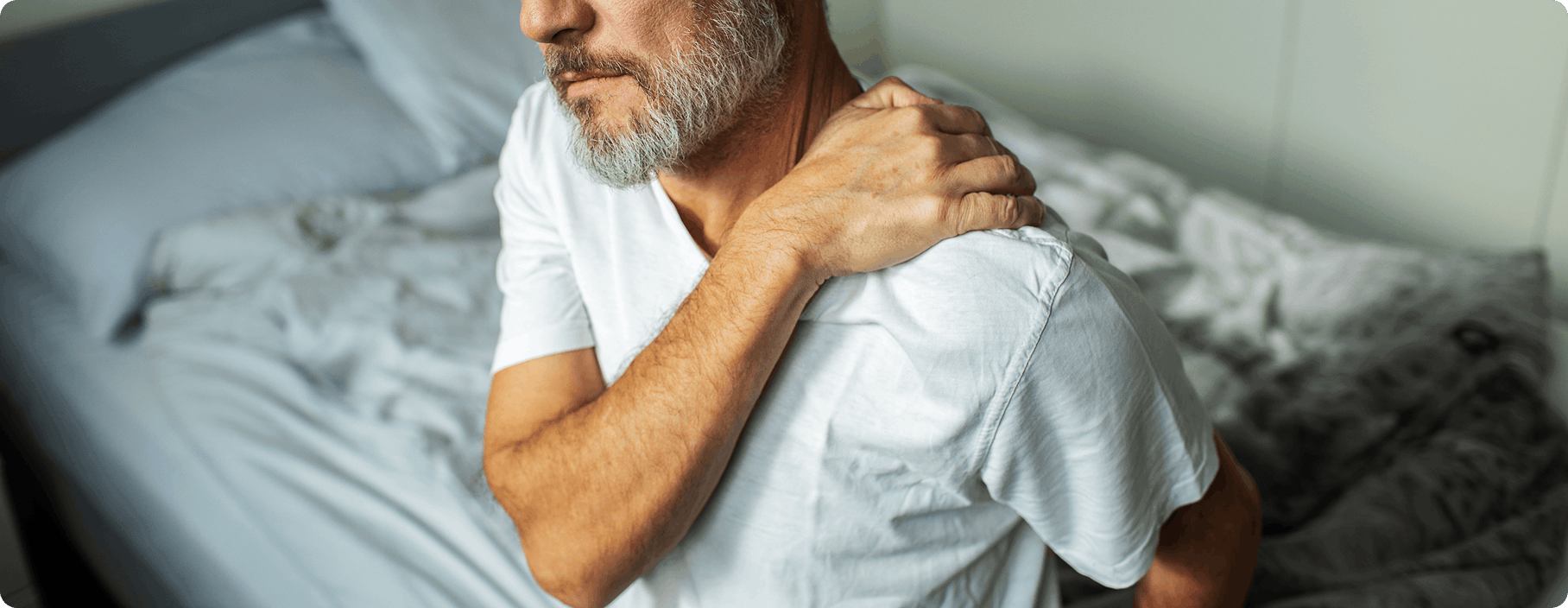
If you’ve researched rotator cuff surgery recovery, you’ve read about sling schedules and physical therapy milestones. What most guides skip entirely is the thing that derails nearly every patient: sleep.
Your body repairs torn tendon tissue, manages inflammation, and rebuilds strength almost exclusively during deep sleep cycles. When pain and poor positioning rob you of that sleep night after night, your recovery measurably slows down.
This guide covers rotator cuff surgery recovery week by week, but through the lens that actually matters: what happens to your sleep at each stage, when pain peaks, when positioning becomes the real challenge, and when most patients finally get their first full night of rest.
During deep sleep, your body releases growth hormones that drive tendon regeneration and tissue repair. Sleep deprivation does the opposite, it intensifies pain perception, increases inflammation, and reduces the quality of your physical therapy sessions. Pain disrupts sleep; poor sleep makes pain worse. This feedback loop is why so many rotator cuff patients say the nights are harder than the days.
The other factor is positional. Your healing tendon needs to be held at approximately 45 degrees from your body, slightly elevated and forward, to minimize tension on the repair. Orthopedic surgeons call this the Maximally Loose Packed Position (MLPP). Lying flat eliminates this angle and the recliner most surgeons tend to recommend can’t maintain this geometry for more than an hour or two before the consistency shift. The result: night after night of two to three hours of broken sleep, with no clear answer for how to fix it.
The first two weeks are the most physically intense of recovery. The nerve block from surgery wears off often in the middle of your first night home, and inflammation peaks around days two through five. Most patients end up in a recliner out of necessity. But a standard recliner provides upright positioning without true MLPP support. Sleep during this phase typically averages two to four hours per night in fragmented bursts.
Timing pain medication 30 to 45 minutes before bed and icing your shoulder for 20 minutes beforehand can meaningfully reduce nighttime spikes. But the positioning problem remains unsolved for most patients during this phase.
Just as acute pain starts to ease, the challenge shifts. Your tendon is in a critical phase of early collagen formation, mechanically vulnerable and requiring consistent MLPP positioning throughout the night. Rolling onto your surgical shoulder, even briefly, can stress the repair.
This is when pillow stacking begins, and where it typically fails. Patients build elaborate arrangements that work for twenty minutes, then shift during deep sleep, leaving them flat and in pain at 3 a.m.
Your sling comes off during the day. Active range-of-motion exercises begin. You start to feel like yourself again, and sleep begins to improve. Your surgeon may clear you to lie on your non-surgical side.
This is when most patients report their first genuinely restorative night. Patients who achieve consistent six-to-eight-hour sleep by this time describe it as a turning point in their overall recovery, with measurable gains in physical therapy range-of-motion benchmarks following shortly after.
The clinic data resulted from weeks of recovery confirms that getting quality sleep it’s one of the primary drivers of healing. The patients who recover fastest aren’t just the ones who work hardest in physical therapy; they’re the ones who protect their sleep just as deliberately.
The default post-operative instruction “sleep in a recliner”, is well-intentioned but incomplete. Surgeons know upright positioning reduces shoulder pressure, but standard recliners can’t maintain therapeutic positioning for six to eight hours, add neck and hip discomfort that fragments sleep further, and clinical data shows patients averaging only two to three hours per night. That sleep deprivation drives higher opioid use, greater anxiety, slower tissue repair, and worse physical therapy outcomes.
The Restore You Therapeutic Support was developed with orthopedic surgeons to help patients sleep comfortably after shoulder surgery. Its anatomical design maintains proper shoulder positioning throughout the night, helping patients avoid the discomfort of sleeping in a recliner during recovery.
Unlike stacked pillows that shift or a recliner that can’t hold proper angles, Restore You supports your entire torso, cradles both arms in dual channels, and maintains cervical spine alignment throughout the night. No straps, no assembly required.
Clinical data shows patients averaging six to eight hours of continuous sleep versus two to three in a recliner, with a reported 50% reduction in pain medication use and a 96% patient success rate. One patient reported an 80% improvement in physical therapy range-of-motion within five days of switching, with sleep as the only variable that changed. Restore You is FSA/HSA eligible under most health savings and flexible spending account plans.
Ice before bed: Apply ice for fifteen to twenty minutes about thirty minutes before lying down to reduce overnight inflammation.
Stay ahead of pain medication: Take prescribed medication 45 minutes before sleep, don’t wait until pain wakes you.
Set up your sleep space before surgery: Arranging positioning tools while exhausted and post-operative is genuinely hard. Do it the day before.
Tell your surgeon about sleep problems: Many patients suffer in silence for weeks. Your medical team can adjust pain management or recommend tools that change the outcome.
Rotator cuff surgery recovery takes four to six months for most daily activities, with full healing up to twelve months. Pain peaks in weeks one and two. Positioning becomes the dominant challenge from weeks three through twelve. Most patients get their first full night somewhere between weeks six and ten, and those who get it earlier, through proper MLPP support, consistently recover faster.
Give your sleep the same attention you give your physical therapy, and your shoulder will heal from it.
Sleep Better, Heal Faster.
Medical Disclaimer: This article is for educational purposes only and does not constitute medical advice, diagnosis, or treatment. Rotator cuff surgery recovery timelines vary significantly based on tear size, surgical technique, patient age, overall health, and rehabilitation adherence. Always follow the specific guidelines provided by your orthopedic surgeon and physical therapist. Contact your healthcare provider immediately if you experience any concerning symptoms during recovery.
How long does rotator cuff surgery recovery take?
Most patients return to daily activities within four to six months and achieve significant strength recovery by twelve months. The timeline depends on the size and complexity of the tear, surgical technique, and how consistently the rehabilitation program is followed.
What is the best way to sleep with a torn rotator cuff before and after surgery?
Before surgery, most patients find sleeping at a thirty to forty-five degree incline with the arm supported reduces pain compared to sleeping flat. After surgery, maintaining the Maximally Loose Packed Position — slight forward flexion and internal rotation — minimizes tension on the repair. Specialized positioning devices designed for post-surgical recovery are significantly more effective at maintaining this position through the night than standard pillows.
When do most patients get their first full night of sleep after rotator cuff surgery?
This varies considerably based on positioning support. Patients with adequate positional support often experience their first full six to eight hour nights somewhere between weeks six and ten. Patients relying on recliners or standard pillows often report fragmented sleep extending well into month three.
Can poor sleep really slow down my rotator cuff surgery recovery?
Yes, and the mechanism is well established. Deep sleep drives growth hormone release, which stimulates the collagen production necessary for tendon healing. Sleep deprivation elevates inflammatory cytokines, amplifies pain perception, and compromises immune function. Patients averaging two to three hours per night heal measurably more slowly than those achieving six to eight hours of continuous sleep.
When can I stop wearing my sling after rotator cuff surgery?
Sling protocols vary by surgeon and tear complexity, but most patients wear their sling for four to six weeks. Your surgeon will determine when you are ready to begin weaning, based on healing progress and physical therapy milestones. Do not discontinue the sling ahead of schedule even if you feel capable — the tendon repair remains vulnerable long before it feels that way.
Is it normal to feel depressed during rotator cuff recovery?
Yes. Loss of independence, chronic pain, and sleep deprivation combine to create conditions that commonly trigger anxiety and low mood after shoulder surgery. If feelings of sadness or hopelessness persist beyond two weeks or include thoughts of self-harm, contact your healthcare provider. Post-surgical depression is a recognized medical condition and responds well to appropriate treatment.
Quality sleep is part of the healing process after shoulder surgery.
While recliners have traditionally been the go-to solution, specialized recovery systems now offer patients another option: maintaining surgeon-recommended positioning while sleeping comfortably in their own bed.
If you’re researching the best alternative to a recliner after surgery, the Restore You Therapeutic Support was specifically designed to solve this challenge.
Explore the Restore You Therapeutic Support and discover how thousands of patients are recovering with greater comfort, better sleep, and more confidence.
Sleep Better, Heal Faster.