Expedited Shipping for $35
✦
FREE STANDARD SHIPPING IN THE U.S.
✦
SLEEP BETTER. HEAL FASTER
✦
FREE STANDARD SHIPPING IN THE U.S.
✦
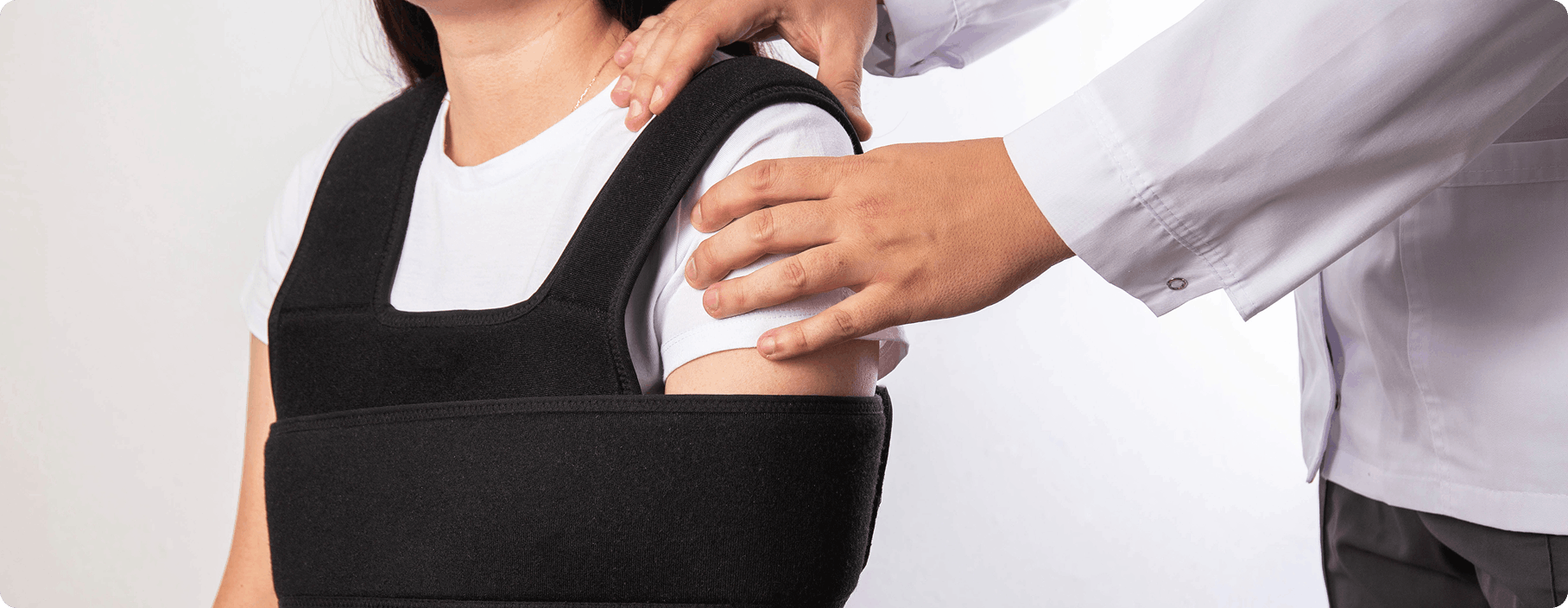
Reverse shoulder replacement patients face a recovery challenge that standard shoulder surgery guides don’t address, because the procedure itself is fundamentally different.
In a conventional shoulder replacement, the ball-and-socket joint stays in its natural configuration. In a reverse shoulder replacement, the anatomy is deliberately flipped: the ball component is anchored to the shoulder blade, and the socket is fixed to the upper arm bone. This design recruits the deltoid muscle to drive shoulder movement, bypassing a damaged or absent rotator cuff entirely.
That anatomical difference alters the rules for sleep positioning. The muscles now stabilizing your joint aren’t the same ones a rotator cuff repair patient relies on. The stress points are different. The restrictions are different. And sleeping in the wrong position doesn’t just cause discomfort; it loads a joint that is still adapting to a completely new mechanical configuration.
Generic shoulder surgery sleep advice wasn’t written for this population. This guide was.
Most patients expect pain and limited mobility. Very few are prepared for how completely surgery disrupts their sleep architecture.
After reverse shoulder replacement, you cannot lie flat without your arm rotating into a position that stresses the joint. Your surgical side is off-limits for weeks. Sleeping on your non-surgical side requires your operated arm to be precisely supported. The margin for error at 3 a.m., when you’re in deep sleep and not consciously controlling your body, is essentially zero.
The predictable result: most patients end up in a recliner. And in a recliner, the average shoulder surgery patient gets approximately two hours of uninterrupted sleep per night.
That number matters clinically. Your body repairs damaged tissue during deep sleep cycles, which require 90 to 120 minutes of uninterrupted rest to complete. If you’re waking every two hours, those cycles aren’t finishing. Sleep deprivation intensifies pain perception, increases reliance on pain medication, and contributes to the anxiety and low mood that affect up to 37% of surgical patients. The sleep problem is a recovery problem.
When your surgeon says to keep your arm elevated, they aren’t describing a rough angle. They’re describing a clinically specific position known as the Maximally Loose Packed Position, or MLPP.
MLPP places your shoulder at approximately 30-45 degrees of elevation, with your arm slightly away from your body. This position reduces intra-articular pressure at the surgical site, encourages fluid drainage to limit swelling, and keeps tension off the healing structures. It is the angle at which your new joint is under the least stress.
The challenge is maintaining that position for six to eight consecutive hours while unconscious. A recliner approximates elevation but doesn’t hold your arm in MLPP; your arm still needs independent support at the correct height and abduction angle. Stacked pillows provide that support only until you shift, adjust, or drift into the deeper sleep stage, where you stop controlling your movements.
Most patients discover this problem around night three.
Your surgeon and physical therapist will give you procedure-specific guidance, but these are the positions most commonly recommended during early recovery.
Elevated back sleeping is the standard starting point. Rather than lying flat, you sleep at a 30-45 degree incline with your upper body supported. This reduces swelling, decreases pressure on the surgical site, and minimizes the risk of your arm falling into a stressful position overnight. The difficulty is holding that angle consistently while your arm stays independently supported, two requirements that standard pillows address separately and poorly.
Non-surgical side sleeping becomes possible for many patients around weeks four to six, once initial healing is established. When you transition, your surgical arm needs firm support in front of and beneath it to prevent forward rolling. The support has to maintain that position throughout the night, not just when you first lie down.
What doesn’t work well is the recliner, despite being the default recommendation for 60 years. Recliners provide elevation, but they keep your shoulder in an upright seated posture that produces worse joint mechanics than a supported supine position. They also cause neck and lower back strain that compounds your discomfort, and they remove you from your own bed, your normal sleep environment, and often your partner. That isolation has a measurable effect on recovery quality.
The recliner became standard not because it works well, but because it was the least bad option available. Until recently, it was the only option.
A wedge pillow addresses your torso angle. It does nothing specific for your arm, nothing to prevent lateral rolling, and nothing to maintain cervical alignment when your head and torso are on the same inclined plane.
In practice, the wedge-plus-pillows method means arranging three to five separate objects every night, a meaningful challenge when you have one arm in a sling and are managing post-operative pain. And because those objects have no structural connection to each other, they drift independently throughout the night. Your torso angle changes. Your arm support shifts. You wake up to readjust, and the deep sleep cycle that was 80 minutes from completing resets to zero.
“Better than nothing” and “optimized for healing” are not the same thing. The difference becomes clear around nights four through seven, when sleep deprivation begins compounding pain, mood, and recovery speed simultaneously.
Surgical Recovery Systems developed the Restore You Therapeutic Support specifically to solve this problem, not approximate a solution, but solve it.
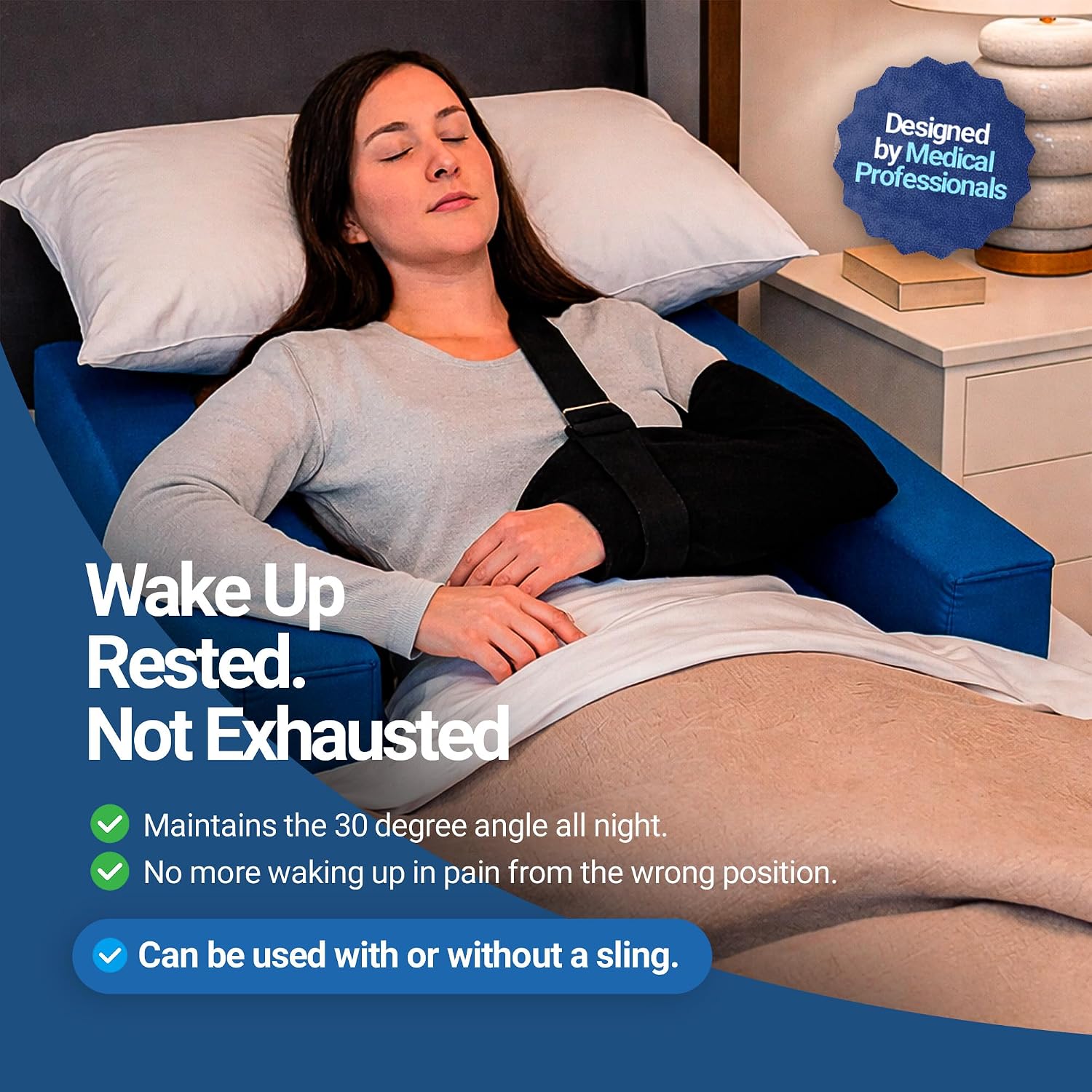
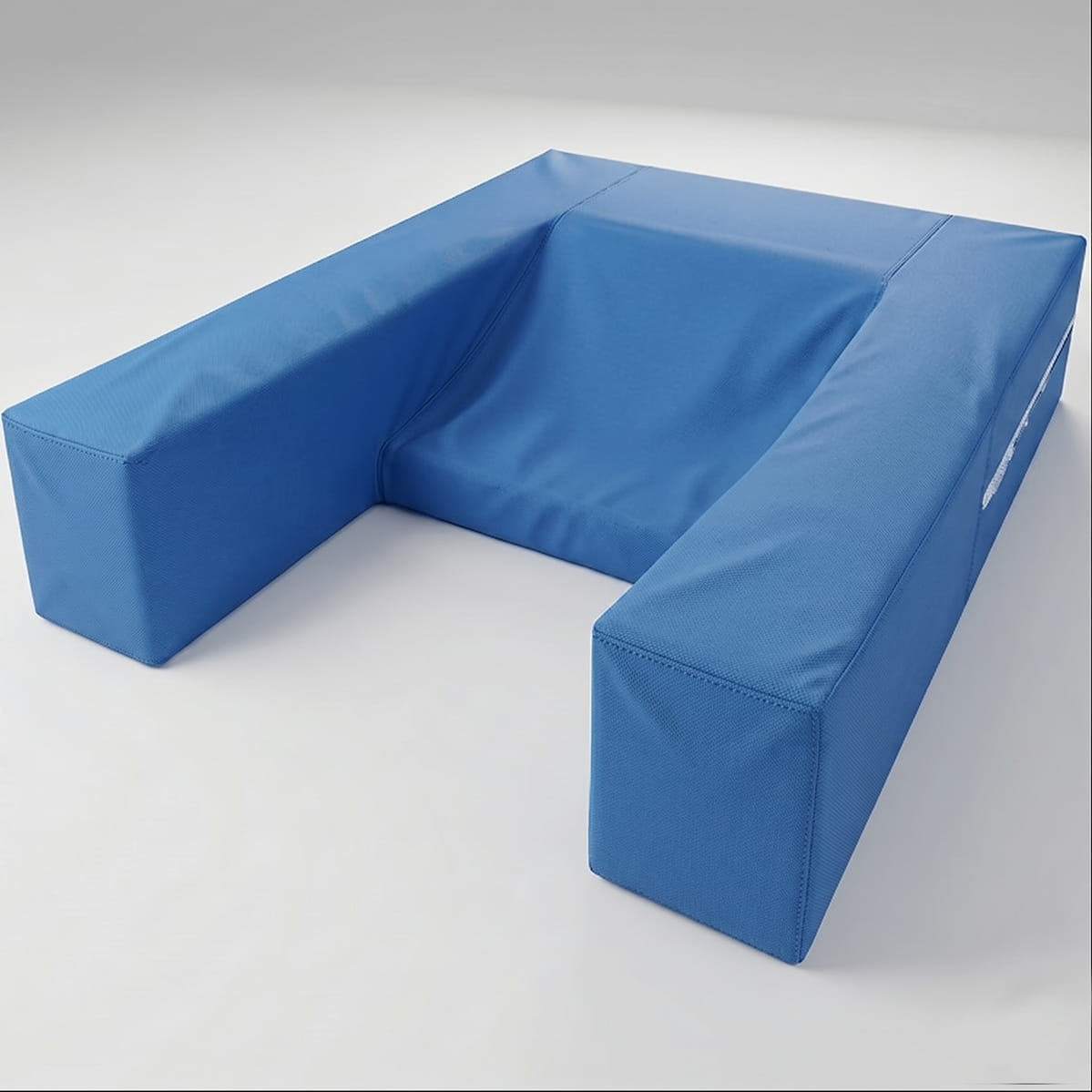
The system maintains MLPP automatically through dual arm channels that cradle both arms and hold the operated shoulder at the correct elevation and abduction angle. You don’t adjust it. You don’t prop anything. You lie down, and the geometry of the device holds the position. Lateral stabilization built into the design prevents rolling onto the surgical side, not through willpower or lucky pillow placement, but structurally, giving you a soft, snuggled feeling throughout the night.
Unlike a wedge, which you sleep on like a rigid board, the Restore You is designed to work with your existing pillow, maintaining cervical alignment as part of the overall support geometry. Neck and upper back pain are among the most common secondary complaints from shoulder surgery patients using recliners or improvised wedge setups. Integrated spinal alignment reduces this significantly.
The clinical outcome: patients using Restore You average six to eight hours of uninterrupted sleep per night. That is the difference between completing full restorative sleep cycles and fragmenting them every two hours. It also corresponds to a meaningful reduction in pain medication use and a significantly higher rate of reported recovery satisfaction.
The Restore You works with all standard bed sizes from twin to king, requires no assembly, and is FSA- and HSA-eligible. If your insurance or workers’ comp plan asks for a prescription, your surgeon can sign our Restore You prescription form.
Keep reading
Sleep is part of healing after shoulder surgery. A recliner is the usual advice, but most people can’t sleep in one for weeks. Restore You keeps you in the position your surgeon wants while you sleep in your own bed.
See the Restore You Therapeutic Support: $199, free standard shipping in the U.S.