Frequently Asked Surgery Recovery Questions
Sleep Better | Your Questions Answered
Pre-Surgery Preparation With Restore You
Buy Before Surgery for Best Results
We recommend ordering your Restore You before your shoulder surgery. Here’s why it matters.
When you get home from surgery, you’ll need immediate comfort. Having your Restore You ready means no waiting period during those critical first days of healing.
You’ll also have time to:
- Practice positioning while you’re still mobile
- Set up your bedroom for recovery
- Read the instructions without post-surgery fatigue
- Get familiar with the support before you need it
The Best Timing
Order 1-2 weeks before your scheduled surgery. This gives you enough time for delivery and preparation without rushing.
What If I Buy After Surgery?
You can absolutely purchase after your procedure. But here’s the reality: most patients struggle more with initial setup when they’re already dealing with pain and limited mobility.
The numbers tell the story. 96% of patients sleep better from night one when their Restore You is waiting at home after surgery.
Will This Work for My Surgery?
The Restore You supports the healing position recommended by orthopedic surgeons for most shoulder procedures, including:
- Rotator cuff repair
- Shoulder replacement surgery
- Reverse shoulder replacement
- Arthroscopic procedures
Always check with your surgeon about positioning requirements specific to your procedure.
Ready to Prepare?
Don’t wait until after surgery. Order your Restore You today and start your recovery with proper sleep support from night one.
Start Before Surgery Day
Set up your bedroom before your procedure. You’ll thank yourself later when you’re tired, medicated, and just want to rest.
Bed Position and Access
Move your bed for easy access. You need to get in and out from your non-surgical side without twisting or reaching.
- Pull the bed away from walls if needed
- Create clear space on your healthy side
- Lower your bed if you have an adjustable frame (less strain getting up)
What You’ll Need Within Arm’s Reach
Set up a bedside table on your non-surgical side with:
- Medications and water bottle
- Phone and charger
- Tissues
- TV remote
- Small flashlight
- Ice packs in a cooler or insulated bag
Pro tip: Test reaching everything with one hand before surgery. If you can’t grab it easily now, you won’t be able to after.
Lighting and Temperature
Make everything one-handed.
- Use bedside lamps you can operate with one hand
- Install touch-control lights if possible
- Keep a small flashlight handy for middle-of-the-night needs
Set your room cooler than usual. Sleeping elevated can make you warmer. Most patients sleep best around 65-68°F.
Consider blackout curtains or an eye mask. Quality sleep speeds healing.
Safety First
Clear the path. Remove anything you could trip over between your bed and bathroom:
- Rugs or loose cords
- Shoes or clutter
- Pet beds or toys
Keep your bedroom door open, or make sure you can open it with your good arm.
Bathroom Considerations
Is your bathroom far from your bedroom? Consider:
- Moving to a room closer to the bathroom temporarily
- Keeping a bedside commode nearby for nighttime (discuss with your surgeon)
- Installing nightlights along the path
Practice Run With Your Restore You
Set up your Restore You before surgery day. Practice getting positioned while you’re still mobile and pain-free.
This test run helps you:
- Find your most comfortable position
- Adjust your setup before it matters
- Feel confident about your first night home
Get Professional Input
Talk to your surgical team about your bedroom setup. They may have specific recommendations based on:
- Your type of surgery
- Your home layout
- Any mobility concerns
Every surgery is different. Your care team knows what works best for your situation.
Have the Conversation Early
Bring it up at your pre-op appointment. This is when your surgeon reviews your recovery plan, making it the perfect time to discuss sleep positioning.
Most orthopedic surgeons appreciate when patients plan ahead for better recovery outcomes.
What to Tell Your Surgeon
Keep it simple and factual:
“I’ve purchased the Restore You Therapeutic Support for my recovery. It’s an FDA-registered device designed to maintain the optimal healing position while I sleep. Can you confirm this will work well with my specific procedure?”
Key Points to Share
The Restore You:
- Elevates your torso at the recommended angle
- Supports both arms to keep your shoulder in the maximally loose-packed position
- Lets you sleep in your own bed instead of a recliner
- Provides 6-8 hours of continuous sleep (vs. 2-3 hours in most recliners)
The results: 96% of patients report better sleep quality, which helps reduce pain and speed healing.
Technical Details (If Your Surgeon Asks)
The device is made with medical-grade, dual-density polyurethane foam. The patented design was engineered specifically for post-surgical shoulder recovery.
It works for most shoulder procedures:
- Rotator cuff repair
- Shoulder replacement
- Reverse shoulder replacement
- Arthroscopic surgery
Questions to Ask Your Surgeon
Get procedure-specific guidance:
- “Are there any positioning modifications I should make for my surgery type?”
- “How many degrees of elevation do you recommend during recovery?”
- “Are there any restrictions on arm positioning I should know about?”
- “When can I transition to sleeping flat?”
Your surgeon knows the unique aspects of your procedure. Their input ensures the Restore You complements your recovery plan perfectly.
What Surgeons Typically Say
Most surgeons support therapeutic positioning devices that help patients:
- Maintain proper healing position
- Get better sleep
- Stay comfortable in their own bed
But always follow your surgeon’s specific recommendations. If they have concerns or modifications, listen carefully.
Already Had Your Surgery?
No problem. You can still discuss the Restore You with your surgeon at your follow-up appointments. They can confirm it’s appropriate for your current recovery stage.
Bottom Line
Your surgeon wants you to heal well. Showing you’re prepared and asking informed questions demonstrates you’re serious about recovery. Most surgeons will appreciate your proactive approach.
Absolutely, and We Recommend It
Practicing with your Restore You before surgery is one of the smartest things you can do. You’ll learn the positioning while you’re still mobile and pain-free.
Why Practice Makes Sense
Get comfortable with the setup now. When you’re dealing with post-surgery pain and limited mobility, you won’t want to figure out positioning for the first time.
Here’s what practice helps with:
- Getting in and out smoothly
- Finding your most comfortable position
- Adjusting the support arms correctly
- Testing your surgery recovery pillow arrangement
- Understanding the elevation angle
Adjust to Elevated Sleep Gradually
Never slept at an incline before? You’re not alone.
Your body needs time to adapt. Sleeping elevated feels different than your normal flat position. A few nights of practice help you adjust before recovery begins.
Some people love it immediately. Others need a few nights to find their groove. Better to figure this out now than on night one after surgery.
Troubleshoot Before It Matters
Practice reveals what works for you:
- Does your bedroom setup accommodate the dimensions?
- Do you need extra pillows for your head or legs?
- Is the firmness right for your preference?
- Can you reach your bedside table easily?
Fix these small details now. You’ll thank yourself later.
Reduce Pre-Surgery Anxiety
Worried about sleeping after surgery? You’re not alone. It’s one of the biggest concerns patients have.
Knowing you have a proven solution helps. When you’ve already practiced and know the Restore You works for you, that’s one less thing to stress about before your procedure.
Many patients tell us this preparation gave them real peace of mind.
What to Expect During Practice
First night: Feels different. Give yourself time to adjust.
By night 2-3: Most people start finding their comfortable position.
By night 4-5: Feels natural. You’re ready for recovery.
Don’t expect perfection on night one. This is practice.
A Few Important Notes
The Restore You is designed for post-surgical therapeutic positioning. That’s when maintaining proper alignment becomes critical for healing.
Practice use is great for preparation, but the device really shines during recovery when your body needs that specific positioning support.
Talk to Your Surgical Team
Mention your practice plan at your pre-op appointment. Your surgeon may have specific recommendations about:
- Positioning techniques for your procedure type
- Other preparatory activities to try
- When to start practicing
Your care team can help you prepare in ways that complement your specific surgery.
Ready to Start Practicing?
Order your Restore You 1-2 weeks before surgery. This gives you time for:
- Delivery and setup
- Several practice nights
- Making any adjustments
- Feeling confident before surgery day
Designed for Shoulders, Helpful for Others
The Restore You was created specifically for shoulder surgery recovery. But many patients successfully use it for other procedures that need elevated upper body positioning.
The key question: Does your doctor want you sleeping elevated with your torso raised? If yes, the Restore You might work for you.
Procedures That Often Work Well
Breast Surgery
Many breast surgery patients love the Restore You:
- Mastectomy
- Breast reconstruction
- Breast reduction
- Breast augmentation
Why it helps: The arm supports keep pressure off your chest while maintaining the elevated position surgeons recommend. This reduces swelling and supports healing.
Heart and Chest Procedures
Similar positioning needs to shoulder surgery:
- Cardiac procedures
- Lung surgery
- Chest wall repairs
Patients recovering from these surgeries often can’t lie flat during early recovery. The Restore You provides stable support for elevated sleeping all night.
Upper Abdominal Surgery
Some abdominal procedures benefit from elevation:
- Gallbladder surgery
- Upper gastric procedures
- Other upper abdomen operations
Elevated sleeping can reduce pressure on surgical sites and make breathing more comfortable.
Arm and Elbow Surgery
Upper extremity procedures that need arm elevation or support:
The arm supports help maintain proper positioning when your arm needs to stay elevated during sleep.
What Doesn’t Work Well
The Restore You is NOT suitable for:
- Lower back surgery
- Hip procedures
- Leg surgery
- Any procedure requiring flat positioning
These surgeries need different positioning strategies. The elevated angle may actually work against your recovery.
Check With Your Surgeon First
This is critical: Always ask your surgical team before using the Restore You for non-shoulder procedures.
Questions to ask:
- “Do you recommend sleeping elevated after my surgery?”
- “Would arm support help or hurt my recovery?”
- “What angle of elevation do you recommend?”
- “How long should I maintain elevated positioning?”
Your surgeon knows your specific procedure. They can tell you if the Restore You’s design matches your positioning needs.
Making the Right Decision
The Restore You works when:
- Your surgeon recommends elevated sleeping
- You need arm support during recovery
- Upper body positioning is critical for healing
- You want to avoid sleeping in a recliner
It doesn’t work best when:
- Your procedure requires flat positioning
- Lower body positioning is the priority
- Your surgeon recommends different support
- The angle doesn’t match your medical needs
Already Own One for Another Surgery?
Tell your surgeon you have a Restore You and describe its features:
- Elevates torso at approximately 30-45 degrees
- Provides arm supports on both sides
- Made with medical-grade foam
- Designed for back/semi-reclined positioning
They can quickly determine if it’s right for your procedure.
Bottom Line
While designed for shoulders, the Restore You helps any procedure requiring elevated upper body positioning with arm support. But your surgeon’s guidance is essential. What works for one procedure might not work for another.
When in doubt, ask. Your surgical team wants you to have the right support for optimal healing.

Order Before Surgery
Be Ready From Day One
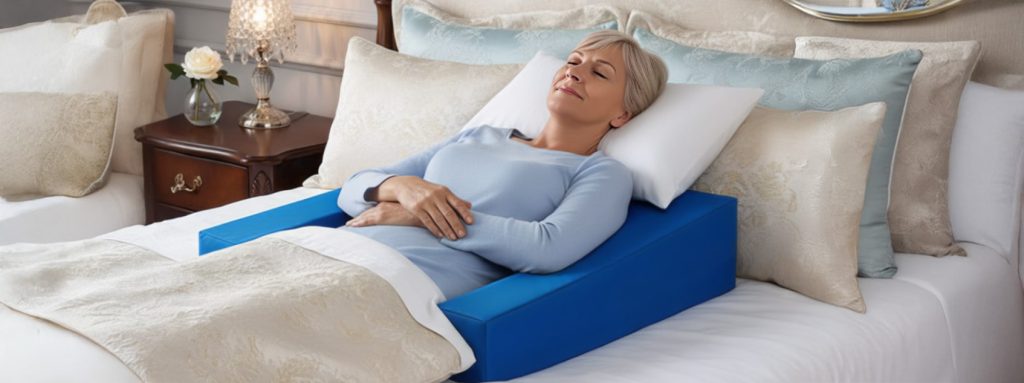
Sleep 6-8 Hours
Your Own Bed. All Night Comfort.

Patented
Designed by Experts. Trusted by Surgeons.
Sleep Better with Restore You Recovery Therapeutic Support

Shoulder Pressure Relief

Surgeon Recommended

Patented Medical Design

FSA/HSA Approved
Restore You Set-up & Usage
Great News for Side Sleepers
Yes—and you might actually love it more than back sleepers do. The Restore You was designed with your natural preferences in mind.
You can maintain your comfortable side-lying position while keeping your recovering shoulder properly supported and elevated. Best of both worlds.
Why It Works So Well for Side Sleepers
You get the positioning you prefer without the risk of rolling onto your surgical shoulder.
Here’s what makes it work:
- The support arms naturally accommodate side-lying
- You stay elevated at the therapeutic angle
- Both arms rest in the optimal healing position
- You can’t accidentally roll onto your recovering shoulder during sleep
Unlike flat side sleeping, the Restore You keeps pressure off your surgical site while you rest in your favorite position.
The Elevation Actually Helps
Side sleepers already know elevation benefits:
- Better breathing
- Less back pressure
- More comfortable overall
Add these recovery benefits:
- Reduced swelling in your shoulder
- Proper arm positioning all night
- Protection from rolling onto the surgical site
The elevated angle reduces swelling more effectively than sleeping flat on your side.
Adapting Is Easy
Worried about getting used to it? Don’t be.
Side sleepers typically adapt faster than back sleepers. The position feels more natural to how you already sleep. The support arms give you that body contact and security you’re used to.
Most side sleepers sleep through the night from their first use, 6-8 hours of continuous sleep versus 2-3 hours in a recliner.
Make It Feel Just Right
Want it even cozier?
If you have a smaller frame or like closer body contact, place a rolled towel between yourself and the support arm. This creates a snugger fit while keeping all the therapeutic benefits.
You get the cozy feeling you want with the positioning your surgeon needs you to maintain.
One Important Reminder
You can’t sleep on your affected side during recovery – even if that’s normally your favorite position.
Your surgeon will tell you this too. The Restore You gives you a comfortable alternative that:
- Respects your side-sleeping tendencies
- Protects your healing shoulder
- Feels natural to your body
- Lets you actually sleep through the night
What Side Sleepers Tell Us
“I was nervous about not being able to sleep on my side. But the Restore You lets me lie at an angle that feels natural. I slept 7 hours my first night home from surgery.”
“As a lifelong side sleeper, I thought I’d hate sleeping elevated. Instead, it’s become my favorite way to sleep—even after recovery.”
Bottom Line
Side sleepers often get the best results with the Restore You. Your natural preference for this position works perfectly with the therapeutic angle your shoulder needs to heal.
You’ll sleep better, heal faster, and feel comfortable from night one.
Shoulder Surgery (Rotator Cuff, Shoulder Replacement)
Position yourself so the support arm aligns with your armpit.
This keeps your recovering shoulder elevated and supported at the optimal healing angle. Your arm should rest comfortably in the support without reaching or straining.
Position yourself slightly higher in the support.
This reduces chest pressure while maintaining the therapeutic elevation. Your chest area should feel supported, not compressed.
Heart or Chest Surgery (Cardiac Procedures, Lung Surgery)
Position the support arms slightly lower.
This accommodates chest restrictions or surgical dressings. You want elevation without pressure on your sternum or chest incisions.
Arm or Elbow Surgery
Standard positioning works for most upper extremity procedures.
The support arms naturally elevate and support your recovering arm. Adjust pillow placement under the affected arm as needed.
Fine-Tuning Your Comfort
Use pillows strategically:
- Behind your head for more elevation
- Under your knees to reduce back strain
- Under your recovering arm for extra support
- Between your legs if you’re side-lying
Add padding where needed:
- Rolled towels between your body and support arms for snugger fit
- Small pillows to fill gaps
- Extra cushioning around sensitive areas
Multiple Procedures or Bilateral Surgery
Recovering from surgery on both sides?
Center yourself in the support to distribute pressure evenly across both support arms. This prevents favoring one side over the other.
Your Surgeon’s Guidance Comes First
The Restore You provides the foundation. Your surgical team provides the specifics.
Always follow your surgeon’s positioning guidelines:
- Required elevation angle
- Weight-bearing restrictions
- Incision protection needs
- Duration of positioning requirements
Different procedures have unique healing requirements. What works for rotator cuff repair might differ slightly from shoulder replacement positioning.
When to Adjust
Change your setup if:
- You feel pressure on surgical sites
- Numbness or tingling develops
- You can’t maintain position comfortably
- Your surgeon recommends modifications at follow-up
Need Help?
Uncertain about proper positioning?
Contact your surgeon’s office. They can provide procedure-specific guidance to ensure the Restore You supports your recovery plan effectively.
Most adjustments are simple, but getting it right matters for optimal healing.
Common Adjustments by Need
Too much pressure on one side? Add a rolled towel on the opposite support arm to balance contact.
Need more elevation? Add an extra pillow behind your head and upper back.
Support arms feel too wide? Use rolled towels to narrow the space and create a snugger fit.
Surgical dressing causing issues? Position padding around (not on top of) dressings to protect them.
The Key to Success
Start with standard positioning recommended for your surgery type. Then make small adjustments based on comfort and your surgeon’s specific instructions.
Most patients find their ideal position within the first 2-3 nights. Don’t be afraid to experiment with pillow placement until it feels right.
Absolutely, We Encourage It
Yes, use as many pillows as you need to get comfortable. The Restore You works perfectly with your existing pillows.
Most patients use additional pillows to fine-tune their positioning. Strategic pillow placement can significantly improve your sleep quality during recovery.
Where to Add Pillows
Under Your Head
Almost everyone needs a head pillow.
The Restore You elevates your upper body, but most people still want a pillow under their head. Use whatever pillow works for you – just make sure it doesn’t push you too far forward.
Under Your Knees
Great for reducing lower back pressure.
A pillow under your knees takes strain off your lower back. This is especially helpful if you’re not used to sleeping elevated.
Many patients say this single addition makes a huge difference in overall comfort.
Between You and the Support Arm
Perfect for smaller frames.
Need a snugger fit? Place a small pillow or rolled towel between your body and the support arm. This creates that cozy feeling without changing the therapeutic angle.
Behind Your Back
Adds extra support and prevents sliding.
A small cushion or rolled towel behind your back can:
- Provide additional lumbar support
- Keep you from shifting backward during sleep
- Make the position feel more secure
Under Your Recovering Arm
Extra elevation when needed.
If your surgeon wants additional arm elevation, place a small pillow under your recovering arm. This maintains the proper angle without straining.
Between Your Legs (For Side Sleepers)
Improves alignment.
Side sleepers often feel more comfortable with a pillow between their knees. This keeps your hips aligned and reduces any twisting.
What Patients Tell Us
Common pillow combinations:
- Head pillow + knee pillow (most popular)
- Head pillow + rolled towel at side (for smaller patients)
- Head pillow + knee pillow + back support (for maximum comfort)
- Head pillow + pillow under recovering arm (when extra elevation needed)
Experiment to find what works for you.
Important: Don’t Overdo It
Too many pillows can cause problems.
While pillows help, avoid over-stuffing your sleep area. Here’s why:
Problems with too many pillows:
- You might slide down out of position
- Shifts you away from the therapeutic angle
- Creates gaps in support
- Makes it harder to maintain positioning all night
The goal: Enhance comfort without compromising the therapeutic positioning that makes the Restore You effective.
The Key Positioning Points to Maintain
No matter how many pillows you add, keep these constant:
- Elevated upper body angle
- Proper shoulder support
- Arms resting in the support arms
- Stable positioning that won’t shift during sleep
Pillows should enhance these features, not replace them.
Check With Your Surgeon
Significant modifications? Get approval first.
If you’re planning major changes to your setup—like dramatically different elevation or arm positioning—run it by your surgical team.
They can provide guidance on pillow placement that complements your specific recovery requirements. Every surgery has unique positioning needs.
Pro Tips
Start simple. Begin with just a head pillow. Add others one at a time based on what feels uncomfortable. This helps you identify exactly what each pillow does.
Use what you have. You don’t need special pillows. Regular bed pillows, throw pillows, and rolled towels all work great.
Adjust as you heal. Your pillow needs might change as recovery progresses. What feels best week one might be different by week four.
Bottom Line
The Restore You provides the foundation—the therapeutic elevation and shoulder support you need to heal. Additional pillows let you customize the experience to match your body and preferences.
Most patients use 2-4 additional pillows total. Find your perfect combination and sleep better through recovery.
It Works for Almost Everyone
The Restore You accommodates a wide range of body types. Dimensions are 36″ long x 28″ wide x 6″ thick—generous enough for most patients.
The design focuses on proper shoulder positioning, not exact body measurements. That’s why it works well regardless of your size.
For Smaller Frames
Feeling a bit lost in there? No problem.
The Restore You might initially feel spacious if you’re petite. This is actually easy to fix.
Quick adjustments for smaller patients:
- Place rolled towels between your body and the support arms
- Add small pillows to narrow the space
- Create a snugger fit that feels more secure
The key: Maintain that armpit-to-support-arm alignment. This keeps your recovering shoulder in the optimal healing position, even if you need to fill some extra space.
Many smaller patients say the adjustments take less than a minute and make all the difference in comfort.
For Larger Frames
You’ll have plenty of room.
Larger patients typically find the dimensions accommodate their frame comfortably. The 28″ width provides stable positioning without feeling cramped.
Why it works for larger builds:
- Generous width and length
- Firm perimeter support maintains stability
- Medical-grade foam holds its shape under weight
- Consistent therapeutic positioning all night
The foam construction maintains support properties regardless of body weight. You won’t sink in or lose the therapeutic angle.
Finding Your Fit
The right position matters more than perfect fit.
Whether you’re petite or plus-size, what matters most is maintaining:
- Proper shoulder elevation
- Correct arm positioning
- Stable support throughout the night
- The therapeutic angle your surgeon recommends
Body size affects comfort adjustments, not whether the Restore You will work for your recovery.
Real Patient Experiences
Smaller patients (under 5’4″ or 120 lbs): “I’m 5’2″ and was worried it would be too big. The rolled towel trick worked perfectly—feels like it was made for me.”
Average patients (5’4″ to 6’0″, 120-220 lbs): “Fit perfectly right out of the box. No adjustments needed.”
Larger patients (over 6’0″ or 220 lbs): “I’m 6’3″ and 250 lbs. Plenty of room, stayed comfortable all night. The foam is seriously supportive.”
Measurements to Consider
Product dimensions:
- Length: 36 inches
- Width: 28 inches
- Height: 6 inches (elevation angle)
Works best for patients:
- Height: 4’10” to 6’6″
- Weight: 90 lbs to 300+ lbs
- Shoulder width: Up to 24 inches
Outside these ranges? Contact us before ordering. We’ll help you determine if adjustments can make it work.
When to Reach Out
Still concerned about fit?
Contact our customer support team before your surgery. We can provide personalized guidance based on:
- Your specific body measurements
- Your surgery type
- Your comfort preferences
- Any mobility limitations
Better to ask before ordering than worry after.
What Your Surgeon Needs to Know
Mention your body size during pre-op discussions.
Your surgical team should know if you have any concerns about positioning. They can:
- Recommend specific positioning modifications
- Suggest additional support options
- Confirm the Restore You will work for your frame
- Address any special considerations
Common Adjustments by Body Type
Petite (under 5’4″):
- Add rolled towels on sides
- May need smaller head pillow
- Position slightly higher in support
Average (5’4″ to 6’0″):
- Usually works as-is
- Standard pillow placement
- Minimal adjustments needed
Tall (over 6’0″):
- May need extra pillow under feet/legs
- Longer head pillow sometimes helps
- Full 36″ length typically sufficient
Plus-size:
- Firm foam provides excellent support
- Width accommodates comfortably
- May prefer extra back support pillow
Bottom Line
Don’t let body size stop you from better recovery sleep.
The Restore You was designed with real patients in mind—all shapes and sizes. Whether you need a few tweaks for a snugger fit or it works perfectly as-is, proper positioning is achievable for almost everyone.
Focus on healing, not measurements.
Absolutely—Entertainment Included
Yes, you can watch TV, read, use your phone, or relax while positioned in the Restore You. The elevated design naturally puts you at a comfortable angle for activities.
This is one of the big advantages over recliners—you can stay in your recovery position without constantly shifting around.
Why This Matters During Recovery
Fewer position changes = less strain on your healing shoulder.
You can binge your favorite shows, catch up on reading, or scroll through your phone without compromising your recovery positioning. Stay comfortable and entertained in one spot.
Make It Even More Comfortable
Add pillows for sitting activities:
- Extra pillow behind your back for more upright support
- Additional pillow behind your head for better viewing angle
- Knee pillow to reduce any lower back strain
Just remember: Keep that support arm aligned under your armpit. This maintains proper shoulder positioning even when you’re sitting more upright.
The Positioning Rule
Don’t slide down too low.
It’s tempting to get really cozy while watching TV. But if you slide down, you lose that critical armpit-to-support-arm contact.
Watch for these signs you’ve slipped:
- Shoulders start rounding forward
- Support arm is at your ribs instead of armpit
- Your recovering shoulder feels unsupported
- You’re slouching
If you notice any of these, readjust. Scoot back up and reposition those support arms.
Activities That Work Great
Perfect for:
- Watching TV or movies
- Reading books or tablets
- Scrolling on your phone
- Video calls with family
- Listening to music or podcasts
- Light laptop work (if surgeon approves)
- Eating meals or snacks
The Restore You becomes your recovery headquarters. Everything you need, right where you’re supposed to be positioned.
Sleeping vs. Sitting
Here’s the difference:
During the day (watching TV):
- Add extra pillows for comfort
- Sit more upright if you want
- Stay positioned as long as you like
At night (sleeping):
- Remove extra sitting pillows
- Return to recommended sleeping position
- Ensure support arms are properly aligned
- Focus on optimal healing alignment
The therapeutic benefits work best when you’re in proper sleeping position. But daytime activities with a few extra pillows? Totally fine.
What Your Body Needs
Long recovery periods can get boring. Being able to stay entertained while maintaining therapeutic positioning makes a huge difference in:
- Your mental health during recovery
- Compliance with positioning recommendations
- Overall comfort throughout the day
- Reducing the urge to get up and move around
You’re more likely to stay in the right position if you’re not bored out of your mind.
Check Your Surgeon’s Guidelines
Some procedures have specific restrictions.
Always follow your surgical team’s activity guidelines. Some surgeries limit:
- How upright you can sit
- Screen time or reading
- Duration of sitting versus lying down
- Upper body movement during certain phases
When in doubt, ask at your follow-up appointment.
Pro Tips for Extended Sitting
Planning a movie marathon?
- Start with proper positioning
- Set a timer to check your alignment every hour
- Have water and snacks within reach
- Keep the remote accessible from your non-surgical side
- Adjust pillows before you get uncomfortable
Listen to your body. If something starts hurting, readjust or take a break.
Common Mistakes to Avoid
Don’t:
- Lean forward to see the screen better (move the TV instead)
- Let yourself slowly slide down over time
- Add so many pillows you lose shoulder support
- Stay in one position for hours without checking alignment
- Twist your torso to reach things
Do:
- Check your positioning regularly
- Keep everything you need close by
- Return to optimal sleeping position at night
- Take breaks to stand and walk if approved
- Ask for help reaching things
Bottom Line
The Restore You isn’t just for sleeping. It’s your recovery home base for sleeping, resting, and yes—watching all the TV you want.
Just maintain proper shoulder positioning, listen to your surgeon’s guidelines, and enjoy the comfort of recovering in your own bed.
Your favorite shows have never been so therapeutic.
Restore You Benefits & Comparison
The Science Behind Better Recovery
Your shoulder heals fastest in one specific position. Orthopedic surgeons call it the “maximally loose-packed position” or MLPP.
The Restore You was designed to keep you in this exact position all night long. That’s the difference between good recovery and great recovery.
What Is MLPP (In Plain English)?
MLPP = your shoulder’s happy place.
It’s the angle where your shoulder joint is most relaxed and decompressed. Think of it like this:
- No tension on healing tissues
- No weight bearing on the surgical site
- Maximum space in the joint for healing
- Optimal circulation around the area
When your shoulder stays in this position, your body can focus entirely on healing – not fighting against poor positioning.
How the Restore You Maintains This Position
Three key design elements work together:
1. Upper Body Elevation
The angle lifts your torso to the precise degree surgeons recommend. This prevents your shoulder from rotating inward or slouching forward – both of which stress healing tissues.
2. Targeted Arm Support
The support arms cradle both arms at the exact angle that keeps your shoulder joint relaxed. Your recovering shoulder literally can’t fall into bad positions during sleep.
3. Consistent Positioning All Night
Unlike recliners where you shift and slide, the Restore You holds you stable. You maintain optimal position for the entire 6-8 hours you sleep.
Why This Position Matters So Much
Better positioning = faster healing. Here’s why:
Reduced Swelling
Elevation improves lymphatic drainage. Fluid drains away from your surgical site instead of pooling there. Less swelling means less pain and faster recovery.
Decreased Pain
Your shoulder stays in the position that minimizes stress on surgical sites and surrounding tissues. No weight, no tension, no unnecessary pressure.
Protected Healing Tissues
You can’t accidentally roll onto your surgical shoulder. You can’t rotate it into compromised positions. The design physically prevents the movements that could slow healing.
Better Circulation
Proper positioning promotes blood flow to healing tissues. Your body can deliver oxygen and nutrients exactly where they’re needed.
The Time Advantage
Here’s where it gets really important:
In a recliner:
- 2-3 hours of sleep (if you’re lucky)
- Constantly shifting trying to get comfortable
- Sliding into bad positions during the night
- Waking up with more pain
With the Restore You:
- 6-8 hours of continuous sleep
- Stable positioning all night
- Consistent therapeutic alignment
- Wake up with less pain
Do the math: That’s 4-6 more hours per night in optimal healing position. Over weeks of recovery, that difference adds up dramatically.
What Flat Sleeping Gets Wrong
Lying flat after shoulder surgery causes problems:
- Shoulder rotates inward (bad for healing)
- Full body weight can compress surgical site
- No elevation = more swelling
- Difficult to maintain proper arm position
Your surgeon tells you not to sleep flat for good reasons. The Restore You gives you the alternative that actually works.
What Recliners Get Wrong
Recliners seem like the obvious choice, but:
- Awkward angle (not therapeutic elevation)
- No arm support (arms hang or dangle)
- Slide down during sleep (lose positioning)
- Uncomfortable for more than 2-3 hours
- Not designed for post-surgical needs
Recliners are furniture, not medical devices. The difference matters.
Clinical Benefits Patients Experience
96% of patients report better sleep quality from night one. But it’s more than just comfort:
Week 1-2 benefits:
- Reduced post-operative swelling
- Lower pain medication needs
- Better sleep despite discomfort
- Less anxiety about positioning
Week 3-6 benefits:
- Accelerated healing timeline
- Improved range of motion at follow-ups
- Consistent pain reduction
- Better compliance with positioning
Long-term benefits:
- Faster return to activities
- Better surgical outcomes
- Reduced complication risk
- Higher patient satisfaction
Your Surgeon Will Appreciate This
Orthopedic surgeons recommend elevation and proper positioning for every shoulder surgery. The Restore You makes their recommendations actually achievable.
When you maintain optimal healing position for 6-8 hours every night, you’re giving your surgeon’s work the best possible environment to succeed.
Perfect surgery + perfect positioning = perfect recovery.
The Design Details That Matter
Why the patented design works:
- Medical-grade foam maintains shape and support
- Precise angles based on orthopedic research
- Dimensions accommodate proper arm positioning
- Stability prevents shifting during sleep
- Simple design = consistent results
No straps, no complexity. Just therapeutic positioning that works.
Bottom Line
The Restore You does one thing exceptionally well: It keeps your shoulder in the exact position orthopedic surgeons say it needs to be for optimal healing.
Everything else—the comfort, the better sleep, the reduced pain—flows from this fundamental positioning advantage.
When healing is the goal, position is everything.
Sleep Isn’t a Luxury During Recovery—It’s Medicine
The science is clear: quality sleep directly impacts how fast you heal.
Medical research published in major journals proves that patients who sleep well after surgery recover significantly faster. This isn’t just about feeling rested—it’s about actual biological healing.
What Happens When You Sleep
Your body does its most important healing work while you’re asleep.
Growth Hormone Release
During deep sleep, your body releases growth hormone and other healing factors essential for tissue repair. Think of it as your body’s construction crew working the night shift.
Immune System Support
Quality sleep strengthens immune function. This protects against infection and promotes optimal recovery. Poor sleep weakens these defenses exactly when you need them most.
Cellular Repair
Your body repairs damaged tissues, builds new cells, and clears away inflammation while you sleep. This work happens primarily during the deep sleep stages you can’t reach when you’re uncomfortable.
The Cost of Poor Sleep After Surgery
Sleep deprivation doesn’t just make you tired—it actively slows your healing.
Research shows patients with poor post-surgical sleep experience:
- Increased inflammation throughout the body
- Delayed wound healing (measurably slower)
- Higher pain levels that persist longer
- Extended recovery times
- Greater risk of complications
One study found that patients sleeping poorly after surgery took up to 30% longer to reach the same recovery milestones as well-rested patients.
That’s weeks of extra recovery time, just from inadequate sleep.
The Position Factor
Here’s what makes this even more important: it’s not just about sleep duration.
Research specifically on post-surgical sleep patterns found something critical:
- Patients in uncomfortable positions heal slower (even if they sleep 6-8 hours)
- Frequent sleep interruptions from poor positioning delay recovery
- Proper therapeutic positioning improves sleep quality AND healing outcomes
You need both: adequate sleep duration AND proper positioning.
What the Shoulder Surgery Research Shows
Studies focusing on shoulder surgery recovery are particularly revealing.
Patients sleeping in recommended elevated position with proper arm support showed:
- Reduced post-operative swelling
- Improved circulation to healing tissues
- Less pain medication required
- Faster return to normal function
- Better range of motion at follow-up appointments
The combination of elevation, arm support, and stable positioning creates the ideal healing environment.
The Numbers Don’t Lie
Clinical studies measured these differences:
Patients with quality sleep in proper position:
- Wound healing: 25-30% faster
- Infection rates: Significantly lower
- Pain levels: 40-50% reduction in medication needs
- Return to activities: Weeks sooner on average
- Complication rates: Measurably decreased
Patients with poor sleep or bad positioning:
- Extended inflammation periods
- Slower tissue regeneration
- Higher pain scores throughout recovery
- Longer time to reach recovery milestones
Why Recliners Fail the Research Test
Medical literature emphasizes consistent, therapeutic positioning throughout sleep.
Recliners don’t deliver this because:
- Patients average only 2-3 hours before waking
- Constant shifting disrupts deep sleep stages
- No proper arm support (not therapeutic positioning)
- Uncomfortable = less deep sleep = less healing
The research is clear: interrupted, uncomfortable sleep in non-therapeutic positions significantly impairs recovery progress.
What “Therapeutic Positioning” Actually Means
Medical research defines therapeutic positioning as:
- Specific elevation angle that reduces swelling
- Proper arm support maintaining optimal joint alignment
- Stable position maintained throughout sleep duration
- Consistent positioning night after night
This isn’t about comfort alone. It’s about creating the biomechanical environment research proves accelerates healing.
The Sleep-Pain Connection
Here’s a cycle every post-surgical patient should understand:
Good sleep → Lower pain → Better sleep → Faster healing → Less pain
Poor sleep → Higher pain → Worse sleep → Slower healing → More pain
Research shows this cycle starts immediately. First-night sleep quality predicts recovery trajectory. Patients who sleep well night one tend to continue that pattern and recover faster overall.
What Surgeons Know (That You Should Too)
Medical literature consistently emphasizes one finding:
The combination of adequate sleep duration AND proper therapeutic positioning creates the ideal environment for:
- Tissue regeneration
- Pain reduction
- Complication prevention
- Successful surgical outcomes
Your surgeon can perform a perfect procedure. But if you don’t sleep well in the right position during recovery, you’re not giving that surgical work the environment it needs to succeed.
The Research Validates What Patients Experience
This isn’t theoretical—it’s measurable, repeatable science.
Study after study confirms: patients who maintain therapeutic positioning during quality sleep recover faster, hurt less, and have better outcomes.
The research foundation is why therapeutic positioning devices exist. They help maintain optimal healing positions throughout the critical recovery period.
Bottom Line
Your body heals while you sleep. But only if you’re sleeping well in the right position.
Poor sleep + poor positioning = slower healing. It’s that simple.
Quality sleep + therapeutic positioning = optimal recovery. The research proves it.
Not All Recovery Products Are Created Equal
The Restore You is the only FDA-registered therapeutic support specifically designed for post-surgical shoulder recovery.
That’s not marketing speak. It’s a fundamental difference in what the product is, how it’s made, and what it can do for your recovery.
What Makes It Different
The Restore You is a patented medical device, not a comfort pillow. This means:
- Designed to specific therapeutic standards
- Medical-grade materials and construction
- Quality control for safety and effectiveness
- Built for post-surgical recovery, not general use
Most competitors? They’re pillows. Comfortable pillows, maybe—but still just pillows.
Patented Technology
The design is patented because it does something others don’t: maintains optimal healing position throughout the night.
Key patented features:
- Dual-density medical-grade foam construction
- Specialized arm supports at precise therapeutic angles
- Dimensions engineered for post-surgical positioning
- Design prevents rolling, sliding, or shifting
Generic wedge pillows can’t match this because they weren’t designed for it.
Restore You vs. Generic Wedge Pillows
Generic wedges offer basic elevation. That’s it.
What they’re missing:
- No specialized arm supports (your arms hang or dangle)
- Wrong angles for therapeutic positioning
- Standard foam that compresses over time
- Not designed to prevent sliding
- No medical device certification
- Built for reading in bed, not recovery
What happens: You slide down during the night. Your arms aren’t supported. You wake up uncomfortable and out of position.
The Restore You difference:
- Arm supports cradle both arms properly
- Precise therapeutic angles maintained all night
- Medical-grade foam holds its shape
- Stable design prevents sliding
- Purpose-built for recovery
ou sleep through the night in optimal healing position.
Restore You vs. Recliners
Most surgeons traditionally recommend recliners because there wasn’t a better option.
Now there is.
The recliner reality:
- 2-3 hours of sleep before discomfort wakes you
- Constant position adjustments
- Awkward arm positioning
- Not actually therapeutic elevation
- Can’t sleep in your own bed
- Uncomfortable for extended periods
Research shows: Patients in recliners get fragmented sleep and spend less total time in optimal healing position.
The Restore You advantage:
- 6-8 hours of continuous sleep (96% of users)
- Stable positioning all night
- Proper arm support
- True therapeutic elevation
- Sleep in your own bed
- Comfortable enough for full night’s rest
That’s 4-6 more hours per night in optimal healing position. Over weeks of recovery, the difference is massive.
Restore You vs. Other Wedge-Style Products
Some competitors look similar. Here’s why they’re not:
Design Specificity
Other products: Generic dimensions, standard angles, basic foam Restore You: Precise dimensions, therapeutic angles, dual-density medical-grade foam—all engineered specifically for post-surgical recovery
Arm Support Quality
Other products: Basic arm rests (if any), wrong angles, insufficient support Restore You: Specialized arm supports at exact angles to maintain shoulder in MLPP
Clinical Validation
Other products: No clinical testing, no patient outcome data Restore You: 96% patient success rate, clinical validation, measurable outcomes
Manufacturing Standards
Other products: Often imported, variable quality, general comfort standards Restore You: Made in USA, medical-grade materials, consistent quality control
The Single-Focus Advantage
Here’s something most people don’t think about:
Companies that make dozens of different pillows and cushions don’t specialize in anything. They make products for every use case.
The Restore You company does ONE thing: post-surgical shoulder recovery support.
This matters because:
- Every design decision focuses on recovery
- Continuous improvement based on patient feedback
- Deep expertise in post-surgical positioning
- No compromise for other use cases
- Complete focus on what actually heals
96% patient success rate doesn’t happen by accident. It happens through singular focus on getting one thing exactly right.
What Patients Notice Immediately
When comparing to other products they’ve tried:
“I tried three different wedge pillows before finding Restore You. None of them had arm support that actually worked. I kept sliding down or waking up with numb arms.”
“My surgeon said to sleep in a recliner. I lasted two nights before ordering the Restore You. Slept 7 hours my first night using it.”
“The difference in quality is obvious. This isn’t just a foam wedge—it’s an actual medical device designed for recovery.”
The Investment Difference
Yes, the Restore You costs more than a generic wedge pillow.
Here’s why:
- FDA-registered medical device (not a pillow)
- Patented technology (not copied design)
- Medical-grade materials (not standard foam)
- Made in USA (not imported)
- Clinical validation (not just marketing)
- Singular focus on recovery (not multi-use product)
Most importantly: It actually works for full-night sleep in optimal healing position.
A $40 wedge pillow that doesn’t let you sleep through the night isn’t saving you money. It’s costing you recovery time.
What You Can’t Compare
Some things don’t have equivalents in other products:
✓ FDA registration as therapeutic device
✓ Patented arm support design
✓ Clinical outcome data (96% success rate)
✓ Specific post-surgical positioning
✓ Medical-grade dual-density foam
✓ Made in USA quality standards
✓ Single-focus recovery expertise
These aren’t features competitors can match by lowering prices or adding more foam. They’re fundamental differences in what the product is.
Bottom Line
Generic recovery products are designed for general comfort.
The Restore You is designed for post-surgical healing. It’s the difference between furniture and medical device, between basic elevation and therapeutic positioning, between 2-3 hours of sleep and 6-8 hours.
When recovery is the goal, the difference matters.
The Sleep Duration Difference Changes Everything
Most patients get 2-3 hours of sleep in a recliner before discomfort wakes them up.
With the Restore You? 96% of users sleep 6-8 hours straight.
That’s not a minor improvement. That’s the difference between fragmented, exhausting nights and actual restorative sleep that heals your body.
Why Recliners Fail at Sleep
Recliners weren’t designed for sleeping—they were designed for watching TV.
The problems:
- Pressure points develop quickly
- Awkward angles stress your body
- Constant shifting trying to get comfortable
- Disrupted deep sleep phases (where healing happens)
- Neck and back stiffness by morning
You might doze off, but you’re not getting quality sleep. And quality sleep is what your body needs to heal.
The Positioning Problem
Here’s what happens in a recliner during the night:
You start in a decent position. But within an hour or two, you’ve slid down. Your arms dangle uncomfortably. Your shoulder rotates into bad positions. You wake up in pain and have to readjust.
This cycle repeats all night:
- Sleep briefly
- Slide into bad position
- Wake up uncomfortable
- Readjust
- Try to fall back asleep
- Repeat
The Restore You prevents this entirely.
The patented arm supports and engineered dimensions keep you stable. You can’t slide down. Your shoulder stays in the maximally loose-packed position surgeons recommend. All night. Without constant readjustment.
What Stable Positioning Actually Means
In a recliner: Variable positions throughout the night, often suboptimal or compromised
With the Restore You: Consistent therapeutic positioning for the full 6-8 hours
The difference matters because your body heals best when maintained in proper position. A few hours in good position followed by hours in bad position doesn’t give you the same healing benefit as full-night therapeutic positioning.
The Comfort Factor
Medical-grade foam construction eliminates pressure points.
Unlike recliner cushions that create hot spots and uncomfortable areas, the Restore You’s dual-density foam:
- Supports without excessive pressure
- Maintains comfort for extended periods
- Doesn’t create numbness or stiffness
- Keeps you at the right temperature
- Lets you actually sleep through the night
You’re not constantly waking up to adjust because you’re not getting uncomfortable in the first place.
Sleep in Your Own Bed
This might be the most underrated difference.
With the Restore You, you get to:
- Sleep next to your partner
- Stay in your familiar bedroom
- Maintain normal routines
- Use your own pillows and bedding
- Not be isolated in the living room
- Feel more normal during recovery
Mental and emotional comfort matters. Recovery is hard enough without feeling banished to a recliner in a different room.
Whether recovering from shoulder surgery or just dealing with a “bad” shoulder due to injury or a chronic condition, patients tell us sleeping in their own bed with their partner nearby made a huge difference in their mental state during recovery.
The Partner Perspective
From caregivers and spouses:
“Being able to sleep next to my husband during his recovery was important for both of us. I could help if he needed something, and he didn’t feel alone.”
“My wife was so much happier once she could sleep in our bed again. The recliner was making her miserable.”
“I could finally get decent sleep too, knowing she was comfortable and I didn’t have to worry about her in another room.”
No Neck and Back Problems
Recliner sleeping commonly causes:
- Neck stiffness and pain
- Lower back discomfort
- Hip soreness
- Leg numbness
- New problems while trying to heal your shoulder
Why add new pain to your recovery?
The Restore You positions your entire body properly—not just your shoulder. You wake up without the neck kinks and back stiffness that make recliner recovery so miserable.
The Cost Reality
Medical recliners often cost $500-$2,000 to purchase, or $100+ per month to rent.
You’re spending that money on something that:
- Doesn’t let you sleep through the night
- Creates new comfort problems
- Provides suboptimal positioning
- You’ll need to get rid of after recovery
The Restore You costs less than most medical recliners and provides superior therapeutic positioning that actually lets you sleep.
Plus, you’re in your own bed. No furniture to move in and out of your house.
What Happens Each Night
Let’s compare a typical night:
Recliner Recovery Night:
- 10 PM: Fall asleep in recliner
- 11:30 PM: Wake up uncomfortable, readjust
- 12:30 AM: Wake up again, can’t get comfortable
- 2:00 AM: Wide awake, in pain, frustrated
- 3:30 AM: Finally doze off
- 5:00 AM: Wake up stiff and miserable
- Total quality sleep: 2-3 hours, fragmented
Restore You Recovery Night:
- 10 PM: Fall asleep in own bed
- 6:00 AM: Wake up naturally after full night’s sleep
- Total quality sleep: 7-8 hours, continuous
Night after night, this difference compounds. Better sleep means faster healing, less pain, better mood, and quicker recovery overall.
The Therapeutic Advantage
Recliners provide basic elevation. That’s it.
The Restore You provides:
- Precise therapeutic angle (not just “elevated”)
- Specialized arm support maintaining MLPP
- Stable positioning preventing sliding
- Medical-grade support for extended comfort
- Design specifically engineered for post-surgical recovery
These differences determine whether you spend recovery nights struggling or actually healing.
What Surgeons Often Don’t Tell You
Most surgeons recommend recliners because historically there wasn’t a better option.
That’s changing. More surgeons are learning about therapeutic positioning devices like the Restore You and recommending them over recliners.
Ask your surgeon: “Would a therapeutic support designed specifically for shoulder surgery recovery be better than a recliner?”
Many will say yes—especially once they understand the sleep duration and positioning advantages.
Patient Experiences: Recliner to Restore You
Common stories we hear:
“I tried the recliner for two nights like my surgeon suggested. Couldn’t sleep, couldn’t get comfortable. Ordered the Restore You and slept 7 hours my first night using it.”
“My insurance covered a recliner rental. I used it for one week before giving up and buying the Restore You. Wish I’d just started with this.”
“The recliner was torture. I was getting maybe 2 hours of broken sleep a night. With the Restore You, I’m finally healing because I’m finally sleeping.”
Bottom Line: It’s Not Even Close
Recliners:
- 2-3 hours of fragmented sleep
- Unstable positioning
- Pressure points and discomfort
- Neck and back problems
- Isolated from partner
- Expensive rental or purchase
- Not designed for recovery
Restore You:
- 6-8 hours of continuous sleep
- Stable therapeutic positioning
- Medical-grade comfort
- Full-body proper support
- Sleep in own bed with partner
- One-time purchase
- Specifically designed for post-surgical recovery
For real recovery sleep, there’s simply no comparison.
It’s Not Just a Bigger Wedge
The Restore You looks like a wedge pillow. It’s not.
It’s a patented medical device specifically designed for post-surgical recovery. That distinction matters more than you might think.
The Arm Support System Changes Everything
Regular wedge pillows give you an inclined surface. That’s it.
Your arms? They’re on their own. They hang, dangle, or fall into awkward positions. Your shoulders rotate inward. Your recovering shoulder loses proper alignment.
The Restore You’s patented arm supports:
- Cradle both arms at therapeutic angles
- Maintain your shoulder in MLPP (optimal healing position)
- Prevent inward rotation while you sleep
- Support proper alignment all night
- Eliminate arm circulation issues
This isn’t a small detail. The arm support is the difference between basic elevation and actual therapeutic positioning.
What Happens Without Arm Support
With a regular wedge pillow:
- Your arms slide off the sides
- Shoulders roll forward (bad for healing)
- Arms go numb from poor positioning
- You wake up to readjust constantly
- Proper shoulder alignment is impossible
Many patients try wedge pillows first. They all tell us the same thing: “I kept waking up with my arms in weird positions.”
The Restore You’s arm cradles solve this completely.
The Foam Quality Difference
Regular wedge pillows use basic foam.
Designed for general comfort, not medical recovery. Often too soft, loses shape over time, doesn’t provide consistent support.
The Restore You uses dual-density, medical-grade polyurethane foam.
What this means:
- Precise firmness for therapeutic support
- Maintains shape throughout recovery and beyond
- Engineered for extended comfort (6-8 hours)
- Different density zones for optimal support
- Won’t compress or lose effectiveness
The foam density ratios were calculated to provide exact elevation angle and support firmness needed for shoulder surgery recovery. That’s engineering, not guesswork.
The Dimensions Are Specific, Not Random
Regular wedge pillows come in standard sizes based on what’s easy to manufacture and ship.
The Restore You’s dimensions (36″ x 28″ x 6″) were specifically designed for post-surgical positioning:
- 28″ width accommodates proper arm spacing
- 36″ length supports full torso positioning
- 6″ height creates optimal therapeutic angle
- Proportions prevent sliding or shifting
Every measurement has a purpose related to healing, not just comfort.
FDA Registration Means Medical Standards
Regular wedge pillows are furniture. The Restore You is a registered medical device.
What FDA registration requires:
- Medical-grade materials
- Quality control processes
- Safety standard compliance
- Manufacturing to medical specifications
- Documented therapeutic purpose
Generic wedge pillows don’t meet these standards because they don’t have to. They’re comfort products, not medical devices.
The difference protects you and ensures consistent quality.
The Sliding Problem
Here’s what happens with regular wedge pillows during the night:
You start in a decent position. Gradually, you slide down. By morning, you’re barely elevated. Your positioning is compromised. Your shoulder isn’t where it should be.
The Restore You prevents this.
The patented design creates natural stopping points. The arm supports anchor you. The foam density provides friction. You stay positioned where you need to be—all night.
96% of users maintain proper positioning throughout 6-8 hours of sleep. That’s not luck—it’s design.
Clinical Validation vs. Marketing Claims
Regular wedge pillows:
- No clinical testing
- No patient outcome data
- No success rate measurements
- Marketing based on comfort claims
The Restore You:
- 96% patient success rate (measured)
- Clinical validation with real outcomes
- Documented sleep duration improvement
- Proven positioning effectiveness
The difference? One has data. The other has descriptions.
Single Purpose vs. Multi-Use
Most wedge pillows are marketed for:
- Reading in bed
- Watching TV
- Acid reflux
- Pregnancy support
- Post-surgery elevation
- General comfort
The Restore You was designed for ONE thing: post-surgical shoulder recovery.
Why this matters:
When you design for everything, you optimize for nothing. When you design for one specific medical need, you can engineer exactly what works.
The 96% success rate exists because the Restore You isn’t compromised by trying to serve multiple purposes.
What Patients Notice Immediately
Common feedback when switching from wedge pillows to Restore You:
“I tried three different wedge pillows first. None of them had real arm support. My arms kept falling off or going numb.”
“The quality difference is obvious the moment you touch it. This is a medical device, not a pillow.”
“With wedge pillows, I’d slide down by the middle of the night. The Restore You keeps me exactly where I need to be.”
“My wedge pillow was too soft—I’d sink into it and lose the elevation. The Restore You stays firm and supportive.”
The Real Cost Comparison
Budget wedge pillow: $30-60
- Basic foam
- No arm support
- Slides and shifts
- Not therapeutic positioning
- Poor sleep quality
- Extended recovery time
Premium wedge pillow: $80-150
- Better foam (but not medical-grade)
- Still no proper arm support
- Still slides
- Still not therapeutic
- Marginally better results
Restore You: Similar to premium wedge price
- Medical-grade materials
- Patented arm support system
- Prevents sliding
- Therapeutic positioning
- 6-8 hours quality sleep
- Faster recovery outcomes
The difference: Only one is actually designed to help you heal.
Why Arm Support Is Non-Negotiable
Your surgeon wants your shoulder in a specific position during recovery. That position requires your arm to be supported at a specific angle.
Regular wedge pillows can’t do this. They provide elevation but no arm positioning control.
Without proper arm support:
- Your shoulder rotates into bad positions
- Healing tissues experience unnecessary stress
- You wake up in pain
- Recovery takes longer
- You’re not following surgeon’s positioning requirements
The arm cradles are why the Restore You works where wedge pillows fail.
What “Medical-Grade” Actually Means
It’s not just marketing language.
Medical-grade materials must:
- Meet biocompatibility standards
- Pass safety testing
- Maintain consistent quality
- Come from certified suppliers
- Be suitable for medical use
Regular wedge pillow foam? None of these requirements apply. It’s whatever foam is cheapest or most convenient.
The Engineering Details Matter
Regular wedge pillows:
- Random angle (whatever seems comfortable)
- Uniform foam (one density throughout)
- Standard dimensions (easy to manufacture)
- Basic cover (comfort focused)
Restore You:
- Precise therapeutic angle (based on orthopedic research)
- Dual-density foam (different zones optimized for different support needs)
- Calculated dimensions (engineered for post-surgical positioning)
- Medical-grade cover (durability and cleanability)
These aren’t arbitrary differences. They’re the result of designing for medical recovery instead of general comfort.
Can’t You Just Use More Pillows?
Some patients try building their own system with multiple wedge pillows.
The problems:
- Pillows shift independently
- No stable arm support
- Gaps develop between pillows
- Inconsistent elevation angle
- Sliding and adjustment throughout night
One integrated device works better than trying to cobble together multiple pieces.
Bottom Line: Purpose-Built vs. Repurposed
Regular wedge pillows were designed for reading, TV watching, and general comfort. Some get repurposed for recovery—but they weren’t built for it.
The Restore You was designed from the ground up for post-surgical shoulder recovery. Every feature serves that single purpose.
That’s why 96% of patients achieve better sleep quality with the Restore You versus the variable (and often poor) results with standard wedge pillows.
When healing is the goal, purpose-built design wins every time.
Gravity Becomes Your Healing Partner
When you sleep elevated, gravity works with your body instead of against it.
This simple physical fact has major implications for your recovery. Let’s break down exactly what happens—and why it matters.
How Blood Flow Improves
When you lie flat after surgery:
- Blood pools in your upper body
- Your heart works harder to pump against gravity
- Oxygen and nutrients reach healing tissues more slowly
- Waste products linger at the surgical site
When you sleep elevated:
- Gravity helps blood flow back to your heart
- Your cardiovascular system works more efficiently
- More oxygen reaches healing tissues
- Waste products get cleared away faster
Think of it like this: Your heart is trying to circulate blood throughout your body. When you’re elevated, you’re giving it an assist from gravity instead of making it pump uphill.
The Lymphatic System Connection
Your lymphatic system removes the fluid and inflammation causing your swelling.
But here’s the thing: the lymphatic system doesn’t have a pump like your heart does. It relies on muscle contractions and—critically—proper positioning to move fluid.
When you sleep flat:
- Lymphatic fluid accumulates around your surgical site
- Swelling persists longer
- Inflammation sticks around
- Stiffness increases
- Healing slows down
When you sleep elevated:
- Lymphatic vessels drain more effectively
- Excess fluid moves away from the surgical site
- Swelling reduces faster
- Inflammation clears more quickly
- You heal on schedule
The result: Less puffiness, less pain, better range of motion.
What Swelling Actually Does to Recovery
Swelling isn’t just uncomfortable—it actively slows healing.
Here’s what excess fluid does:
- Creates pressure on healing tissues
- Limits range of motion
- Increases pain levels
- Slows down tissue repair
- Prolongs inflammation
- Extends overall recovery time
Reducing swelling faster means:
- Less pressure and pain
- Better mobility sooner
- Faster tissue healing
- Shorter inflammation period
- Quicker return to normal activities
This is why your surgeon emphasizes elevation. It’s not optional comfort advice—it’s a critical healing strategy.
The Science Behind the Angle
Not all elevation is equal.
Too little elevation (15-20 degrees): Minimal drainage benefit. Not enough to significantly help circulation or lymphatic flow.
Too much elevation (60+ degrees): Uncomfortable for extended periods. You can’t maintain it through the night.
Optimal therapeutic angle (30-45 degrees): Sweet spot for drainage benefits and all-night comfort. This is where the Restore You positions you.
The specific angle matters because it maximizes circulatory benefits while allowing 6-8 hours of continuous sleep.
What Happens During the Night
Your body does most of its healing during deep sleep.
With proper elevation maintained all night:
Hour 1-2:
- Initial drainage begins
- Swelling starts reducing
- Pressure on tissues decreases
Hour 3-5:
- Continuous lymphatic drainage
- Improved blood flow delivering nutrients
- Waste products being cleared
- Deep healing processes active
Hour 6-8:
- Sustained optimal positioning
- Maximum healing benefit
- Inflammation markers decreasing
- Body repairing tissues efficiently
Without maintained elevation (like in a recliner where you slide down): You lose these benefits partway through the night. Your body can’t complete the full healing cycle in optimal conditions.
Clinical Evidence
Research backs this up with actual measurements.
Studies show patients with consistent elevated positioning experience:
- 30-40% reduction in post-operative swelling
- Faster inflammation resolution (days sooner)
- Measurably better tissue oxygenation
- Reduced fluid accumulation at surgical sites
- Lower pain scores throughout recovery
This isn’t theory. Doctors can measure the difference in swelling, inflammation markers, and healing speed.
Why This Matters More Than You Think
Better circulation and reduced swelling create a cascade of benefits:
Immediate benefits:
- Less pain (swelling creates pressure)
- Better mobility (less stiffness)
- Reduced medication needs
- More comfortable recovery
Medium-term benefits:
- Faster tissue healing
- Earlier return to physical therapy
- Better range of motion
- Fewer complications
Long-term benefits:
- Shorter overall recovery time
- Better surgical outcomes
- Faster return to activities
- Improved final range of motion
It all starts with proper positioning during sleep.
The Heart Workload Factor
Here’s something most people don’t think about:
Your heart works harder after surgery. It’s trying to heal your body, maintain normal function, AND fight inflammation—all while you’re in pain and possibly on medication.
Flat sleeping: Your heart pumps blood up from your surgical site against gravity. Extra work.
Elevated sleeping: Gravity assists blood return. Your heart’s workload decreases.
Reducing cardiac workload means:
- Your heart can work more efficiently
- More energy available for healing
- Better overall cardiovascular function during recovery
- Less fatigue throughout the day
What “Optimal Drainage” Looks Like
You can actually see the difference:
Morning after flat sleeping:
- Noticeable swelling in shoulder/arm
- Puffy tissue around surgical site
- Tightness and stiffness
- Visible fluid retention
Morning after elevated sleeping:
- Significantly less swelling
- Flatter, less puffy tissue
- Better range of motion
- Visible reduction in fluid
Most patients notice this difference within 2-3 days of proper elevation.
The Inflammation Timeline
Proper drainage accelerates your inflammation timeline:
Without optimal elevation:
- Days 1-7: High inflammation
- Days 8-14: Moderate inflammation
- Days 15-21: Still some inflammation lingering
- Weeks 4+: Finally resolving
With consistent elevation:
- Days 1-5: High inflammation
- Days 6-10: Rapidly decreasing
- Days 11-14: Minimal inflammation
- Weeks 3+: Resolved
That’s potentially a week of faster healing just from maintaining proper positioning during sleep.
Why the Restore You’s Angle Works
The specific elevation angle of the Restore You wasn’t random.
It was engineered to:
- Maximize gravitational drainage assistance
- Optimize lymphatic flow
- Maintain cardiovascular efficiency
- Allow comfortable all-night positioning
- Support the upper extremities properly
Too many recovery products get the angle wrong. Either it’s not elevated enough to help drainage, or it’s too elevated to sleep comfortably for 6-8 hours.
The Restore You’s angle delivers maximum circulatory benefit while enabling full-night sleep.
What Your Body Needs
Your body wants to heal. It knows how.
But it needs the right conditions:
- Good blood flow (oxygen and nutrients in)
- Efficient drainage (waste and fluid out)
- Proper positioning (optimal tissue alignment)
- Quality sleep (healing hormones released)
Elevated sleeping provides all four.
Flat sleeping or poor positioning compromises all four.
Bottom Line
Elevation isn’t just about comfort—it’s about creating the physiological conditions for optimal healing.
Better circulation + reduced swelling = faster recovery. The research proves it. Patients experience it. Surgeons recommend it.
The Restore You maintains the specific therapeutic angle that maximizes these circulatory benefits throughout your entire night’s sleep.
Your body does the healing. Proper positioning gives it the best possible environment to work.
Restore You Practical Concerns
The Honest Answer
Most private insurance plans don’t cover the Restore You.
Here’s why: Many insurers classify recovery positioning devices as “comfort items” rather than essential medical equipment. Frustrating, but that’s the current reality.
But don’t stop there. You still have several options to reduce your cost.
Your Best Bet: HSA or FSA
Health Savings Accounts (HSA) and Flexible Spending Accounts (FSA) are your most reliable coverage options.
These accounts typically accept the Restore You as a qualified medical expense when your healthcare provider recommends it.
Why this works:
- You’re using your own pre-tax dollars
- Medical necessity is easier to establish
- Less bureaucracy than insurance claims
- Tax savings effectively reduce the cost
What you need:
- Receipt from your purchase
- Letter of medical necessity from your surgeon or doctor
- Documentation showing it’s for post-surgical recovery
Check with your HSA/FSA administrator about their specific requirements. Most accept these purchases without hassle.
Some Patients Get Insurance Reimbursement
It’s not common, but it happens.
Some patients have successfully obtained partial reimbursement by submitting claims with proper documentation.
The key factors:
- Strong letter of medical necessity from your surgeon
- Documentation of how it supports your specific recovery
- Explanation of why it’s medically necessary (not just comfortable)
- Evidence that alternatives (like recliners) are inadequate for your needs
No guarantees, but it’s worth trying if you have the documentation.
What “Letter of Medical Necessity” Means
This is a document from your surgeon or doctor explaining why you need the Restore You.
A good letter includes:
- Your diagnosis and surgical procedure
- Why therapeutic positioning is essential for your recovery
- How the Restore You meets your specific positioning needs
- Why alternatives (recliners, regular pillows) are inadequate
- Medical rationale for the device
Ask your surgeon’s office if they’ll write this letter. Many will—especially if they’re already recommending elevated positioning for your recovery.
Check Before You Buy (If You Have Time)
If your surgery is scheduled a few weeks out, call your insurance company first.
Ask these specific questions:
- “Do you cover post-surgical positioning devices?”
- “What’s needed for medical device reimbursement?”
- “Do you accept letters of medical necessity?”
- “What documentation do you require?”
- “Is there a pre-approval process?”
Get the representative’s name and reference number. Document everything.
Some insurance plans have specific procedures for medical device purchases. Knowing them in advance helps.
The Coverage Reality Check
Why insurance companies often say no:
They classify the Restore You as:
- “Comfort item” (not medically necessary)
- “Convenience device” (alternatives exist)
- “General wellness product” (not treatment)
The counterargument:
- It’s FDA-registered as a therapeutic device (not a comfort pillow)
- It maintains surgeon-recommended positioning (medical necessity)
- It enables proper healing position for 6-8 hours (clinical benefit)
- It prevents complications from poor positioning (medical intervention)
Armed with good documentation, some patients successfully make this case. But it’s not guaranteed.
If You’re Denied
Don’t assume it’s final.
Many patients succeed on appeal with:
- Additional letter from surgeon with more specific medical justification
- Clinical studies showing positioning benefits
- Documentation of inadequacy of alternatives
- Emphasis on FDA registration and medical device status
Insurance companies bet most people won’t appeal. Those who do sometimes win.
Payment Plans
If insurance and HSA/FSA don’t work out, ask about payment options.
Many medical device companies offer:
- Payment plans
- Financing options
- Installment arrangements
The cost spread over time might make it more manageable while still getting the recovery support you need.
The Cost-Benefit Math
Here’s how many patients think about it:
Restore You cost: $$$ one-time purchase
Potential savings from better recovery:
- Less time off work (earlier return)
- Fewer pain medications needed
- Reduced complication risk
- No expensive recliner rental ($100+ per month)
- Faster return to normal activities
For many patients, better recovery outcomes justify the investment—even without insurance coverage.
What to Do Right Now
If you’re trying for coverage:
Step 1: Check if you have HSA or FSA
- This is your easiest path
- Contact your account administrator
- Ask what documentation they need
Step 2: Talk to your surgeon
- Request letter of medical necessity
- Explain you’re seeking insurance coverage
- Ask them to emphasize medical necessity
Step 3: Contact your insurance
- Ask about coverage policies
- Get documentation requirements
- Understand the process
Step 4: Keep all documentation
- Receipts
- Medical letters
- Insurance correspondence
- Claim submissions
Even if initially denied, this documentation helps with appeals.
FSA/HSA Tax Savings Example
Here’s the practical benefit:
If you’re in the 25% tax bracket:
- Purchase price: $300
- Tax savings: $75
- Effective cost: $225
The pre-tax advantage makes a real difference.
Plus, you’re using money already set aside for medical expenses.
What Other Patients Have Done
Real approaches that have worked:
“My HSA covered it completely. I just needed the receipt and a note from my surgeon saying it was for post-surgical positioning.”
“Insurance denied it initially, but I appealed with a detailed letter from my doctor. They approved partial reimbursement on the second try.”
“I didn’t even bother with insurance after reading about others’ experiences. Used my FSA and had zero issues.”
“I called my insurance before surgery. They said no coverage, but told me exactly what I’d need for FSA reimbursement.”
The Documentation That Helps Most
If you’re going to fight for coverage, arm yourself well:
Letter of medical necessity from surgeon
✓ Post-surgical positioning protocol from doctor
✓ Restore You’s FDA registration documentation
✓ Your surgical procedure details
✓ Clinical studies on positioning benefits (we can provide)
✓ Documentation of why alternatives don’t work for your case
More documentation = better chance if you’re appealing.
Bottom Line
Most insurance doesn’t cover it. HSA/FSA usually does.
If you have an HSA or FSA, use it. If you’re paying out of pocket, consider it an investment in better recovery outcomes.
Some patients successfully get insurance reimbursement with good documentation and persistence. Worth trying, but don’t count on it.
Your recovery is too important to let payment uncertainties delay proper positioning support. Explore all your options.
Yes—This Is Usually Your Easiest Payment Option
The Restore You typically qualifies as an eligible expense for both HSA and FSA accounts.
Most plans accept therapeutic positioning devices as legitimate medical expenses. You can use your pre-tax dollars to purchase it, which effectively reduces your cost through tax savings.
This is simpler than dealing with insurance claims. Most patients find FSA/HSA to be the smoothest path.
How It Works
These accounts were designed for exactly this type of purchase:
HSA (Health Savings Account):
- You own the account
- Funds roll over year to year
- Covers qualified medical expenses
- Tax-free when used for medical purchases
FSA (Flexible Spending Account):
- Employer-sponsored benefit
- Use it or lose it (within plan year)
- Covers qualified medical expenses
- Pre-tax dollars reduce your taxable income
The Restore You fits both categories as a post-surgical recovery device recommended by your surgeon.
Before You Buy: Quick Check
Contact your FSA or HSA administrator first.
Ask one simple question: “Do therapeutic recovery devices qualify under my plan when recommended by my surgeon?”
Most will say yes. Some may ask for documentation. Better to know upfront.
Get the answer in writing (email is fine). Saves potential headaches later.
What Documentation You Might Need
Some administrators require proof. Most common requirements:
Letter of Medical Necessity Your surgeon writes a brief letter explaining:
- You’re having/had shoulder surgery
- Therapeutic positioning is medically necessary for your recovery
- The Restore You provides this positioning support
Prescription or Recommendation Some plans want:
- Written prescription from your doctor
- Documentation that the device was recommended
- Post-operative care instructions mentioning positioning
Most surgeons are familiar with these requests and can provide documentation quickly.
The Simple Approach
Here’s the easiest path most patients follow:
Step 1: Talk to Your Surgeon “I’m planning to use my HSA/FSA for the Restore You. Would you write a quick letter or prescription saying it’s medically necessary for my post-surgical positioning?”
Step 2: Contact Your HSA/FSA Administrator “Do I need any documentation before purchasing a therapeutic positioning device?”
Step 3: Purchase Use your FSA/HSA card at checkout (or pay and submit for reimbursement).
Step 4: Save Everything Keep receipt, documentation, and purchase confirmation.
Most of the time, it’s that simple.
If Your Card Is Declined
Don’t panic—this happens sometimes.
Why it might decline:
- System doesn’t recognize the merchant category
- Administrator requires documentation first
- Card hasn’t been activated for medical purchases
- Incorrect card information
What to do:
- Pay with regular payment method
- Submit manual reimbursement claim
- Include all documentation (receipt + medical letter)
- Most claims process within 1-2 weeks
Manual claims usually work even when the card initially declines.
What to Keep for Your Records
Save these documents:
✓ Purchase receipt showing:
- Item name and description
- Purchase amount
- Date of purchase
- Merchant information
✓ Medical documentation showing:
- Letter of medical necessity, or
- Prescription/recommendation, or
- Post-operative care instructions
✓ Confirmation of reimbursement:
- Claim approval
- Payment confirmation
Why keep everything?
Some administrators conduct routine audits. Having documentation ready makes any review quick and painless.
The Tax Advantage
Here’s the real benefit of using HSA/FSA:
Without HSA/FSA (after-tax dollars): Purchase price: $300 You pay: $300
With HSA/FSA (pre-tax dollars): Purchase price: $300 If you’re in 25% tax bracket: Effective cost = $225 Tax savings: $75
It’s like getting a discount just for using the right payment method.
Common Questions
“What if I don’t have enough in my account?” You can:
- Add funds to HSA (if it’s your account)
- Use FSA for partial payment + another payment method
- Plan ahead and contribute before surgery
“Can I buy it before surgery?” Yes! Actually recommended. Use your HSA/FSA for the purchase, then you’re all set when you need it.
“What if my administrator denies it?” Submit appeal with strong medical documentation. Most denials get reversed with proper documentation.
“Do I need a prescription or just a recommendation?” Depends on your plan. Most accept either. Call your administrator to be sure.
Administrator Contact Info
Where to find it:
- FSA: Check with your employer’s benefits department
- HSA: Check your HSA card or account paperwork
- Both: Call number on back of your card
What to have ready when you call:
- Your account number
- Product name (Restore You Therapeutic Support)
- That it’s for post-surgical shoulder recovery
- That your surgeon recommended it
Most customer service reps can give you a quick yes/no answer right on the phone.
Success Rate
Most patients have no issues using HSA/FSA for the Restore You.
Typical experiences:
“Used my HSA card at checkout. Went through immediately. No documentation required.”
“My FSA required a letter from my surgeon. Got it the same day I asked. Submitted receipt and letter—reimbursed in 5 days.”
“Card declined at first, but manual claim with surgeon’s note was approved in a week.”
“Called my HSA administrator before buying. They confirmed it qualified and told me exactly what to keep for records.”
The One Thing That Helps Most
Get that letter from your surgeon.
Even if your administrator doesn’t require it upfront, having it prevents any potential issues.
Most surgeons will write: “[Patient name] is recovering from [surgery type]. Therapeutic positioning support is medically necessary for optimal recovery. I recommend the Restore You Therapeutic Support to maintain proper positioning during sleep.”
That’s it. Takes them 2 minutes. Protects your purchase completely.
Different Account Types
Both work, slightly different processes:
HSA:
- Usually simpler (you own the account)
- Can use card directly or submit claim
- Funds always available (don’t expire)
- More flexibility
FSA:
- May have more documentation requirements
- Often need to submit claims for reimbursement
- Use it before plan year ends
- Employer-specific rules
Either way, the Restore You typically qualifies. Just follow your plan’s specific process.
Plan Ahead
Best timing:
2-3 weeks before surgery:
- Talk to surgeon about documentation
- Contact HSA/FSA administrator
- Understand your plan’s requirements
- Order Restore You with plenty of time
1 week before surgery:
- Have all documentation ready
- Complete purchase
- Practice positioning (while you’re not in pain)
- Enter surgery prepared
Don’t wait until after surgery to figure out payment. Handling it beforehand means one less thing to stress about during recovery.
Bottom Line
Your HSA or FSA is designed for exactly this type of purchase.
Therapeutic devices recommended by your surgeon for post-surgical recovery are qualified medical expenses. The Restore You fits this category perfectly.
Get documentation from your surgeon, contact your administrator if unsure, and use those pre-tax dollars to reduce your effective cost.
Most patients report this is the easiest payment method—much simpler than insurance claims or out-of-pocket expenses.
Standard Shipping Timeline
Most orders follow this schedule:
Processing: 1-2 business days Your order ships within 1-2 business days after payment processes.
Delivery: 3-5 business days (standard shipping) Most customers receive their Restore You within 3-5 business days after it ships.
Total time from order to doorstep: Usually 4-7 business days
You’ll get tracking information via email as soon as your order ships. You can monitor your package’s progress and see the estimated delivery date.
Need It Faster?
Expedited shipping options are available at checkout.
Choose faster shipping if:
- Your surgery is less than a week away
- You want to practice positioning sooner
- You prefer not to wait
- You’re ordering last-minute
Expedited options typically deliver in 2-3 business days (after it ships).
The Best Timeline: Order 1-2 Weeks Before Surgery
Here’s why we recommend ordering at least one week ahead:
Week before surgery:
- Package arrives
- You unpack and set it up
- Practice positioning while you’re mobile
- Get comfortable with it before you need it
- No stress about timing
2-3 days before surgery:
- You’re rushing
- No time to practice
- Stressed about whether it will arrive
- May need to pay for expedited shipping
Give yourself that extra time. The peace of mind is worth it.
What Affects Delivery Time
Factors that can extend delivery:
Weather delays Major storms, snow, or severe weather can slow carriers down.
Holiday periods Thanksgiving through New Year’s, and other major holidays see higher shipping volumes.
Carrier volume During peak shopping seasons (Black Friday, Cyber Monday), everything moves slower.
Your location Rural or remote areas may take an extra day or two.
These are beyond our control, but we’ll always do our best to get your order to you as quickly as possible.
Surgery Coming Up Soon?
If you have a specific surgery date and need your Restore You by a certain time:
Contact our customer service team when you place your order.
Tell them:
- Your surgery date
- When you need the Restore You by
- Your location
We’ll help you choose the right shipping option to ensure it arrives with time to spare.
Don’t wait until the last minute to reach out. The earlier you contact us, the more options we have.
Tracking Your Order
Here’s what happens after you order:
Within 24-48 hours: You’ll receive order confirmation email with order details.
Within 1-2 business days: You’ll receive shipping confirmation email with tracking number.
Track anytime: Use the tracking number to see exactly where your package is and when it will arrive.
Most carriers provide very accurate delivery estimates once your package is in transit.
What If It Doesn’t Arrive on Time?
Contact us immediately if:
- Tracking shows your package is delayed
- Your surgery date is approaching
- Package appears lost or stuck
- You need to make alternative arrangements
We’ll work with you to find a solution:
- Contact the carrier for updates
- Rush a replacement if necessary
- Help you get what you need before surgery
Your recovery can’t wait. We understand that and will do everything possible to help.
Planning for Surgery
Recommended timeline:
3 weeks before surgery: Perfect timing. Order now, plenty of time for delivery and practice.
2 weeks before: Still great. Order soon to ensure arrival with practice time.
1 week before: Cutting it close. Order immediately, consider expedited shipping.
Less than 1 week: Contact us first. We’ll advise on fastest shipping option for your location.
Surgery tomorrow: Call us. We’ll discuss options, but you may need post-surgery delivery plan.
The earlier you order, the less stressful everything is.
Delivery to Your Door
What to expect when it arrives:
Packaging: Arrives in protective shipping box.
Size: Not huge—manageable for one person to carry inside.
Signature: Usually not required, but depends on carrier and shipping method.
Where it’s left: Front door, porch, or wherever you specified in shipping preferences.
When you get home from surgery, it will be waiting for you (if you ordered ahead).
International Shipping
Currently, we ship within the United States.
If you’re outside the US and need a Restore You:
- Contact customer service
- We’ll discuss options for your location
- Some arrangements may be possible
Typical Customer Experiences
What patients tell us about delivery:
“Ordered on Monday, arrived Thursday. Perfect timing for my surgery the following Tuesday.”
“Used expedited shipping with surgery 5 days away. Arrived in 2 days. Worth the extra cost for peace of mind.”
“Package came exactly when tracking said it would. Set it up that evening and practiced before bed.”
“I ordered 10 days before surgery. Gave me plenty of time to get used to it. Glad I didn’t wait.”
If You’re Post-Surgery Without One
Already had your surgery and wish you’d ordered sooner?
It’s not too late. Many patients order after surgery and still benefit tremendously.
Choose expedited shipping and you can have it within 2-3 days.
Better to start using proper positioning support a few days into recovery than to struggle for weeks without it.
Weather-Related Delays
Winter storms, hurricanes, or severe weather can affect delivery.
What happens:
- Carriers may suspend service to affected areas
- Packages in transit may be delayed
- Delivery dates get pushed back
What we do:
- Monitor weather affecting shipments
- Update you if we see potential delays
- Work with carriers to reroute if possible
What you can do:
- Order early to avoid weather season concerns
- Stay in touch with us about your surgery timeline
- Be flexible if weather causes unavoidable delays
Holiday Shipping
Major holidays can extend delivery times.
Busiest shipping periods:
- Thanksgiving week
- Cyber Monday through Christmas
- Week between Christmas and New Year’s
- Memorial Day, July 4th, Labor Day weekends
During these times:
- Order extra early
- Expect possible delays
- Consider expedited shipping
- Track packages closely
We’ll communicate any known delays during holiday periods.
Customer Service Is Here to Help
Questions about shipping?
We’re available to:
- Recommend the best shipping option for your timeline
- Track down delayed packages
- Rush orders when needed
- Problem-solve delivery issues
- Ensure you get your Restore You before surgery
Don’t hesitate to reach out. We’d rather help you plan ahead than have you worry about timing.
Bottom Line
Standard shipping gets your Restore You to you within a week.
Expedited options are available if you need it faster.
Order at least one week before surgery for the most stress-free experience.
Contact us if you have any timing concerns. We’ll make sure you have your therapeutic support ready when you need it.
Your recovery starts with proper sleep positioning. We’ll do everything we can to ensure you’re prepared.
Easy to Clean, Easy to Maintain
The Restore You has a removable, washable cover. Keeping it clean throughout your recovery is simple.
You’ll appreciate this during those weeks when hygiene matters most for healing.
Cleaning the Cover
The cover is machine washable—just like your regular bedding.
Step-by-step:
- Unzip the cover completely
- Find the zipper (runs along one side)
- Unzip all the way around
- Remove cover from foam core
- Machine wash
- Use cold or warm water (not hot)
- Add mild detergent
- Regular wash cycle is fine
- No bleach or harsh chemicals
- Dry
- Machine dry on low heat, OR
- Air dry (flat or hanging)
- Make sure it’s completely dry before putting back on
That’s it. Takes about 5 minutes to remove and put back on.
Caring for the Foam Core
Never submerge the foam in water or put it in the washing machine.
Water damages the therapeutic foam structure and compromises the support properties. This would ruin what makes the Restore You work.
If the foam needs cleaning:
Spot clean only
- Use a damp (not soaking) cloth
- Add small amount of mild soap if needed
- Gently dab or wipe the area
- Don’t saturate the foam
Air dry completely
- Let it dry naturally
- Don’t use heat
- Make sure it’s 100% dry before putting the cover back on
- May take several hours to dry fully
For freshening without washing:
- Use fabric freshener designed for memory foam
- Light spray only
- Let it dry completely before use
- Or just air it out near an open window
How Often Should You Clean It?
Wash the cover weekly during recovery, or as needed.
Wash more frequently if:
- You’re experiencing night sweats (common post-surgery)
- Using topical medications that transfer to fabric
- Any spillage or accidents
- You notice odors
- You just want it fresh
It’s okay to wash it as often as needed. The cover is durable and made for regular washing.
What You’ll Need During Recovery
Make life easier with these items:
Spare sheets or pillowcases Keep extras nearby for quick changes between washes.
Waterproof mattress protector Place under the Restore You to protect your mattress. Makes cleanup easier if spills happen.
Mild detergent Gentle on the fabric, effective for cleaning.
Backup pillowcases (optional) Some patients drape a pillowcase over the support arms for extra protection. Easy to change out daily.
Drying Tips
Always ensure the cover is completely dry before putting it back on.
Why this matters:
- Trapped moisture creates odors
- Dampness can affect foam over time
- Dry cover = fresh, comfortable recovery support
Drying options:
Machine dryer (low heat):
- Fastest method (30-45 minutes)
- Use low or delicate setting
- Don’t over-dry
Air drying:
- Hang or lay flat
- Takes several hours
- Most gentle on fabric
- Free (no electricity)
Quick-dry tip: If you need it back on quickly, use the dryer on low. If you have time, air drying extends fabric life.
During Recovery: Hygiene Matters
Your immune system is working hard to heal your surgical site.
Good hygiene around your sleeping area supports healing and prevents infections.
Recovery hygiene tips:
✓ Wash the cover weekly minimum ✓ Change regular bedding frequently ✓ Keep the sleeping area clean ✓ Use waterproof protection if needed ✓ Address spills or stains immediately ✓ Air out your room daily
Clean sleeping environment = better healing environment.
Night Sweats? You’re Not Alone
Post-surgery night sweats are common (medications, pain, stress, hormones).
If you’re sweating at night:
- Wash the cover more frequently (2-3 times per week)
- Use moisture-wicking sheets
- Keep room cooler
- Have backup pillowcases handy for quick changes
- Consider a waterproof cover between you and the fabric
This is temporary. As you heal, night sweats typically decrease.
Protecting Your Investment
Simple maintenance extends the life of your Restore You:
Do: ✓ Wash cover regularly ✓ Spot clean foam promptly if needed ✓ Let everything dry completely ✓ Use waterproof protection underneath ✓ Keep away from pets (claws and foam don’t mix) ✓ Store in dry area if not using
Don’t: ✗ Submerge foam in water ✗ Machine wash the foam core ✗ Use harsh chemicals or bleach ✗ Put damp cover back on foam ✗ Use high heat when drying ✗ Ignore spills or stains
Take care of it, and it’ll take care of you through your entire recovery and beyond.
What If Something Spills?
Act quickly for best results.
For the cover:
- Remove cover immediately
- Rinse the affected area with cold water
- Pre-treat stain if needed
- Wash as normal
- Dry completely
If liquid reached the foam:
- Blot (don’t rub) with dry towel to absorb
- Spot clean gently with damp cloth
- Air dry completely in well-ventilated area
- May take 24 hours to dry fully
- Don’t use until 100% dry
Prevention tip: Keep drinks and food away from your sleeping area.
Odor Control
If you notice any odors:
For the cover:
- Wash with mild detergent
- Add baking soda to the wash (natural deodorizer)
- Dry in sunlight if possible (natural freshener)
For the foam:
- Air it out near open window
- Light spray of foam-safe fabric freshener
- Ensure it’s completely dry
- Place in sunlight for a few hours (not direct intense heat)
Prevention: Regular washing of the cover prevents most odor issues.
Medications and Topical Treatments
Using ointments, creams, or patches on your surgical site?
These can transfer to the fabric.
Protection strategies:
- Cover surgical area with gauze before sleeping
- Wear a clean t-shirt
- Place pillowcase over contact areas
- Wash cover more frequently
- Consider waterproof barrier layer
Medical tape residue on fabric? Pre-treat with rubbing alcohol before washing.
Storage Between Uses
Not using it for a while after recovery?
Proper storage:
- Wash and dry cover completely
- Clean foam if needed
- Store in dry, cool place
- Keep in original packaging or plastic cover
- Avoid damp basements or hot attics
- Keep away from direct sunlight
Properly stored, the Restore You lasts for years. Some patients keep theirs for future procedures or other family members.
Common Cleaning Questions
“Can I use bleach on the cover?” Not recommended. Mild detergent works great and won’t damage the fabric.
“How long does the cover take to dry?” Machine dry (low heat): 30-45 minutes. Air dry: 3-6 hours depending on conditions.
“Can I wash the cover in hot water?” Warm water is fine. Hot water may cause shrinking or wear. Cold or warm is best.
“What if I don’t have time to wash it?” Use a spare pillowcase draped over it, or have a backup cover available. Or wash it during the day while you’re up and active.
“The foam got really wet. What do I do?” Don’t panic. Blot up excess water, air dry completely in well-ventilated area. May take 24 hours. Don’t use until fully dry.
Replacement Covers
Eventually, you might want a fresh cover.
Contact us about:
- Replacement covers
- Spare covers to have on hand
- Upgraded fabric options
Having a spare means you can wash one while using the other. No downtime in your recovery.
Bottom Line
The Restore You is designed for real-life recovery.
Machine washable cover makes hygiene easy. Spot-clean foam care is simple. Regular maintenance keeps it fresh throughout your recovery.
Clean it weekly, dry it completely, and you’re good to go. Your recovery support stays fresh and supportive for as long as you need it.
Built to Last Years, Not Just Months
The Restore You is constructed with medical-grade, dual-density polyurethane foam designed for long-term durability.
Under normal use, it maintains its therapeutic support properties for years—well beyond your typical recovery period.
This isn’t disposable recovery equipment. It’s a quality medical device built to last.
Expected Lifespan
Most patients get many years of reliable performance.
Typical lifespan:
- Primary recovery use (6-12 weeks): Like new throughout
- Occasional use after recovery: 5+ years of consistent support
- Regular ongoing use: 3-5+ years with proper care
The medical-grade foam resists compression and maintains the precise therapeutic angles essential for positioning. It doesn’t flatten out or lose support like cheap foam products.
What Affects How Long It Lasts
Several factors influence longevity:
Frequency of Use
Recovery only (6-12 weeks): Minimal wear. Will last for multiple future uses.
Occasional use: Using it now and then for various needs. Many years of life.
Daily ongoing use: Sleeping on it every night. Still lasts several years with proper care.
User Weight
Within normal weight range (up to 300+ lbs): Foam maintains support for years.
Higher weight: May compress slightly faster, but still provides years of use.
The dual-density construction distributes weight effectively and prevents premature breakdown.
Proper Care
Good maintenance extends life significantly:
- Wash cover regularly (protects foam)
- Spot clean foam when needed
- Keep dry (moisture damages foam over time)
- Store properly when not using
- Keep away from direct sunlight
Patients who care for it well report using the same Restore You for 5+ years.
Signs It’s Still Good
How to know your Restore You is still working properly:
✓ Maintains elevation angle Still provides the therapeutic positioning
✓ No significant compression Foam hasn’t flattened or lost height
✓ Arm supports intact Support arms maintain their shape and firmness
✓ No cracks or tears in foam Foam structure is solid and intact
✓ Cover still functional Zipper works, fabric isn’t torn (replacement covers available)
If it meets these criteria, it’s still doing its job.
What Wears Out First
Normal wear patterns:
The cover (fabric):
- May show signs of use after 1-2 years of regular use
- Fabric may thin or fade
- Zipper may eventually wear
- Solution: Replacement covers available
The foam (rare):
- High-quality foam lasts for years
- Eventually may show slight compression in high-use areas
- Normal for any foam product over time
- Takes years of use to see any significant change
Good news: The foam almost always outlasts expectations.
Beyond Primary Recovery
Many patients continue using their Restore You long after surgery recovery ends.
Common ongoing uses:
Multiple surgeries “I’ve used mine for three different procedures over 5 years. Still works perfectly.”
Other medical needs
- Managing chronic shoulder pain
- Recovering from illness
- Respiratory issues requiring elevation
- Acid reflux relief
General comfort
- Reading in bed
- Watching TV comfortably
- Relaxing in elevated position
- Better sleep positioning in general
The investment pays for itself when you realize how many ways you’ll use it over the years.
Family Use
Some patients share their Restore You with family members.
“My husband used it after his rotator cuff surgery. Two years later, I used it for my shoulder replacement. Still in great shape.”
“Bought it for my mom’s recovery. She kept using it, then my dad needed shoulder surgery. Worked for both.”
If you have family members who might need it in the future, one Restore You can serve multiple people over many years.
Just wash the cover between users and it’s ready to go.
Storage Between Uses
Proper storage when you’re not using it extends life significantly:
Storage tips:
✓ Clean and dry cover completely
✓ Let foam air out
✓ Store in cool, dry place
✓ Keep away from direct sunlight (UV damages foam over time)
✓ Avoid damp basements or hot attics
✓ Keep in original packaging or protective covering
✓ Store flat or slightly elevated (not compressed)
Well-stored, the Restore You waits patiently for years until needed again.
The Quality Difference
Why medical-grade foam lasts longer:
Cheap foam (like budget wedge pillows):
- Breaks down quickly
- Loses shape within months
- Compresses and flattens
- Needs frequent replacement
Medical-grade dual-density foam (Restore You):
- Engineered for durability
- Maintains shape for years
- Resists compression
- Consistent support over time
The construction quality is why patients report using the same Restore You for multiple surgeries years apart.
Value Over Time
Let’s look at the math:
Restore You: One-time purchase
- Lasts 5+ years with proper care
- Multiple uses over those years
- Serves various medical and comfort needs
vs.
Cheap wedge pillow: $40-60
- Lasts 6-12 months before losing support
- Need to replace regularly
- Limited functionality
Over 5 years:
- Restore You: One purchase
- Cheap alternatives: 5+ purchases = $200-300+
The Restore You is actually the economical choice when you factor in longevity and multi-use value.
Real Patient Experiences
What patients tell us about durability:
“Used it for my first shoulder surgery in 2019. Just used it again for my other shoulder in 2024. Still perfect.”
“Been sleeping on mine nightly for 2 years since my surgery. Haven’t noticed any compression or loss of support.”
“Bought it for recovery. Five years later, I still use it when my shoulder acts up or I’m feeling under the weather. Best purchase.”
“My mom used it in 2020, then passed it to me for my surgery in 2023. Then my sister borrowed it for her procedure. Still going strong.”
When to Replace It
You’ll know it’s time for a new one when:
❌ Foam shows significant compression (loses height)
❌ Support arms have collapsed or lost shape
❌ Cracks or tears in foam structure
❌ No longer maintains therapeutic angle
❌ Overall structure feels compromised
This typically takes many years of use.
Most patients never need to replace their Restore You—it outlasts their need for it.
Replacement Parts Available
If individual components wear out:
Replacement covers: Available when fabric shows wear. Foam core usually still perfect.
Contact us about:
- Replacement covers
- Foam condition questions
- Product lifespan concerns
- Warranty issues
Often a new cover is all you need to refresh a Restore You that’s been heavily used.
Warranty & Support
Your Restore You comes with warranty protection.
Covers manufacturing defects and premature foam breakdown. Normal wear over time is expected, but premature failure is covered.
[View Complete Warranty Information]
If you have concerns about your Restore You’s condition, contact us. We’ll help determine if it’s performing as it should.
The “Buy It Once” Mentality
This isn’t a product you’ll need to repurchase every year.
One Restore You typically serves you for:
- Your current surgery recovery
- Future procedures if needed
- Family members who need it
- Ongoing comfort and medical needs
- Years of reliable use
It’s a genuine investment in long-term recovery support—not a disposable recovery product.
Care = Longevity
The patients who get the most years out of their Restore You:
✓ Wash the cover regularly
✓ Spot clean foam when needed
✓ Keep it dry
✓ Store properly between uses
✓ Protect from excessive sun/heat
✓ Follow all care instructions
Simple maintenance = years of reliable performance.
Bottom Line
The Restore You is built to last for years, not just your recovery period.
Medical-grade construction, proper care, and durable materials mean you’re making a one-time investment that serves you (and potentially your family) for many years.
Most patients report their Restore You still works perfectly years after purchase—providing value far beyond the initial recovery period.
Quality construction pays off in long-term reliability and multi-use value.
Ready to Sleep Better and Heal Faster?
You’ve done your research. You know better sleep means faster recovery. Now it’s time to prepare for the best possible healing experience. 96% of patients sleep better from night one with the Restore You. Join thousands of shoulder surgery patients who chose clinical-grade support over uncomfortable recliners. Order now and have your Restore You ready before surgery day. Reach-out with your questions – we’re here to help you prepare for a successful recovery.