Best Alternative to Recliner After Surgery: Sleep Better, Heal Faster
Your surgeon told you to sleep in a recliner for the next six weeks. Three nights in, you’re exhausted, your neck hurts, your back aches, and you’re getting maybe 2-3 hours of broken sleep per night. You’re wondering: isn’t there a better way?
There absolutely is. While recliners have been the default recommendation for decades, they’re far from the best solution for post-surgical recovery. Finding the right alternative to recliner after surgery can transform your recovery experience – leading to better sleep, less pain, reduced medication needs, and faster healing.
In this guide, I’ll explain why recliners create so many problems during recovery, what makes a good alternative, and how to choose the best option for your specific surgical situation.
Why Recliners Are Terrible for Surgical Recovery
Let’s be honest about what really happens when you try to sleep in a recliner after surgery. Surgeons recommend recliners because they need patients elevated, not because recliners actually work well.
The Real Problems with Recliner Sleep
Recliners create a cascade of problems that make recovery harder:
Neck and back strain. Most recliners position your body at awkward angles that force your neck forward and create lumbar tension. You’re essentially sleeping hunched over for hours, which leads to new pain problems on top of your surgical recovery. Many patients report that neck and back pain becomes worse than their surgical site pain.
Inadequate arm support. Your arms dangle off the sides of a recliner with no proper support. This creates shoulder tension, reduces circulation, and makes it impossible to maintain the therapeutic positioning your surgeon wants. If you’ve had shoulder surgery, this lack of bilateral arm support is particularly problematic.
You slide down constantly. Recliners aren’t designed for sleeping – they’re designed for watching TV. The angle and surface mean you gradually slide down throughout the night, which disrupts your positioning, wakes you up repeatedly, and can even stress your surgical site.
Poor sleep quality. Research consistently shows that people sleep worse in recliners compared to beds. You miss out on deep, restorative sleep stages because your body never fully relaxes. The result? You wake up exhausted even after lying there for 8 hours.
Isolation from your partner. If you’re married or have a partner, sleeping in a recliner means weeks or months separated from them. This affects emotional wellbeing during a time when you need support most. Your relationship shouldn’t suffer because of inadequate recovery equipment.
Limited circulation. The bent position in recliners can restrict blood flow to your legs, increasing risk of blood clots – a serious concern after surgery. Proper circulation is essential for healing.
What Orthopedic Surgeons Actually Think
Here’s something most patients don’t realize: surgeons recommend recliners by default, not because they’re ideal. They need you elevated at approximately 30-45 degrees to reduce swelling and maintain proper positioning. For decades, recliners were the only readily available option to achieve this elevation.
When I talk to orthopedic surgeons about recovery positioning, they all acknowledge the same thing: if there was a better way to keep patients elevated with proper support, they’d recommend it in a heartbeat. The goal is therapeutic positioning, not recliner sleeping specifically.
What Makes a Good Alternative to Recliner After Surgery
Not all recliner alternatives are created equal. Before we look at specific options, you need to understand what actually matters for post-surgical recovery.
Essential Requirements for Post-Surgical Sleep Support
Any alternative to recliner after surgery must provide:
Proper elevation angle. Your upper body needs to be elevated at 30-45 degrees (the maximally loose packed position or MLPP) to reduce swelling, minimize tension on surgical repairs, and promote healing. This isn’t negotiable—the angle matters.
Full torso support. Unlike wedge pillows that only elevate part of your body, you need support that distributes pressure evenly across your entire back and torso. This prevents sliding and maintains consistent positioning throughout the night.
Bilateral arm positioning. Both arms need proper support to maintain therapeutic alignment, reduce shoulder tension, and prevent your surgical arm from drifting into harmful positions. This is especially critical for shoulder, chest, and upper body procedures.
Stability throughout the night. Whatever alternative you choose must stay in place without shifting, collapsing, or requiring constant readjustment. You need to sleep, not spend all night fixing your positioning.
Ability to use your own bed. Sleep quality dramatically improves when you’re in your own comfortable bed. The familiar environment, your own mattress, and the ability to sleep next to your partner all contribute to better rest and faster recovery.
Medical-Grade vs. Consumer Products
This distinction matters more than most people realize. Consumer comfort products (standard pillows, basic wedges) are designed for general use, not medical recovery. They lack the specific features needed for post-surgical positioning and often fail to maintain therapeutic angles throughout the night.
Medical-grade recovery equipment is engineered specifically for post-operative needs. It meets regulatory standards, uses appropriate materials, and is designed with input from healthcare professionals. When comparing alternatives to recliners, understanding this difference helps you make better decisions.
Evaluating Different Alternatives to Recliner After Surgery
Let’s look at the most common alternatives patients try, what works, and what doesn’t.
Standard Pillows and Pillow Stacks
Many patients start by stacking regular pillows to create elevation. I understand the appeal – you already own pillows, they’re free, and they seem like an easy solution.
The reality? Pillow stacks rarely work for more than a few nights. Standard pillows compress under your body weight, shift positions throughout the night, and don’t provide the stability needed for therapeutic positioning. You wake up having slid down, with pillows scattered around the bed, and your positioning completely compromised.
If you’re going to use pillows, you’d need at least 4-6 firm pillows arranged strategically, and you’d still spend significant time readjusting throughout the night. This disrupts sleep and defeats the purpose.
Verdict: Inexpensive but ineffective for more than very short-term use.
Basic Wedge Pillows
Wedge pillows represent a step up from pillow stacks. They’re designed to maintain an incline and won’t compress or shift as easily as standard pillows.
The problem with most wedge pillows is they only elevate your upper body without providing arm support or full torso positioning. You’re still dealing with arms that dangle, inadequate width for proper support, and often the wrong angle for therapeutic positioning.
Some patients find basic wedge pillows helpful for the first week or two, but most report that the limitations become frustrating quickly. You’re paying for a product that only partially solves the problem.
Verdict: Better than pillow stacks but lacks critical features for optimal recovery.
Adjustable Bed Frames
If you already own an adjustable bed or are willing to invest in one, it can work as an alternative to recliner after surgery. Adjustable beds let you elevate your upper body to any angle, and you’re sleeping in your own bed.
The challenges: adjustable beds are expensive (typically $1,000-$3,000+), and they still don’t provide arm positioning support. You’ll need additional pillows or supports for your arms, which brings back the shifting and adjustment problems. Also, not everyone wants to invest in a completely new bed frame for a 6-12 week recovery period.
That said, if you already have an adjustable bed, it’s certainly better than a recliner. Just be prepared to supplement with additional positioning aids for your arms.
Verdict: Effective if you already own one, but expensive as a recovery-specific solution.
Purpose-Built Surgical Recovery Support Systems
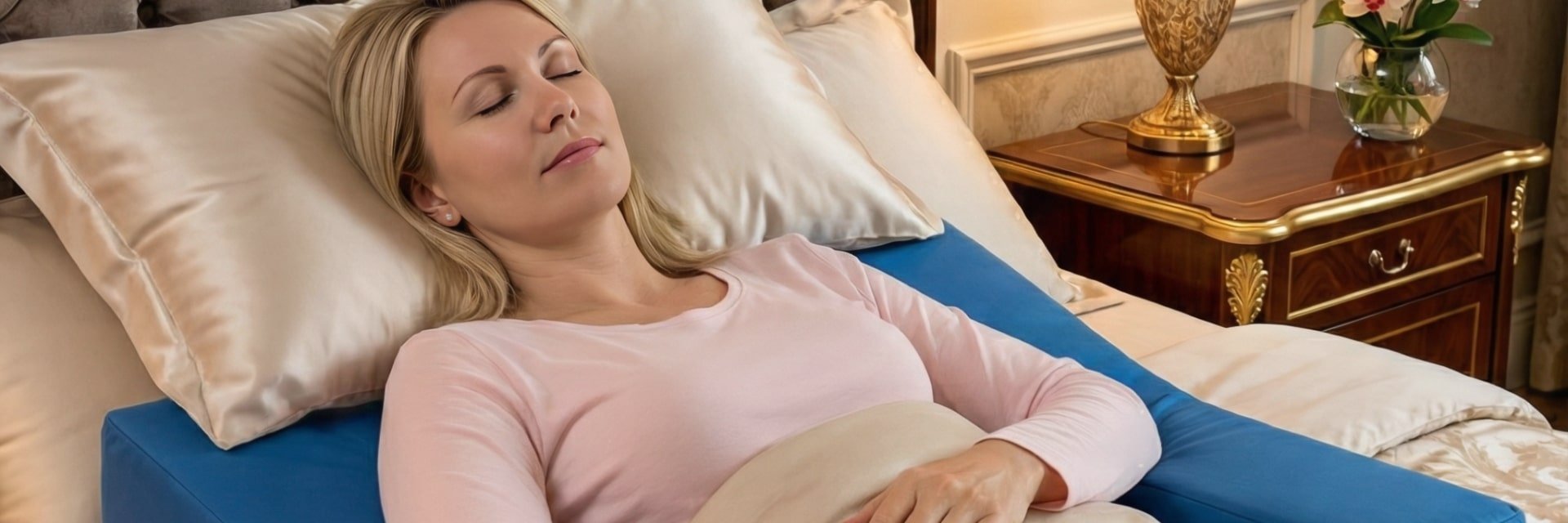
The best alternative to recliner after surgery is equipment designed specifically for post-operative recovery. These systems address all the problems with recliners while providing the benefits of bed sleeping.
Medical-grade surgical recovery supports offer:
- Proper therapeutic elevation angles designed for healing
- Full torso support that prevents sliding
- Bilateral arm positioning channels
- Medical-grade materials that maintain shape and support
- Ability to use in your own bed from day one
- No complex setup or adjustment required
The Restore You Therapeutic Support exemplifies this category. As an FDA-registered medical device specifically engineered for post-surgical recovery, it maintains the maximally loose packed position throughout the night while supporting your entire body properly.
Patients using this type of surgical support report sleeping 6-8 hours per night compared to 2-3 hours in recliners. That’s the difference between genuine rest and exhausting recovery.
Verdict: Most effective solution specifically designed for surgical recovery needs.
The Restore You Advantage: Why It’s the Best Alternative to Recliner
Let me be specific about why purpose-built surgical support outperforms other options.
Engineered for Medical Recovery, Not General Comfort
The Restore You wasn’t designed by furniture makers or comfort product companies. It was engineered by someone who personally experienced post-surgical recovery challenges and understood exactly what patients need.
The design incorporates orthopedic principles: maintaining shoulder position in MLPP, supporting the entire torso to prevent sliding, providing bilateral arm channels to keep both arms properly positioned, and using medical-grade dual-density foam that delivers support exactly where needed.
This isn’t a comfort product adapted for medical use—it’s a medical device designed from the ground up for surgical recovery.
Sleep in Your Own Bed from Day One
This matters more than most people realize. Your own bed means:
- Familiar comfort that helps you relax and fall asleep faster
- Ability to sleep next to your partner for emotional support
- Better sleep quality in your regular environment
- Maintenance of normal sleep routines during recovery
Patients consistently report that returning to their own bed dramatically improves mental health during recovery. You’re going through enough challenges—you don’t need to be isolated in a recliner too.
96% Patient Success Rate
The numbers don’t lie. When patients use proper surgical support equipment instead of recliners, satisfaction rates are extraordinarily high. The Restore You has demonstrated a 96% success rate among shoulder surgery patients, with similar success for other procedures.
This success rate reflects the system’s ability to deliver on its core promise: comfortable, safe positioning that actually allows you to sleep through the night.
Proven Reduction in Opioid Use
Here’s a benefit that surprised even surgeons: patients using the Restore You reduced their opioid use by 50% during recovery compared to patients in recliners.
Why? Better sleep means less pain-related anxiety and reduced need for pain medication just to rest. When your body is properly supported and you’re getting genuine restorative sleep, you naturally require less medication to manage pain.
This isn’t just about comfort—it’s about safer recovery with less dependency risk.
Works for Multiple Surgical Procedures and Conditions
While originally designed for shoulder surgery recovery, the Restore You has become the preferred alternative to recliner after surgery for multiple conditions:
- Shoulder procedures:Rotator cuff repair, shoulder replacement, reverse shoulder replacement, labral repair, shoulder arthroscopy
- Breast surgery: Mastectomy recovery, breast augmentation, breast reconstruction
- Cardiac procedures: Heart surgery recovery, cardiac conditions requiring elevation
- Spinal conditions: Back surgery recovery, sciatica, chronic back pain
- Plastic surgery: Face and upper torso procedures requiring elevated positioning
- Chronic conditions: GERD, sleep apnea, migraines, pregnancy discomfort
This versatility comes from the fundamental design: proper elevation with full support works for any condition requiring therapeutic positioning during sleep.
Real Patient Experiences: Recliner vs. Restore You
Let me share what patients consistently report when comparing their recliner experience to using proper surgical support:
Sleep duration: 2-3 hours per night in recliner → 6-8 hours with surgical support
Pain levels: Constant discomfort and new neck/back pain in recliner → Significantly reduced pain with proper positioning
Recovery engagement: Too exhausted for physical therapy → Energized and ready for daily exercises
Relationship impact: Weeks separated from partner → Sleeping together in own bed
Medication needs: Maximum prescribed pain medication → Often less than half the prescribed amount
Overall satisfaction: Frustration and questioning recovery process → Confidence and positive outlook
These aren’t marketing claims—they’re consistent patterns I see across hundreds of patients who made the switch from recliners to proper recovery support.
Making the Switch: What to Expect
If you’re currently using a recliner and considering alternatives, here’s what to expect when you switch to proper surgical support:
The First Night
Most patients report immediate improvement the first night. You’ll notice:
- Easier time falling asleep in the familiar environment of your bed
- Better support for your arms and torso
- Less need to constantly readjust positioning
- Longer sleep periods before waking
Don’t be surprised if you still wake once or twice—your body is adjusting to new positioning. But the quality and duration of sleep typically improves dramatically even on night one.
The First Week
By the end of the first week with proper support, most patients have completely adjusted. You’ll likely experience:
- Consistently longer sleep periods (5-8 hours)
- Reduced need for pain medication during the night
- Less stiffness and discomfort upon waking
- Better mood and energy for daily activities
- Improved physical therapy performance
Your body responds quickly to proper support and quality sleep.
FSA/HSA Eligibility
One practical benefit many patients appreciate: medical-grade surgical support equipment typically qualifies for FSA (Flexible Spending Account) and HSA (Health Savings Account) reimbursement.
The Restore You, as an FDA-registered medical device, qualifies as an eligible medical expense under IRS guidelines. This makes the investment more accessible since you’re using pre-tax dollars designated for healthcare expenses.
Check with your specific plan administrator, but most patients successfully use their health savings accounts for this purchase.
When to Consider an Alternative to Your Recliner
You should seriously evaluate alternatives to recliner after surgery if you’re experiencing:
- Consistently poor sleep (less than 4 hours per night)
- New pain problems from recliner positioning (neck, back, hips)
- Constant sliding and need to readjust positioning
- Emotional distress from isolation or discomfort
- Difficulty performing physical therapy due to exhaustion
- Increased pain medication needs just to rest
- No improvement after the first week of recliner use
Recovery is challenging enough without fighting against inadequate equipment. If your current setup isn’t working, you don’t have to accept it as inevitable.
How to Choose Your Alternative
When evaluating alternatives to recliner after surgery, ask these questions:
Does it maintain the therapeutic angle my surgeon requires? Proper elevation at 30-45 degrees is essential for healing.
Does it provide full torso support? Partial support leads to sliding and disrupted positioning.
Are both arms properly supported? Bilateral arm positioning is critical, especially for shoulder and chest procedures.
Will it work in my own bed? Sleeping in your familiar environment dramatically improves sleep quality.
Is it designed for medical recovery or general comfort? Medical-grade equipment performs significantly better for post-surgical needs.
What’s the patient success rate? Look for evidence of effectiveness, not just marketing claims.
Is it FSA/HSA eligible? Medical device classification typically means you can use health savings accounts.
How easy is setup and use? You need something simple when you’re recovering and have limited mobility.
Don’t Settle for Suboptimal Recovery
You deserve better than exhausting nights in a recliner. The right alternative to recliner after surgery can transform your recovery experience from something you endure into a process that actually supports healing.
Your body needs quality sleep to repair tissues, manage inflammation, and restore function. When you’re properly supported and positioned correctly, you give your body the best chance to heal efficiently and completely.
The Restore You Therapeutic Support represents the most effective alternative to recliner after surgery because it addresses every limitation of recliner sleeping while providing all the benefits of proper therapeutic positioning in your own bed.
With a 96% patient success rate, 50% reduction in opioid use, and the ability to sleep 6-8 hours per night from day one, it’s the solution orthopedic surgeons wish they’d had available for decades.
Your recovery matters. Your sleep matters. You don’t have to accept suboptimal equipment when better solutions exist.
Medical Disclaimer: This information is for educational purposes only and should not replace professional medical advice. Always follow your surgeon’s specific post-operative instructions and positioning requirements. Consult your healthcare provider before making changes to your recovery plan or switching from recommended equipment. Individual results may vary based on procedure type, overall health, and personal circumstances.