The Hardest Part of Shoulder Surgery Recovery (And Why Sleep Changes Everything)
If you’ve had shoulder surgery, you already know the truth: the hardest part isn’t the sling. It’s not the physical therapy exercises. It’s sleep after shoulder surgery.
For weeks, maybe months, you’re camping out in a recliner. You’re buried under a pile of pillows that slide everywhere. You’re waking up every hour in pain. I’ve heard this story hundreds of times from my patients, and for years, my advice has been the same: “Do the best you can. There’s not a great solution.”
Until now.
Why Sleep After Shoulder Surgery Is the Biggest Recovery Killer
Poor sleep after shoulder surgery doesn’t just make you tired. It slows down your healing. It amplifies your pain. It drains your energy and patience. When you can’t sleep, every other part of recovery becomes harder.
I’ve had patients tell me the worst part of their entire surgical experience wasn’t the procedure itself. It wasn’t the therapy sessions. It was the nights. The dreaded moment when they had to try to sleep, knowing they’d face hours of frustration and almost no rest.
That’s not acceptable. But honestly, for decades, the best advice we had was to use a recliner or stack some wedge pillows. Not exactly a great solution.
The Problem with Traditional Sleep After Shoulder Surgery
Most people try one of three things for sleep after shoulder surgery:
Sleeping in a recliner – This keeps you upright, which helps with positioning. But recliners aren’t designed for all-night sleep. Your back starts to hurt. Your legs swell. You’re still not getting quality rest.
Wedge pillows – These can work for some people. They prop you up at an angle. But here’s the thing: wedge pillows are generic. They’re not engineered for shoulder surgery. They don’t address the specific positioning needs your shoulder has while it’s healing.
Stacking regular pillows – This is what most people end up doing. You build a fortress of pillows around yourself. And then you spend all night fighting with them as they slide around. You wake up with pillows on the floor and your shoulder in the wrong position.
None of these options solve the fundamental problem: you need to maintain a specific position all night long without stressing your healing shoulder.
What Makes the Restore You Different
I recently came across something called the Restore You Therapeutic Support. It caught my attention because it’s the only FDA-registered, patented recovery device built specifically for sleep after shoulder surgery.
This isn’t just another pillow. It’s a medical device.
I reached out to the founder, Scott, to learn more. After talking with him, I understood this wasn’t some random product someone threw together. It was engineered to solve the exact sleep problem every shoulder surgery patient faces.
Then I tried it myself. Even though I haven’t had recent shoulder surgery, I wanted to see what my patients would experience. I was surprised by how comfortable it actually was.
How It Works
The Restore You uses something called MLPP positioning – that’s Maximally Loose Packed Position. Without getting too technical, this means it holds your shoulder in the optimal position for healing. Not just comfortable – optimal.
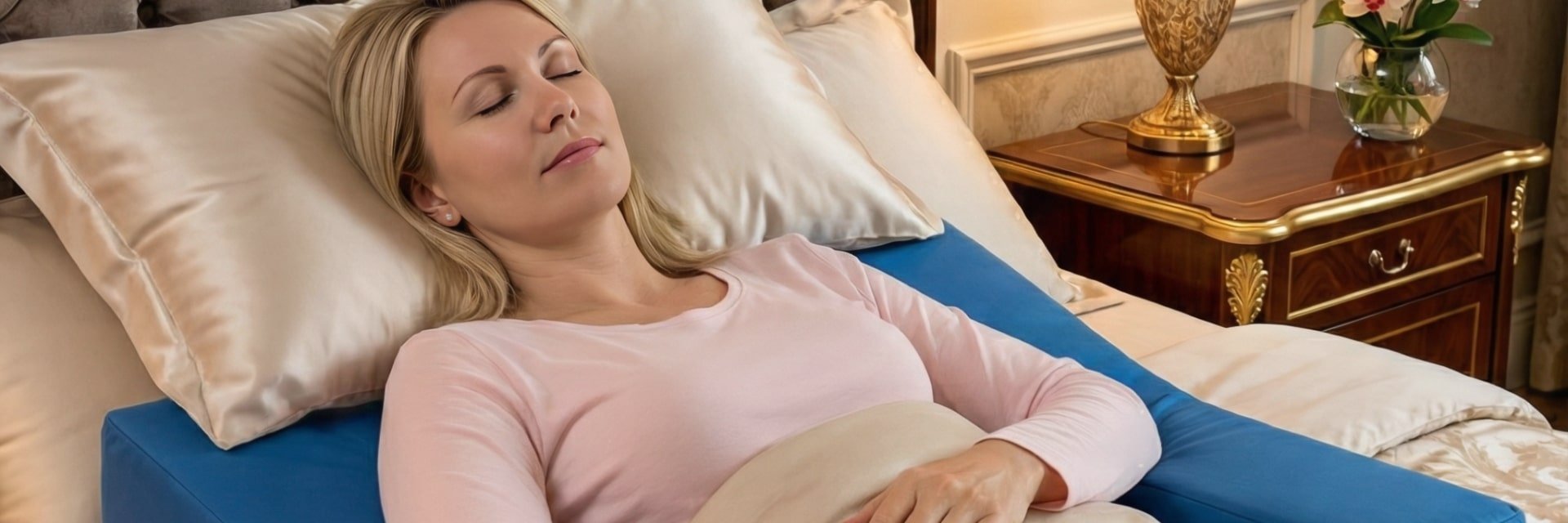
Instead of fighting with sliding pillows all night, the device cradles you in the right position. Patients describe it as feeling like they’re floating on a raft in a pool. You’re supported, but you’re not restricted.
Here’s what really got my attention: patients report a 96% success rate with 6 to 8 hours of uninterrupted sleep, starting the very first night. They’re about to go into a true clinical trial to confirm this, but those are impressive numbers.
Real Patient Results
The patient stories are hard to ignore, especially after experiencing the device myself.
One patient described finally getting their first full night of sleep in ten weeks. Ten weeks of broken sleep, then one night with proper support changed everything.
Another patient said their pain and range of motion improved dramatically in just five days, simply because they were able to rest properly. When your body can actually sleep, it can actually heal.
Others have called it the single best medical investment they ever made. That’s strong feedback, and it matches what I’ve seen over the years: when people can sleep, everything else in recovery improves.
The Trade-Off You Need to Know
I’m giving you an honest review here, not a commercial. The Restore You is bulky. There’s no getting around it. It takes up space in your bed, and it’s not as simple as grabbing a pillow off the couch.
But that’s the trade-off. Pillows slide around. Recliners only go so far. This device stays put. And that’s exactly why it works.
You’re not buying furniture. You’re investing in a medical recovery device that serves a specific purpose for a limited time. Most patients use it for 6-12 weeks during their recovery period.
Why Sleep Matters More Than You Think
After treating more than a thousand shoulder surgery patients over the last 20 years, I can tell you this with confidence: sleep quality directly correlates with recovery outcomes.
When you sleep well, your body:
- Repairs tissue more efficiently
- Manages pain better
- Maintains better range of motion
- Experiences less inflammation
- Stays more motivated to do therapy exercises
When you don’t sleep well, everything suffers. Your pain tolerance drops. Your energy disappears. Simple therapy exercises feel impossible. Your mood tanks. You might even skip physical therapy sessions because you’re too exhausted.
Who Should Consider This
The Restore You isn’t for everyone. It’s specifically designed for shoulder surgery recovery. If you’re recovering from:
- Rotator cuff repair
- Shoulder replacement
- Labrum surgery
- AC joint repair
- Any shoulder procedure requiring immobilization
This device might be worth considering. Talk to your surgeon first, but know that there’s now an FDA-registered option specifically engineered for your situation.
The Hardest Recovery Hurdle: Sleep After Shoulder Surgery
As a surgeon, I don’t typically recommend specific products. I focus on the surgery and the rehab protocol. But sleep is different. Sleep affects everything.
For 60 years, we’ve basically told patients “good luck” when it comes to sleeping after shoulder surgery. We’ve suggested recliners and pillows, knowing those solutions are barely adequate.
For the first time, there’s a product that was actually engineered to solve this specific problem. It’s backed by medical device standards, not just comfort claims.
My wife even mentioned she appreciates the bonus effect – it cut down on my snoring. So there’s that.
The Bottom Line
Sleep has always been the unsolved problem after shoulder surgery. For decades, the best options were a recliner or piled-up pillows. But for the first time in 60 years, there’s actually a product engineered to solve that specific problem.
And based on what I’ve seen, both from patient feedback and my own experience, it works.
If you’re facing shoulder surgery, talk to your surgeon about your sleep plan. Ask about the Restore You. Make sleep a priority in your recovery planning, because when you sleep better, you recover better.
Frequently Asked Questions
How long will I need to use a recovery support device? Most patients use specialized positioning support for 6-12 weeks after shoulder surgery, depending on their specific procedure and surgeon’s recommendations. Your surgeon will give you specific guidance based on your surgery type.
Can I use regular pillows instead? You can, and many people do. The challenge is that regular pillows slide around and don’t maintain consistent positioning throughout the night. Medical-grade recovery devices are specifically engineered to hold proper shoulder position while you sleep.
Will insurance cover a recovery support device? Coverage varies by insurance plan. The Restore You is FSA/HSA eligible, and some patients have successfully obtained reimbursement through their insurance. Check with your provider about durable medical equipment coverage.
When should I start planning for post-surgery sleep? Before your surgery. Order your sleep solution ahead of time so it’s ready when you get home. The first few nights are often the most challenging, so having proper support from day one makes a significant difference.
What if I’m a side sleeper? After shoulder surgery, you can’t sleep on your surgical side for several weeks. You’ll need to sleep on your back or non-surgical side at a specific angle. This is exactly why specialized positioning support helps – it makes this unfamiliar position more comfortable.
This information is for educational purposes only and should not replace professional medical advice. Always consult with your surgeon before making decisions about recovery equipment. Individual results may vary based on surgery type and personal health circumstances.